



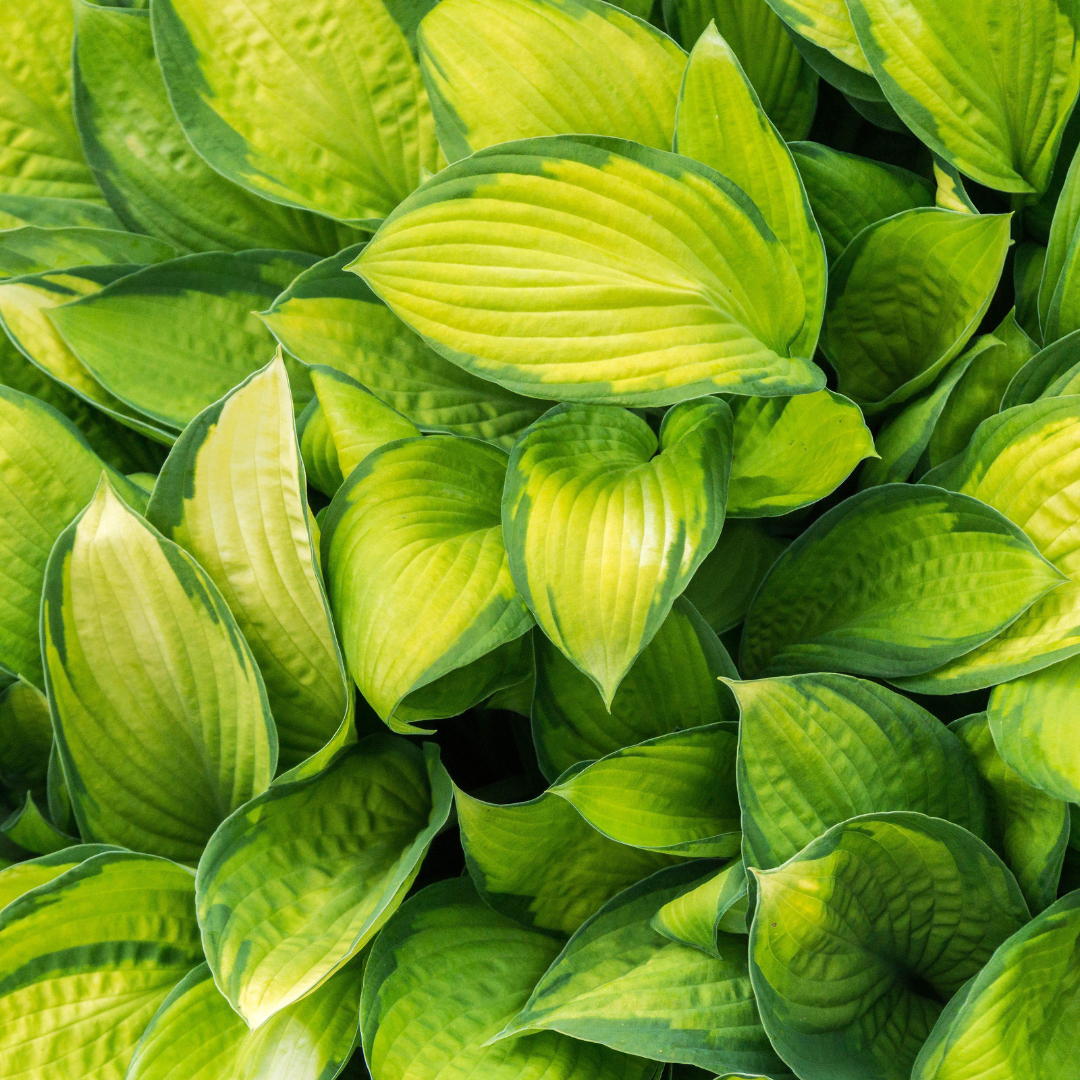
Hosta 'Stained Glass'
Add to Wishlist Partial Sun
 Full Shade
 Pollinator Friendly
 Low Maintenance
- In stock, ready to ship
Hosta 'Stained Glass': Gold Leaves for the Gloomiest Corner
Your shade garden has been sitting in the dark like a teenager with the blinds closed. Huge, glossy gold leaves with dark green edges, glowing like somebody finally opened a window. NO LAMP. NO EXTENSION CORD. JUST ATTITUDE.
Plant Characteristics:
- Botanical Name: Hosta 'Stained Glass'
- Common Name: Plantain Lily, Hosta
- Height: 40–50 cm (16–20 in) foliage, with flower stems reaching 60–90 cm (2–3 ft)
- Spread: 90–120 cm (3–4 ft)
- Flowers: Pale lavender, fragrant
- Bloom Time: Late summer (August)
- Foliage: Large, shiny gold leaves with wide, streaky dark green margins
- Features: Fragrant flowers, Hosta of the Year 2006
Where to Plant: A shady border, a woodland walk or the north side of the house. Morning sun brings out the brightest gold, but keep it out of hot afternoon sun. Plant it near a path so you catch the fragrance in August.
Companion Plants: Polygonatum multiflorum arches to 90 cm behind this bright hosta, with white bells in May and June. Pulmonaria 'Dark Vader' edges the front with purple flowers in April and May. Ligularia 'Little Rocket' sends up yellow spikes from June to August, an upright form that contrasts with the hosta's wide, rounded leaves. Together they cover spring to late summer in the same shady bed.
Plant Care: Plant in part sun to full shade, in moist, rich, well-drained soil. Mix in compost at planting. Water deeply during dry spells, especially in its first year and in sunnier spots. Deer and rabbits love hostas, so use a repellent or fencing if they visit. Slugs may chew holes in the leaves, though the thick, shiny foliage helps. Cut off the flower stems after bloom and remove the leaves after a hard frost. Divide in spring as the shoots emerge if you want more plants.
History: Registered in 1999 by Hans Hansen and Shady Oaks Nursery in Minnesota, as a sport of Hosta 'Guacamole', which gave it its fragrant flowers. The American Hosta Growers Association named it Hosta of the Year in 2006.
Final Thoughts: The slugs will want a bite. The neighbours will want a division. Tell them both to GET IN LINE.



