



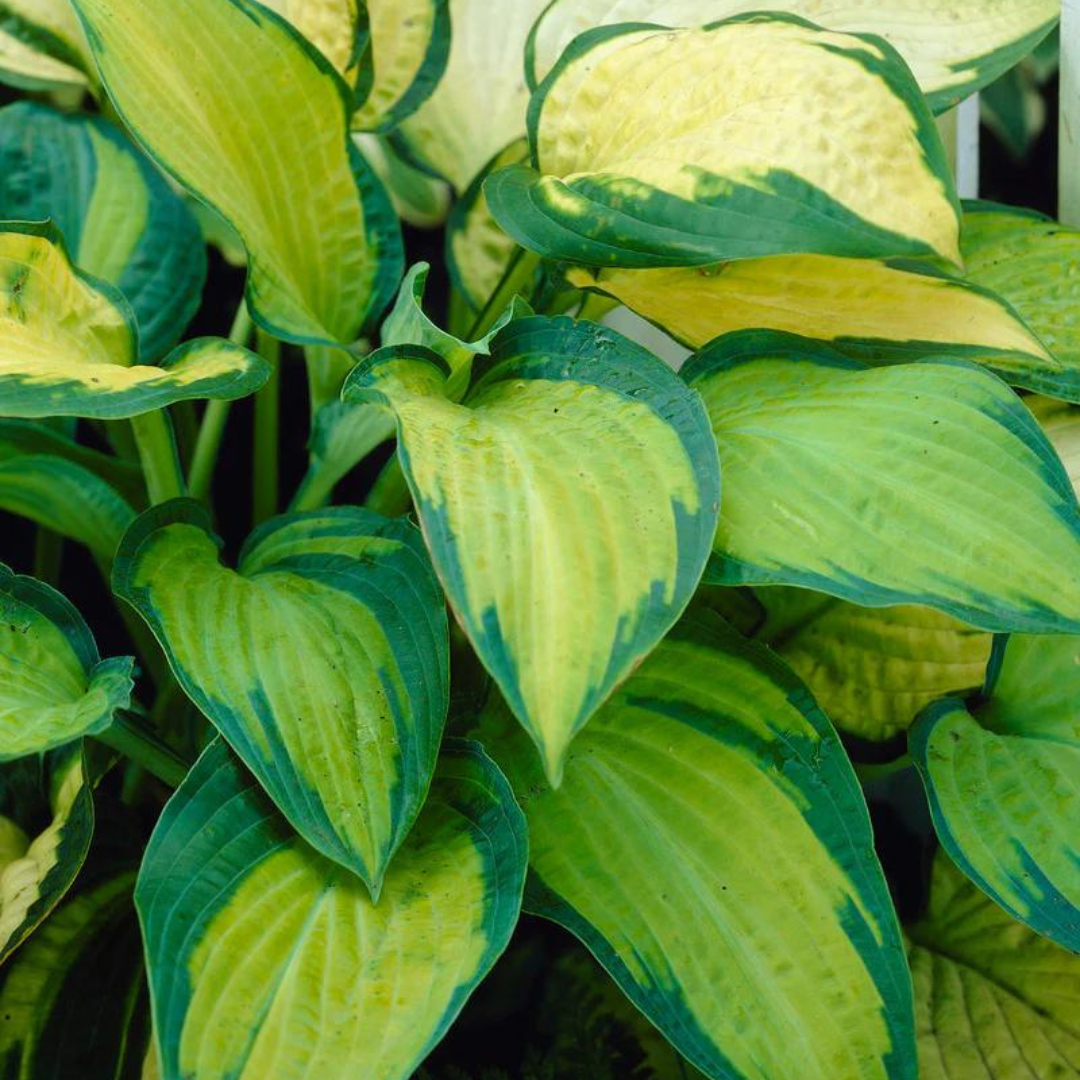
Hosta 'Paul's Glory'
Add to Wishlist Partial Sun
 Full Shade
 Pollinator Friendly
 Low Maintenance
- In stock, ready to ship
Hosta 'Paul's Glory': Chartreuse to Gold by Midsummer
Gold centres that soften to cream, wrapped in blue-green borders that darken as summer goes. This hosta changes its look more often than a teenager's profile picture, and EVERY VERSION IS A KEEPER.
Plant Characteristics:
- Botanical Name: Hosta 'Paul's Glory'
- Common Name: Plantain Lily, Hosta
- Height: 55–65 cm (21–25 in)
- Spread: 90–120 cm (3–4 ft)
- Flowers: Pale lavender, bell-shaped, on stems above the foliage
- Bloom Time: Midsummer (July to August)
- Foliage: Heart-shaped leaves with a gold to creamy centre and a wide blue-green margin that darkens through the season
- Features: Hosta of the Year 1999
Where to Plant: Give it room in the middle of a shady border, or use one as a focal point where a path bends, where the gold centres stand out against the dark shade under trees. Hostas are generally reported to tolerate black walnut, which helps in gardens where many plants struggle.
Companion Plants: Tiarella cordifolia edges the front at 15 to 30 cm, with frothy white flowers in May and June. Astilbe 'Amethyst' stands behind at 90 to 100 cm, and its purple plumes in June and July pair well with the hosta's lavender flowers. Eurybia divaricata 'Eastern Star' carries on with white asters from August to October, keeping the bed in flower after the hosta. Fine plumes and frothy flowers set off the hosta's broad, solid leaves in the same shade.
Plant Care: Plant in part shade with some morning sun, in moist, well-drained soil rich in compost. Hot afternoon sun can bleach the gold centre to ivory, so give it shade after lunch. Water deeply during dry spells, especially in its first year. Deer and rabbits will eat hostas, so use a repellent or fencing if they visit. The leaves have good substance, which helps them hold up against slugs. Remove the flower stems after bloom and clear away the foliage after a hard frost. Divide in spring if the clump gets too big for its spot.
History: Paul Hofer of Antioch Farms and Peter Ruh found 'Paul's Glory' in Ohio growing in a clump of Hosta 'Perry's True Blue', and it was registered in 1987, though some hosta experts think it's a seedling rather than a sport. The American Hosta Growers Association named it Hosta of the Year in 1999.
Final Thoughts: Easy care, hummingbirds on the flowers and a fresh look every few weeks. Plant one. Then plant ANOTHER ONE.



