



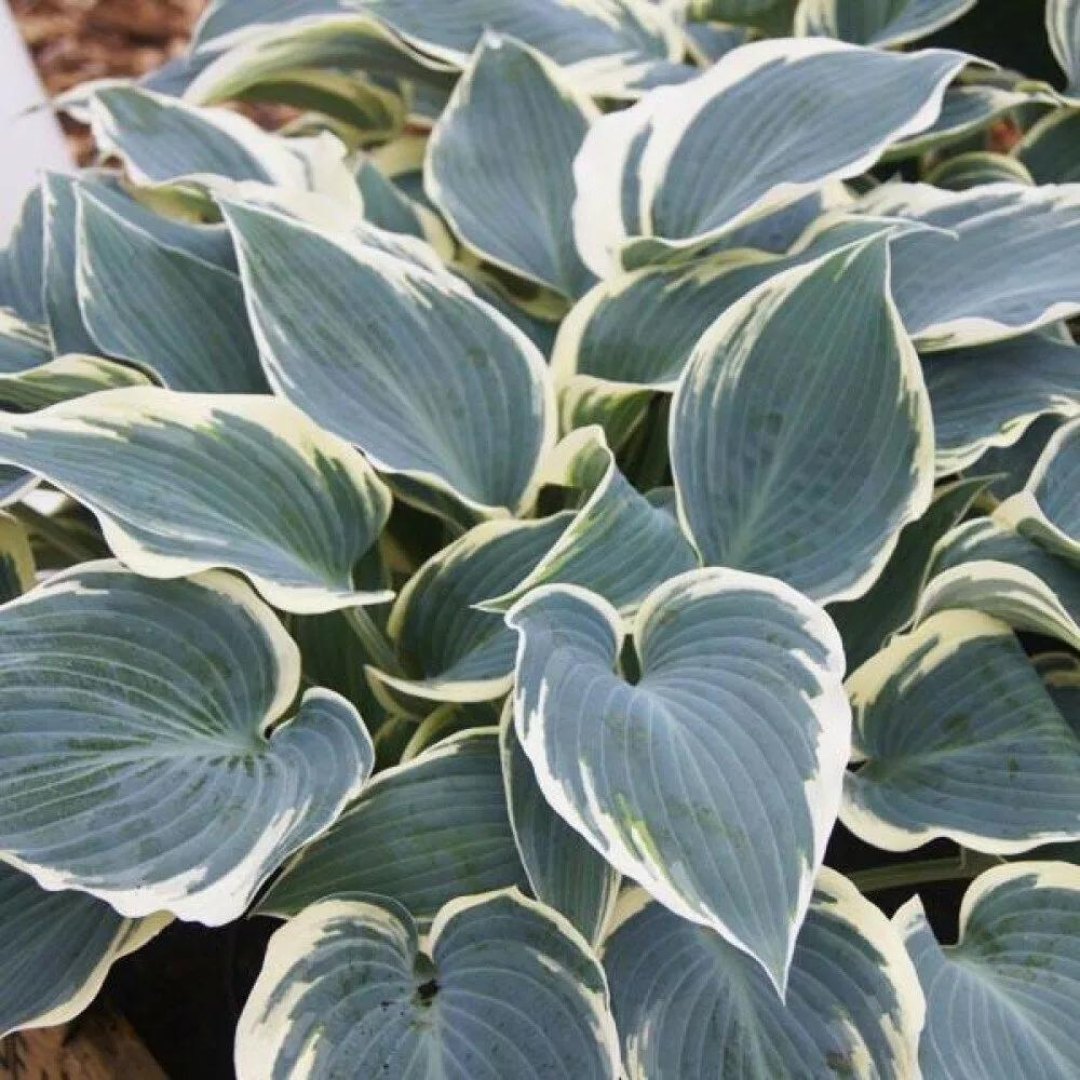
Hosta 'El Nino'
Add to Wishlist Partial Sun
 Full Shade
 Pollinator Friendly
 Low Maintenance
- In stock, ready to ship
Hosta 'El Nino': Cool Blue, Crisp White, Total Calm
Powder-blue leaves with streaky creamy edges that get WIDER every year, like a weather system that just keeps building. 'El Nino' rolls into the shade garden and changes the whole forecast.
Plant Characteristics:
- Botanical Name: Hosta 'El Nino'
- Common Name: Plantain Lily, Hosta
- Height: 40–45 cm (16–18 in)
- Spread: 75–90 cm (29–35 in)
- Flowers: Pale lavender, held upright above the leaves
- Bloom Time: Midsummer (July to August)
- Foliage: Thick, pointed powder-blue leaves with streaky creamy white margins that widen as the plant matures
- Features: Good slug resistance
- Plant Patent: USPP 14,632 / CPBR 2662
Where to Plant: Its neat shape suits edging a shady walk, lining a foundation on the north side, or repeating down a border for rhythm. It's also a good size for a large container on a shaded patio.
Companion Plants: Dicentra 'Alba' carries white flowers in May and June at 60 to 90 cm, before the hosta flowers. Ligularia 'Britt-Marie Crawford' stands behind it at 90 to 120 cm with orange flowers in August and September. Galium odoratum spreads at the front as a 10 to 25 cm carpet of white flowers in May and June. The whole group enjoys shade to partial sun.
Plant Care: Plant it in moist, rich, well-drained soil with compost mixed in. Give it shade during the afternoon. Blue hostas get their colour from a waxy coating on the leaves, and strong sun and heat wear it off faster. Water deeply in dry spells, especially in the first year. Deer and rabbits like hostas, so use a repellent or fencing if they visit. Remove flower stems after blooming and clean up the leaves after a hard frost. Divide in early spring when the shoots emerge if you want more plants.
History: Dutch nurseryman Piet Warmerdam registered 'El Nino' in 2003 as a hybrid of the classic blue Hosta 'Halcyon', though many hosta experts believe it is a sport of that plant. It received U.S. Plant Patent 14,632 in 2004.
Final Thoughts: Thick leaves, good slug resistance, very little upkeep. The only climate event you'll actually want in the yard. EXPECT A COOL FRONT.



