



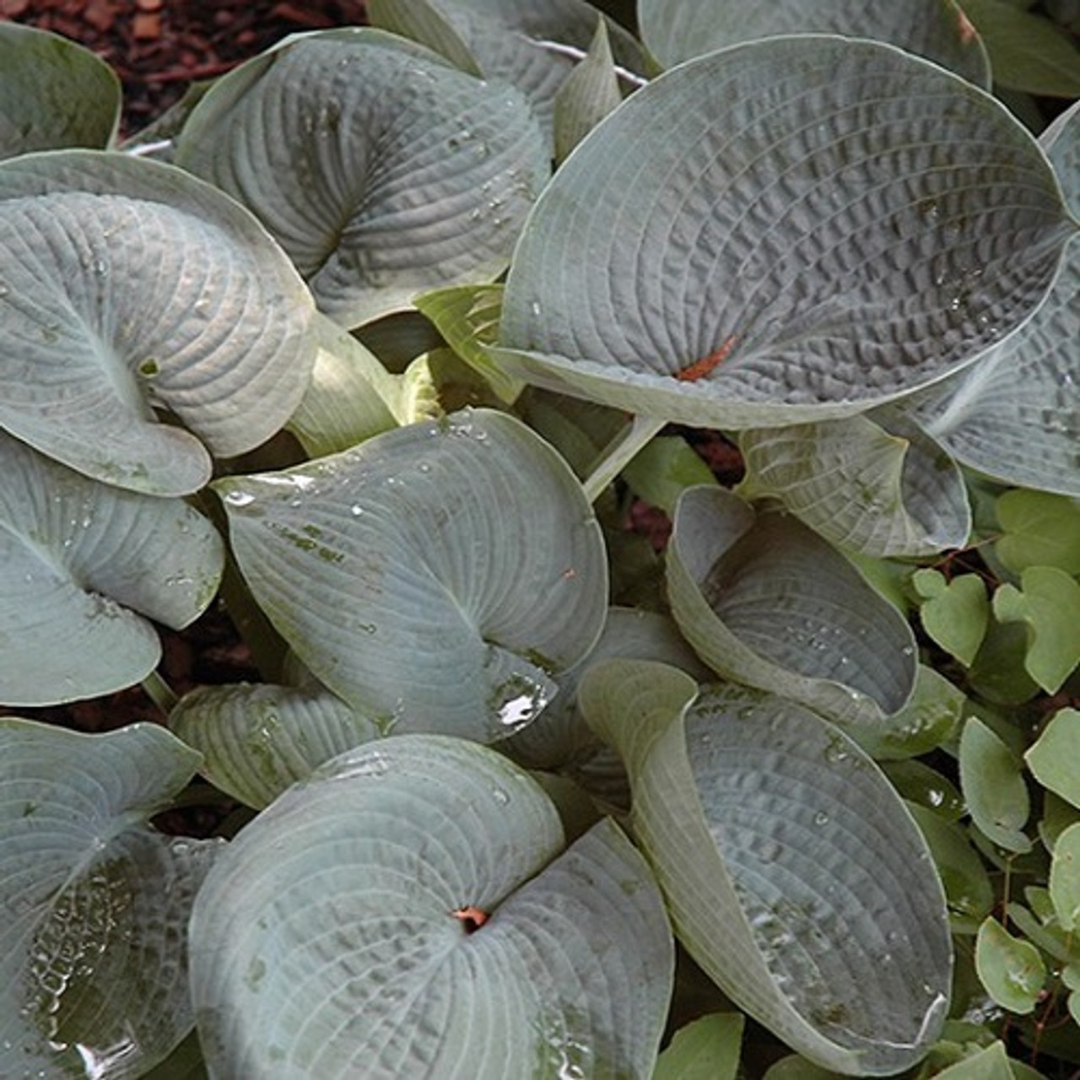
Hosta 'Abiqua Drinking Gourd'
Add to Wishlist Partial Sun
 Full Shade
 Pollinator Friendly
 Low Maintenance
- In stock, ready to ship
Hosta 'Abiqua Drinking Gourd': Blue Cups That Catch the Rain
Round, deeply cupped blue-green leaves that look ready to catch the rain and pour you a drink. 'Abiqua Drinking Gourd' runs a full bar in the shade garden, and THE SLUGS ARE NOT ON THE GUEST LIST.
Plant Characteristics:
- Botanical Name: Hosta 'Abiqua Drinking Gourd'
- Common Name: Plantain Lily, Hosta
- Height: 45–60 cm (18–24 in)
- Spread: 90–120 cm (3–4 ft)
- Flowers: Near-white bells on scapes held above the leaves
- Bloom Time: Early to midsummer (June to July)
- Foliage: Dark blue-green, round, deeply cupped and heavily puckered, with very thick substance
- Features: Good slug resistance, Hosta of the Year 2014
Where to Plant: This is a specimen plant, so put it near a path or patio edge where people can look down into the cups, or use it to anchor a shade bed. The blue holds best in shade or with gentle morning sun, and it grows happily near black walnut, but protect it where deer and rabbits drop by.
Companion Plants: Helleborus HGC® Pink Frost flowers pink from March into May, well before the hosta leaves are full size. Astilbe 'Bressingham Beauty' carries pink plumes at 90 to 100 cm in July and August, standing just behind. Asarum europaeum makes a low, glossy groundcover at 10 to 15 cm along the front. All three thrive in shade to partial sun.
Plant Care: Plant in part sun to full shade, in moist, rich, well-drained soil. Mix compost into the planting hole and mulch to keep the roots cool. Water deeply in dry spells, especially during its first year. Like most blue hostas with thick leaves, it grows at a moderate pace and looks better every year for the first few seasons. The waxy blue coating rubs off with handling and fades in hot sun, so plant it where it won't be brushed constantly. Cut the flower scapes after bloom if you like a tidy look. Remove the leaves after a hard frost. Divide in spring as the shoots emerge.
History: Walden West registered 'Abiqua Drinking Gourd' in 1989 from a cross of Hosta 'Tokudama' and Hosta sieboldiana, two parents known for blue, thick, puckered leaves. The American Hosta Growers Association named it Hosta of the Year in 2014, and the American Hosta Society calls it probably the most deeply cupped hosta of all.
Final Thoughts: Thick, puckered and built like crockery. Plant it in shade and let it fill up every rainstorm. LAST CALL IS NEVER.



