



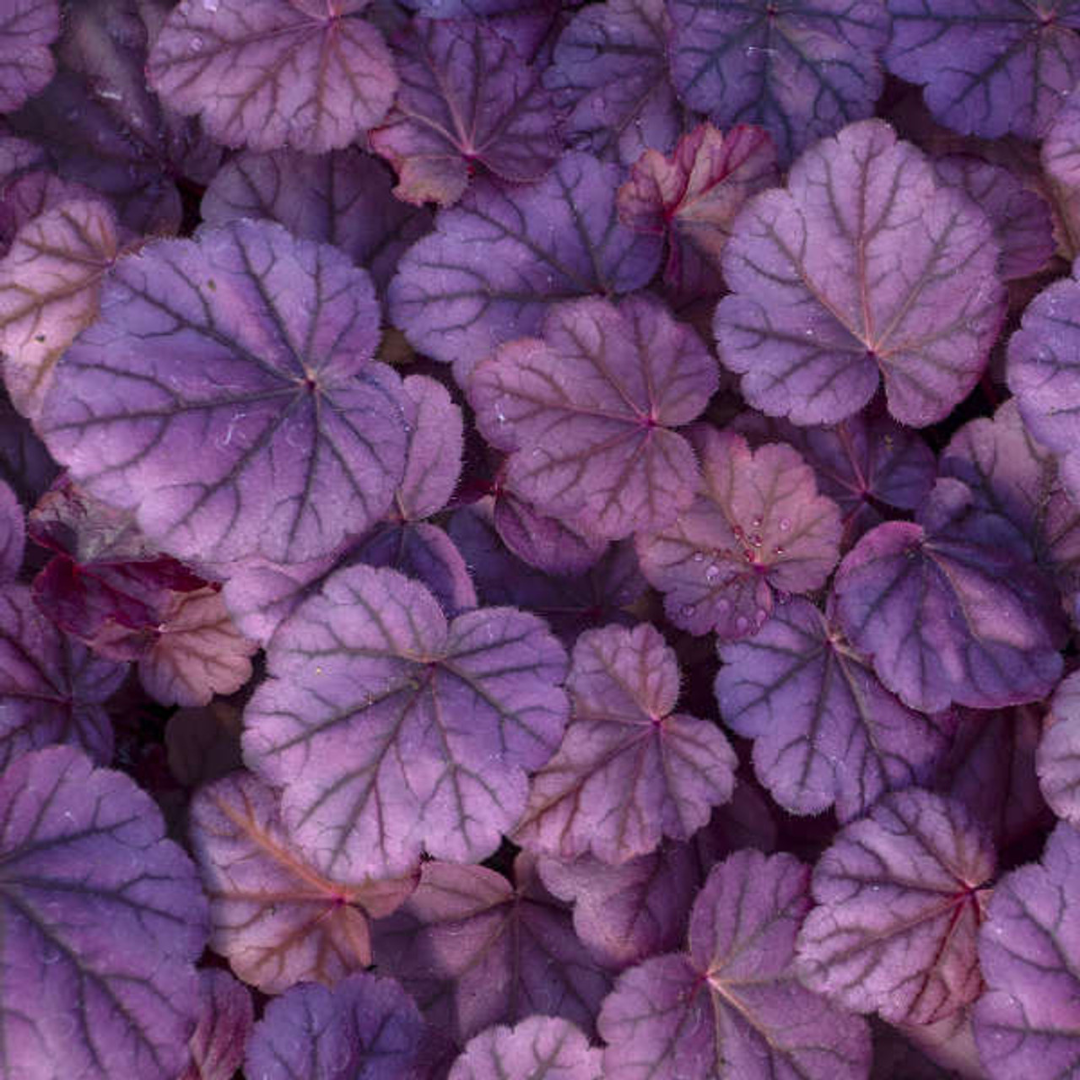
Heuchera 'Pink Panther'
Add to Wishlist Partial Sun
 Full Shade
 Deer Resistant
 Pollinator Friendly
 Low Maintenance
- In stock, ready to ship
Heuchera 'Pink Panther': Metallic Pink Now, Berry Later
'Pink Panther' sneaks into the shade garden in metallic pink and nobody can figure out how. The leaves mature to deep berry-pink with dark veins, while tall stems carry light pink flowers. SMOOTH OPERATOR.
Plant Characteristics:
- Botanical Name: Heuchera hybrid
- Common Name: Coral Bells
- Height: 25–30 cm (10–12 in) in leaf; flower stems reach 71–76 cm (28–30 in)
- Spread: 40–50 cm (16–20 in)
- Flowers: Light pink with dark rose calyces, on dark stems
- Bloom Time: Midsummer (July to August)
- Foliage: Semi-glossy, metallic pink when new, maturing to dark berry-pink with darker veins. Evergreen in mild winters.
- Plant Patent: USPP 31,224
Where to Plant: Use it at the front of a shady border, along a path, or as the star of a container, ideally with afternoon shade. The tall flower stems add a light, airy layer to the bed.
Companion Plants: Pink coral bells look lovely in front of Cimicifuga 'Chocoholic', which adds pink flower spikes from August to October on 90 to 120 cm stems. Rodgersia aesculifolia brings big leaves and cream flowers in June and July. Edge the front with Cornus canadensis for white flowers in May and June. All three are happy in shade or part shade.
Plant Care: Plant in moist, well-drained soil with good organic content. Keep the crown level with the soil surface. Loosen clay with compost so water doesn't sit around the roots in spring. Afternoon shade protects the pink colour from fading and scorching. Water through dry spells, especially in the first season. Cut flower stems to the base after bloom. Trim winter-worn leaves in early spring. Divide every three or four years, or when the crown starts rising out of the soil.
History: Hans Hansen bred 'Pink Panther' at Walters Gardens in Zeeland, Michigan, from a 2013 cross with 'Mocha', 'Tiramisu', 'Stainless Steel' and 'Milan' in its family tree. Selected for strong growth in the hot, humid summers of eastern North America, it holds US plant patent 31,224.
Final Thoughts: Give it afternoon shade and let it prowl. Deer won't chase it. THE HUMMINGBIRDS ARE ON THE CASE.



