



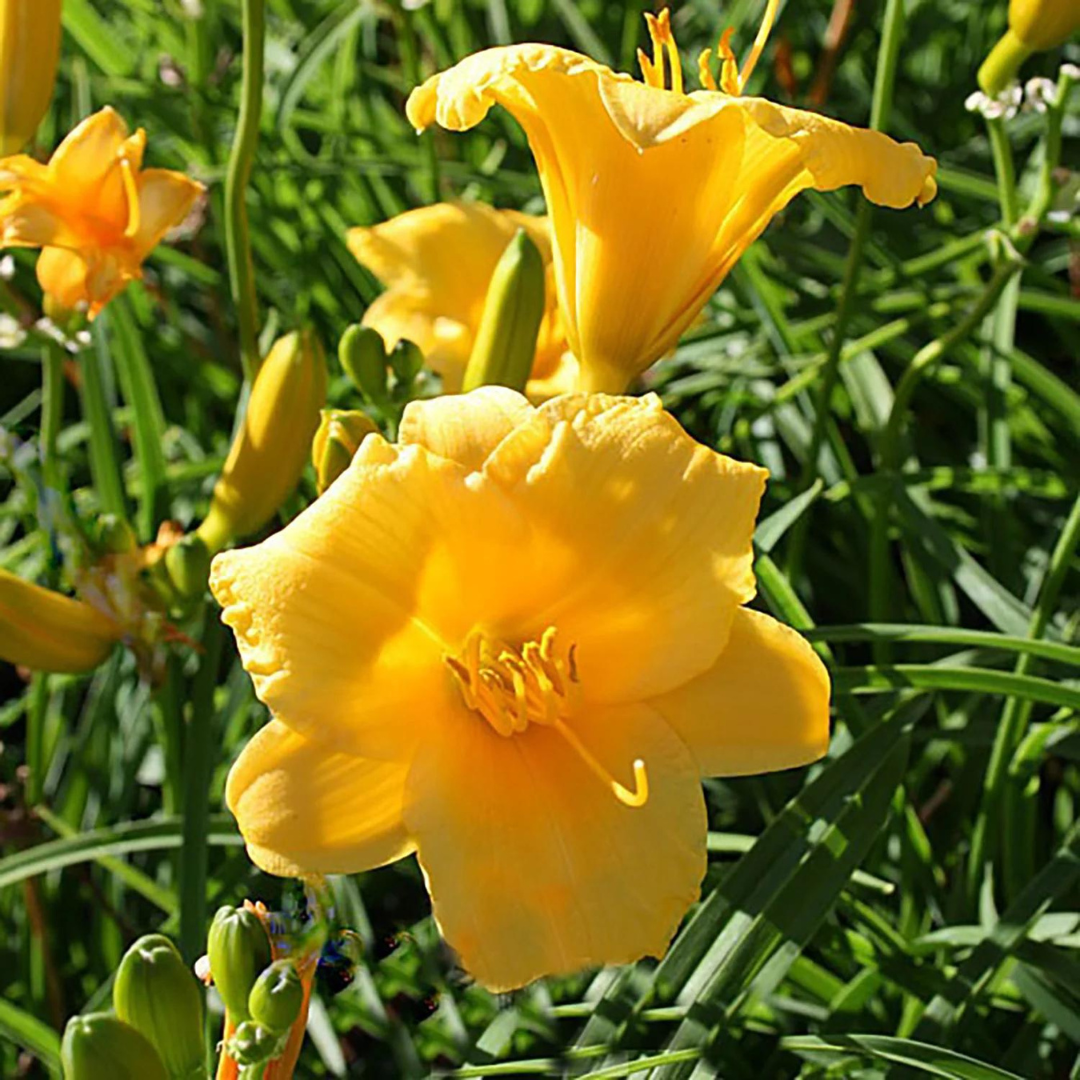
Hemerocallis 'Stella de Oro'
Add to Wishlist Full Sun
 Partial Sun
 Drought Tolerant
 Pollinator Friendly
 Low Maintenance
- In stock, ready to ship
Hemerocallis 'Stella de Oro': The Gold Standard of Rebloomers
'Stella de Oro' blooms like it's paid by the flower. Golden trumpets in wave after wave, from early summer into fall, on a low clump that fits anywhere. THE PARKING LOT PLANT, AND PROUD OF IT.
Plant Characteristics:
- Botanical Name: Hemerocallis 'Stella de Oro'
- Common Name: Daylily
- Height: 30–45 cm (12–18 in)
- Spread: 45–60 cm (18–24 in)
- Flowers: Golden yellow trumpets about 6–8 cm (2.5–3 in) across, produced in big numbers. Each flower lasts a day.
- Bloom Time: Early summer to early fall (June to September), in repeat flushes
- Foliage: Narrow, grass-like green leaves in a dense, low clump
- Features: Reblooming, Stout Silver Medal winner
Where to Plant: This is the classic edging daylily for walkways, driveways and the front of foundation beds, and it also suits massing on a sunny slope or growing in containers and planters. It holds up in hot, dry city spots and copes well with clay soil. Give it some protection where deer and rabbits are common.
Companion Plants: Monarda punctata adds bicolour flowers in June and July in front of the compact yellow daylily. Amsonia 'Storm Cloud' brings blue starry flowers in May and June, before the daylily starts. Edge the front with Ceratostigma plumbaginoides, a low groundcover with blue flowers from August to October. All three handle full sun or part sun.
Plant Care: Full sun gives the most flowers. Part sun is fine, with a lighter show. Plant in average, well-drained soil and water regularly through the first season. After that, it only needs water in long dry spells. Deadheading matters with this one. Pull off spent flowers and any seed pods that form, so the plant puts its energy into new buds instead of seed. Cut finished flower stems at the base. Clear the old leaves in late fall or early spring. Divide every three to four years in spring or late summer. Crowded clumps tend to flower less.
History: Walter Jablonski of Merrillville, Indiana introduced 'Stella de Oro' in 1975, and in 1985 it won the Stout Silver Medal, the highest award of the American Hemerocallis Society. Its long bloom season helped start a wave of compact rebloomers, and the name roughly means star of gold.
Final Thoughts: Mass it along a sunny edge and let it do the heavy lifting. Drought tolerant once established. GOLD STAR FOR EFFORT, EVERY SINGLE YEAR.



