



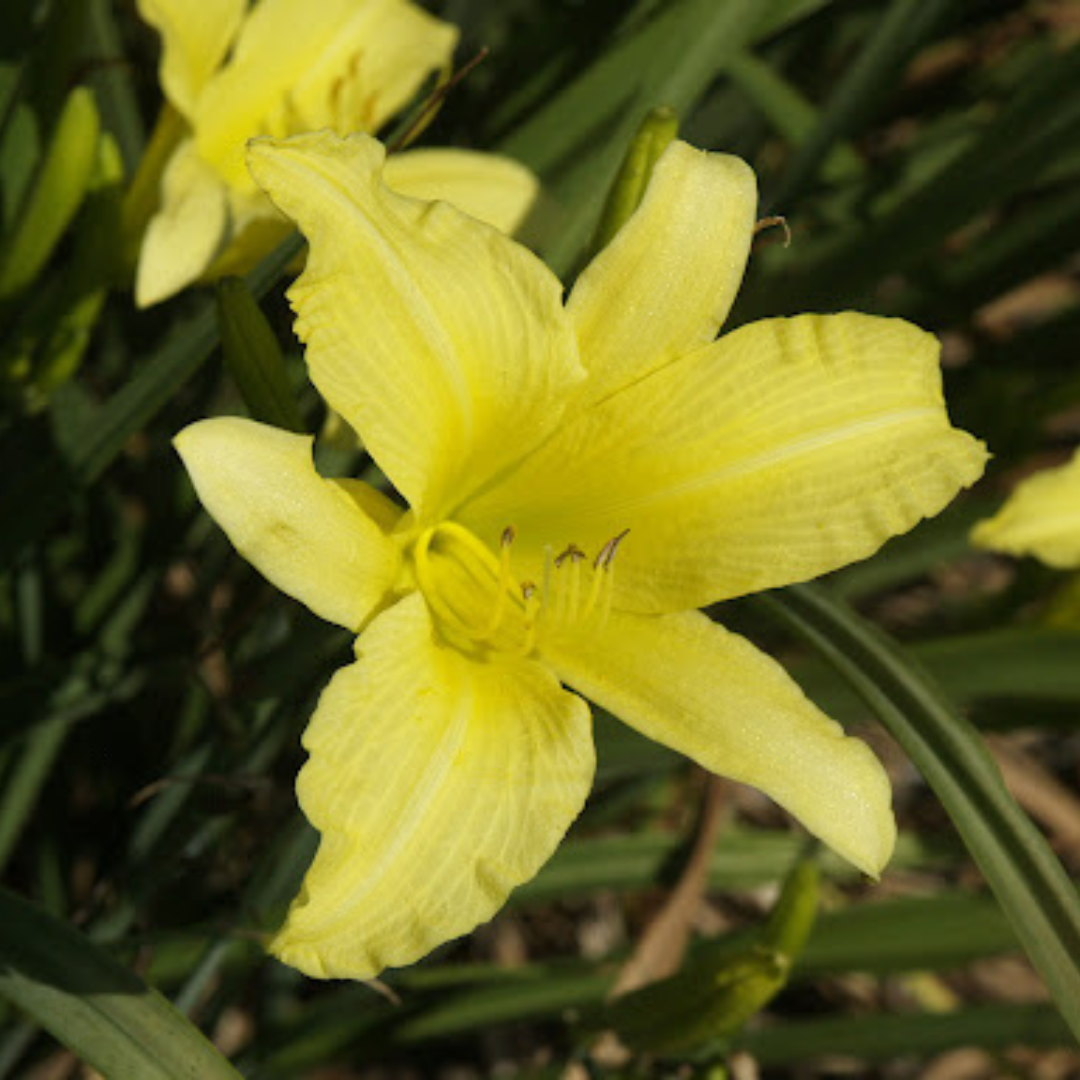
Hemerocallis 'Hyperion'
Add to Wishlist Full Sun
 Partial Sun
 Drought Tolerant
 Pollinator Friendly
 Low Maintenance
- In stock, ready to ship
Hemerocallis 'Hyperion': Sweet-Scented Lemon Heirloom Standing Tall
'Hyperion' carries itself like a Greek god and smells like one too, probably. Clear lemon-yellow trumpets on tall stems, perfuming the whole yard. MOUNT OLYMPUS, BUT MAKE IT BACKYARD.
Plant Characteristics:
- Botanical Name: Hemerocallis 'Hyperion'
- Common Name: Daylily
- Height: 90–100 cm (3–3.3 ft) in flower
- Spread: 60–75 cm (2–2.5 ft)
- Flowers: Clear lemon to canary yellow with a soft green throat, trumpet-shaped and fragrant
- Bloom Time: Midsummer (July to August)
- Foliage: Long, narrow, arching green leaves; dies back in winter
- Features: Fragrant
Where to Plant: It is tall, so give it a spot in the middle or back of the border where the flowers can rise above shorter plants. It suits cottage gardens and heritage plantings, a bed near a porch or window lets you catch the scent in the evening, and it handles clay soil.
Companion Plants: Tall yellow 'Hyperion' looks fresh beside Aconitum carmichaelii 'Arendsii', a 120 to 150 cm monkshood with blue flowers from August to October. Tradescantia 'Concord Grape' adds purple flowers from June to September in the middle. Plant Persicaria polymorpha at the back for cream flower plumes from June to August on 120 to 180 cm stems. This group is happy in full sun or part sun.
Plant Care: Plant in full sun to part sun in average, well-drained soil. Rich soil and heavy feeding aren't needed, and too much fertilizer gives you leaves instead of flowers. Water regularly the first year, then during long dry spells. Snap off faded flowers and cut each stem down once it's finished blooming. Tidy the foliage in late fall or early spring. Divide every four or five years, in spring or early fall, if the clump gets crowded or flowers dwindle. Daylilies are toxic to cats.
History: 'Hyperion' was bred by Franklin B. Mead of Fort Wayne, Indiana, introduced in the mid-1920s, and became one of the most popular daylilies of the early twentieth century, often planted in Colonial Revival gardens as a stand-in for the old lemon lily, Hemerocallis lilioasphodelus. It is named for Hyperion, the Titan of light in Greek mythology.
Final Thoughts: Plant it where you'll catch the scent on a summer evening. Low maintenance and drought tolerant once established. DIVINE, AND IT KNOWS IT.



