



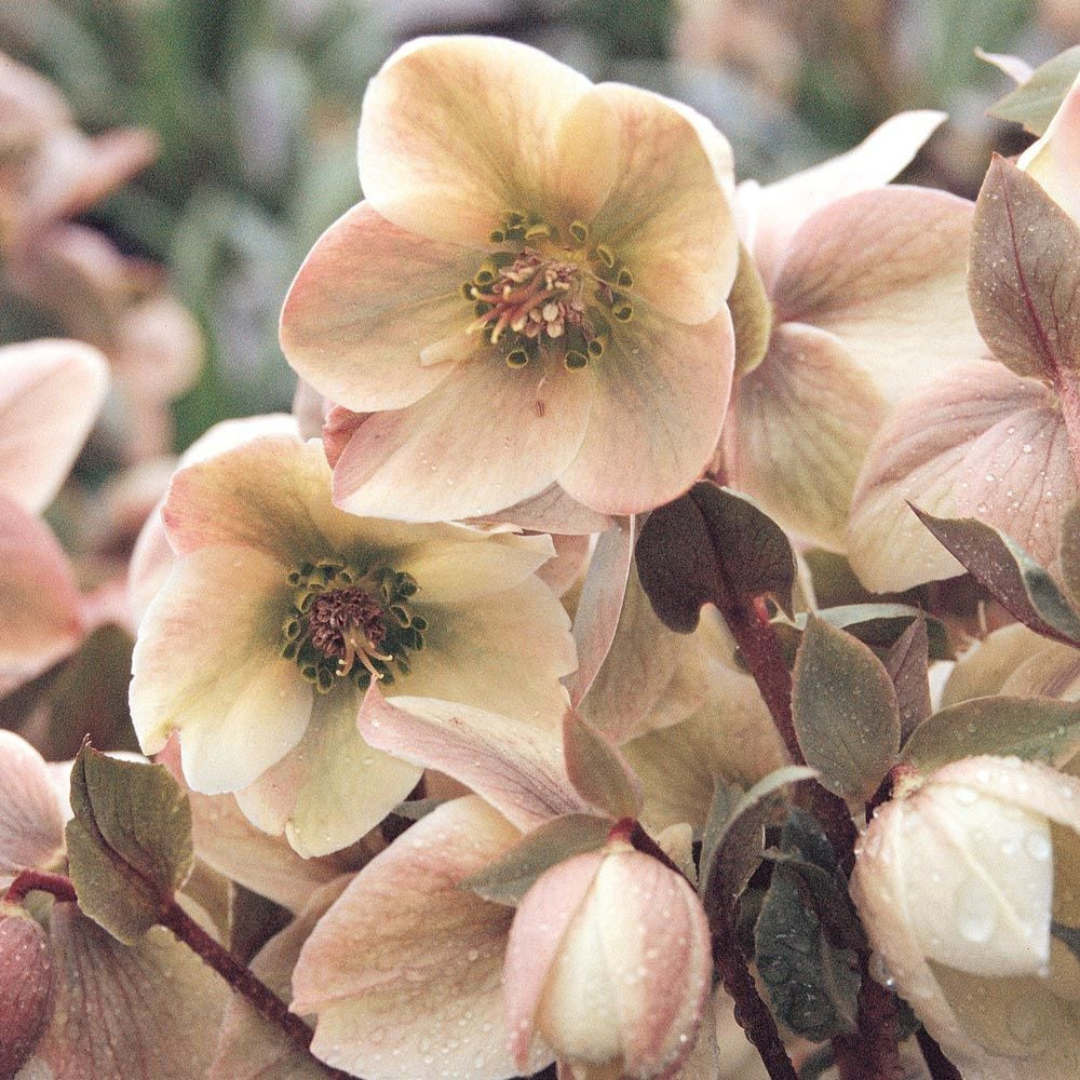
Helleborus 'Ivory Prince'
Add to Wishlist Partial Sun
 Full Shade
 Deer Resistant
 Pollinator Friendly
 Low Maintenance
- In stock, ready to ship
Helleborus 'Ivory Prince': Ivory Royalty for the Shady Doorstep
'Ivory Prince' shows up at the tail end of winter like royalty arriving early to the ball. Ivory flowers brushed with green and pink, facing right at you over silvery blue-green leaves. THE SNOW HASN'T EVEN LEFT. HE DOESN'T CARE.
Plant Characteristics:
- Botanical Name: Helleborus x nigersmithii 'Walhelivor'
- Common Name: Christmas Rose, Hellebore
- Height: 30–45 cm (12–18 in)
- Spread: 60 cm (24 in)
- Flowers: Large, ivory flowers about 7.5 cm (3 in) across, streaked green and pink, opening from burgundy-pink buds and aging to rosy green. They face outward, so you see the inside of the flower.
- Bloom Time: Late winter to spring (March to May)
- Foliage: Leathery, blue-green leaves with a silvery cast. Evergreen.
- Features: Evergreen, long-lasting flowers, decorative seed pods
- Plant Patent: PP16199
Where to Plant: Its compact size and upward-looking flowers make it a good front-of-border plant in shade and a strong choice for containers near the door. It also suits woodland paths and spots under a high tree canopy, where it gets spring light before the leaves come in.
Companion Plants: Brunnera 'Sea Heart' pairs well with this cream hellebore, adding blue spring flowers in April and May at 30 cm. Polygonatum multiflorum brings arching stems and white flowers in May and June. Cimicifuga 'Atropurpurea' rises 150 to 180 cm at the back with white spires from August to October. It is a calm, green-and-white planting for shade and part shade.
Plant Care: Plant in part sun to full shade, in moist, humus-rich, well-drained soil. It handles a range of soils, including clay amended with compost. Water well through the first season and in dry spells after that. Remove old, damaged leaves at the base in early spring before the flowers open. Leaving spent flowers in place gives you the decorative seed pods. In colder spots, a loose mulch of shredded leaves helps protect the foliage. Hellebores don't like to be moved, so pick a spot and leave it. Wear gloves, as the sap can irritate skin.
History: 'Ivory Prince' was bred in England by plant breeder David Tristram and introduced to North America through PlantHaven under the cultivar name 'Walhelivor'. It has the Christmas rose, Helleborus niger, in its background, which accounts for its pale flowers and compact habit.
Final Thoughts: Plant him by the front walk where you'll pass every day in late winter. The deer bow out. A PRINCE WHO ACTUALLY SHOWS UP.



