



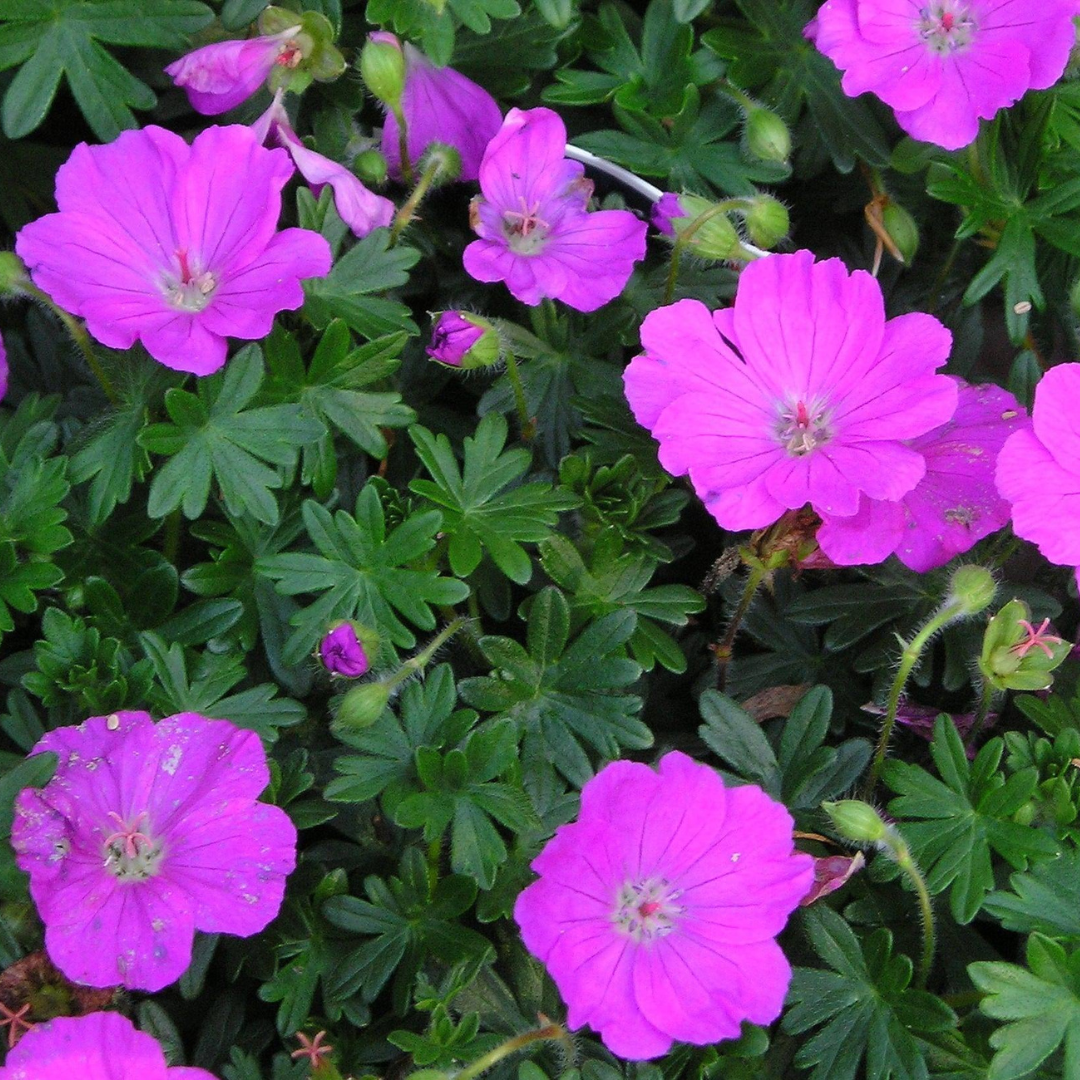
Geranium 'Max Frei'
Add to Wishlist Full Sun
 Partial Sun
 Drought Tolerant
 Deer Resistant
 Pollinator Friendly
 Low Maintenance
- In stock, ready to ship
Geranium 'Max Frei': Tiny Mound in a Loud Magenta Shirt
Small plant. Loud magenta-pink flowers. 'Max Frei' fits in the front of the border the way hot sauce fits in a lunch box: tiny, and not to be underestimated. THE BEES ARE SWEATING.
Plant Characteristics:
- Botanical Name: Geranium sanguineum 'Max Frei'
- Common Name: Bloody Cranesbill
- Height: 15–20 cm (6–8 in)
- Spread: 45–60 cm (18–24 in)
- Flowers: Small, bright magenta-pink, saucer-shaped flowers held just above the leaves
- Bloom Time: Late spring to late summer (June to August)
- Foliage: Fine-textured, deeply lobed, deep green leaves that often turn bronzy red in fall
- Features: Rabbit resistant
Where to Plant: Use it to edge a sunny path or the very front of a border, tuck it into a rock garden, or plant several together as a low ground cover. It also suits containers and the hot strip along a driveway where taller plants sulk.
Companion Plants: Sagina subulata forms a tight, very low mat that sits in front of this compact cranesbill, with white flowers in May and June. Behind it, Solidago 'Little Miss Sunshine' brings golden yellow from July to October. Sisyrinchium angustifolium adds grassy foliage and violet flowers from May to July at 15 to 45 cm. These are all small-scale plants for a sunny or part-sun edge.
Plant Care: Plant it in full sun to part sun, in average, well-drained soil. It copes with sandy or rocky ground, and handles clay as long as water doesn't sit around the crown. Water regularly through the first season, then only in long dry spells. If the clump looks tired by late summer, shear it back lightly and fresh leaves will follow. Cut the old stems down in late fall or early spring. It spreads slowly by short rhizomes. Divide it in spring or fall if it outgrows its space or you want more plants.
History: 'Max Frei' is a garden selection of Geranium sanguineum, a cranesbill native to Europe and western Asia as far as the Caucasus, whose species name means blood red. The common name cranesbill comes from the long, beak-shaped seed pods, and the genus name comes from the Greek word for crane.
Final Thoughts: Tuck it along the edge, skip the hose and let it run the show until fall turns the leaves bronzy red. SMALL BATCH. BIG HEAT.



