



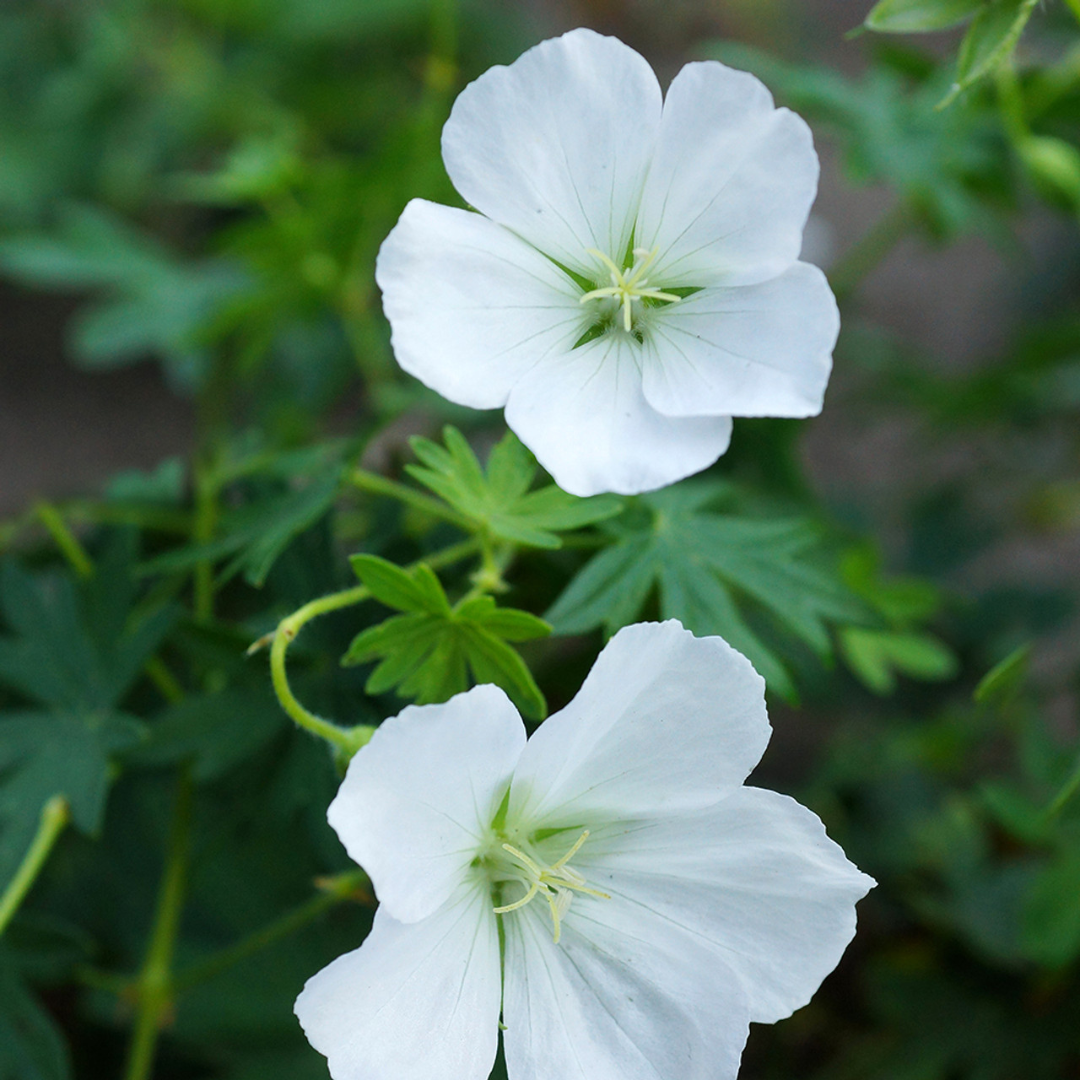
Geranium sanguineum 'Album'
Add to Wishlist Full Sun
 Partial Sun
 Drought Tolerant
 Deer Resistant
 Pollinator Friendly
 Low Maintenance
- In stock, ready to ship
Geranium sanguineum 'Album': Crisp White Saucers Crowding Out Weeds
Same tough bloodline, but 'Album' showed up in all white like it's above the family drama. Clear white flowers over fine leaves that blush bronzy red in fall. THE BLACK SHEEP OF THE BLOODY CRANESBILLS.
Plant Characteristics:
- Botanical Name: Geranium sanguineum 'Album'
- Common Name: Bloody Cranesbill, Hardy Geranium
- Height: 25–30 cm (10–12 in)
- Spread: 60–75 cm (24–30 in)
- Flowers: Clear white, about 4 cm (1.5 in) across
- Bloom Time: Late spring to early summer (June to July), with a few later flowers
- Foliage: Finely divided green leaves that turn bronzy red in fall
- Features: Rabbit resistant, RHS Award of Garden Merit
Where to Plant: Use it as a ground cover, an edger along paths, or a filler at the front of a sunny border, and it is great in rock gardens and on slopes, where it fills in quickly to crowd out weeds. It isn't fussy about soil, from sandy to heavier loam, as long as water drains away.
Companion Plants: White cranesbill makes a clean skirt for Verbena hastata 'Blue Spires', a 120 cm native with blue spires from July to September. Kalimeris 'Blue Star' adds soft blue flowers at a similar low height from June to September. Rudbeckia 'American Gold Rush' brings warm yellow from July to October, so the bed keeps going after the geranium finishes. Give it full sun or part sun.
Plant Care: Plant in full sun to part sun, in average, well-drained soil. It copes with poor and dry soil better than many perennials. Water regularly the first season, then only during long dry spells. If the plant looks tired after its main bloom, shear it back by about half. Fresh leaves follow, and sometimes a few more flowers. Divide in spring or early fall every few years if it outgrows its space or the centre opens up. Tidy old foliage in late fall or early spring.
History: Bloody cranesbill is native to the dry grassland, rocky slopes and coastal dunes of Europe and western Asia, and sanguineum means blood-red, a nod to the deep magenta flowers of the wild plant. The white form has long been grown in gardens and holds the Royal Horticultural Society's Award of Garden Merit.
Final Thoughts: Plant it among the pinks and let it be the calm one at dinner. The deer and rabbits will skip it. EVERY FAMILY NEEDS A WHITE SHEEP.



