



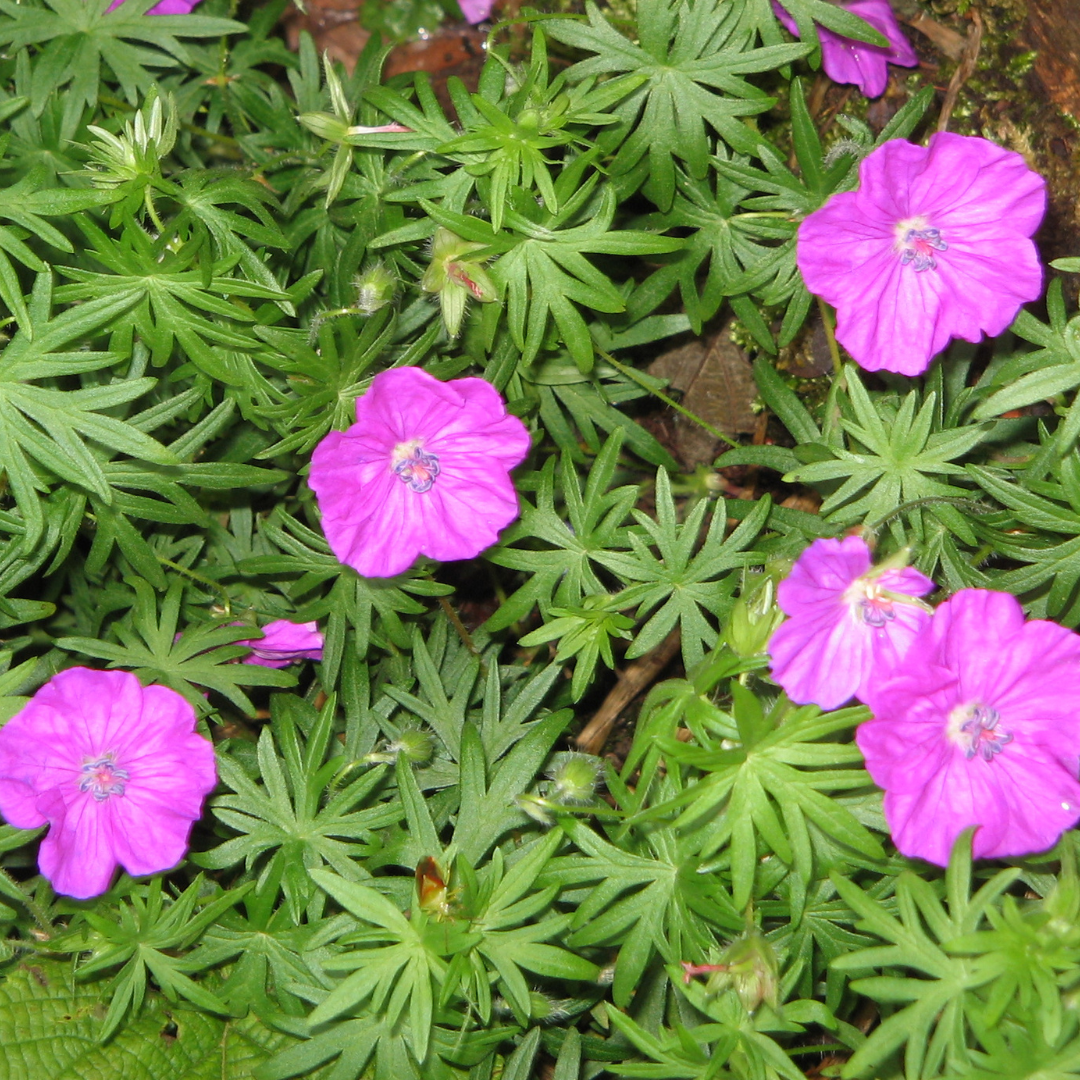
Geranium sanguineum
Add to Wishlist Full Sun
 Partial Sun
 Drought Tolerant
 Deer Resistant
 Pollinator Friendly
 Low Maintenance
- In stock, ready to ship
Geranium sanguineum: Tough-as-Nails Magenta for Dry Banks
The common name is Bloody Cranesbill, which is a lot. The plant itself is cheerful: magenta-pink cups over finely cut leaves, shrugging off clay, heat and dry spells. METAL BAND NAME. SUNSHINE PERSONALITY.
Plant Characteristics:
- Botanical Name: Geranium sanguineum
- Common Name: Bloody Cranesbill
- Height: 25–45 cm (10–18 in)
- Spread: 50–60 cm (20–24 in)
- Flowers: Cup-shaped, magenta-pink with darker veins, up to 4 cm (1.5 in) across
- Bloom Time: Late spring to late summer (June to August)
- Foliage: Finely cut, deep green leaves that turn red in fall
- Features: Rabbit resistant, tolerates clay and heat
Where to Plant: It is a tough, spreading plant for the front of a sunny border, a slope, a rock garden or a dry bank. Plant a group as a low ground cover that flowers on and off through summer, and don't worry about clay or heat.
Companion Plants: Echinacea 'Mellow Yellows' stands behind this cranesbill with yellow coneflowers from June to October. Symphyotrichum shortii picks up the story in late summer with blue flowers from August to October on 60 to 90 cm stems. Edge the bed with Iberis 'Snowsation', whose white flowers in May and June brighten the front before the magenta blooms appear. The planting suits full sun or part sun.
Plant Care: Plant it in full sun to part sun, in average, well-drained soil. It copes with poor, sandy, rocky or clay soils. Water regularly through the first season, then only during long droughts. If it gets leggy in midsummer, shear it back by about a third and it will regrow neatly and often flower again. Cut it back in late fall or early spring. It spreads slowly by rhizomes and may self-seed. Divide in spring or fall to control it or make more plants.
History: Bloody cranesbill grows wild across much of Europe, including Britain, and east to Turkey and the Caucasus, often on dry, rocky, limestone ground. Sanguineum is Latin for blood red, and the genus name Geranium comes from the Greek word for crane, after the long, beaked seed pods.
Final Thoughts: Stick it in the tough spot by the driveway and let it prove the name wrong. Fall turns the leaves red anyway. IT LIKES A LITTLE DRAMA.



