



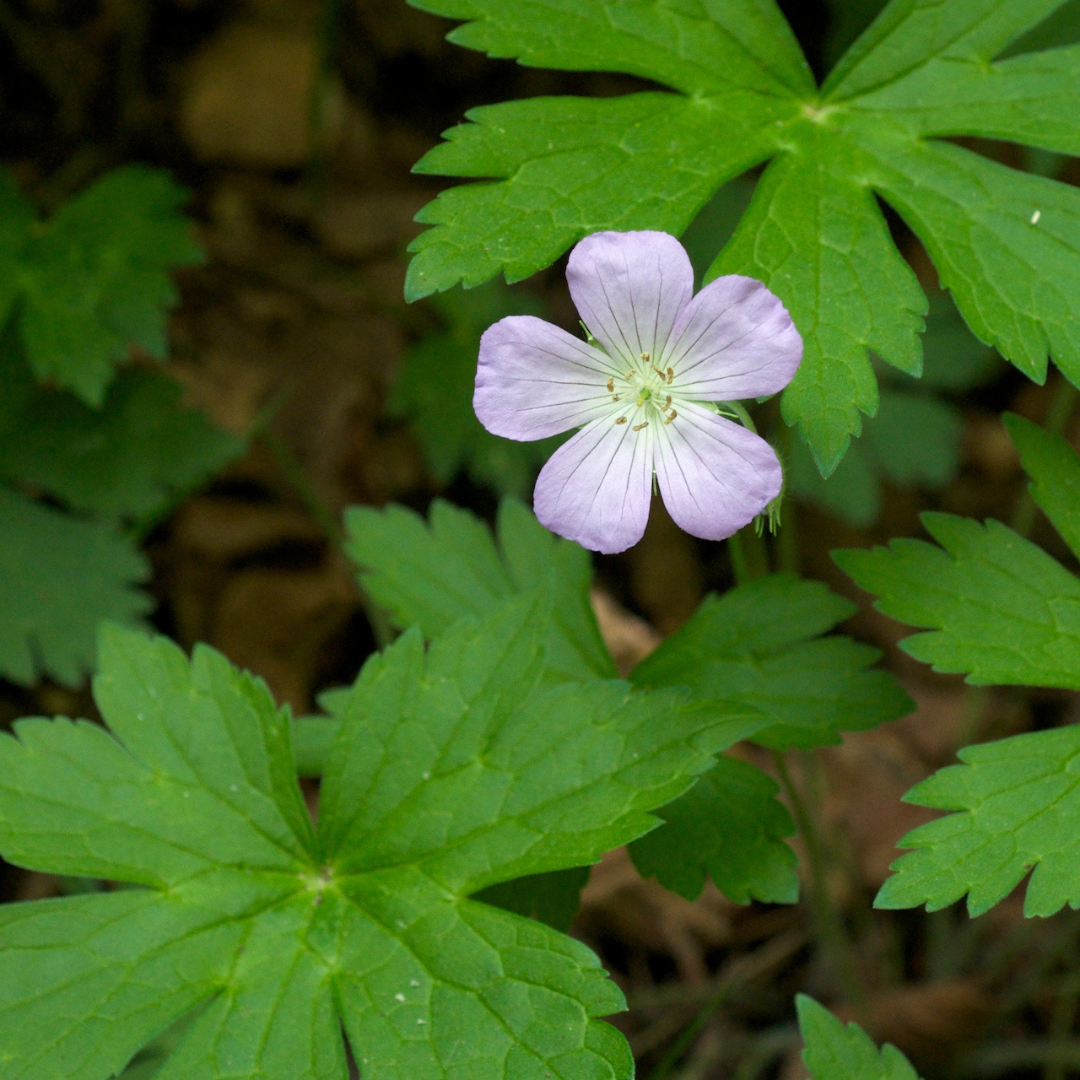
Geranium maculatum
Add to Wishlist Full Sun
 Partial Sun
 Deer Resistant
 Pollinator Friendly
 Native
 Low Maintenance
- In stock, ready to ship
Geranium maculatum: Woodland Wildflower, Garden-Bed Ready
Wild Geranium is a native that was doing woodland chic long before anybody put it on a mood board. Pale pink to lilac flowers, early nectar for the bees and seeds for the birds. THE ORIGINAL LOCAL CELEBRITY.
Plant Characteristics:
- Botanical Name: Geranium maculatum
- Common Name: Wild Geranium, Spotted Cranesbill
- Height: 45–60 cm (18–24 in)
- Spread: 30–45 cm (12–18 in)
- Flowers: Five-petalled, pale pink to lilac, about 2.5–4 cm (1–1.5 in) across, in loose clusters
- Bloom Time: Late spring to early summer (May to June)
- Foliage: Deeply cut, five-lobed, mid-green leaves, sometimes lightly mottled
- Features: Seeds eaten by birds
Where to Plant: Use it in a woodland garden, under a high tree canopy, at the edge of a shady border or in a native planting. It is happy in light woodland shade as well as sun, so it is an easy way to bring a local plant into a regular garden bed.
Companion Plants: Elymus virginicus is a native grass that rises 90 to 125 cm behind the wild geranium and fills in from June to August. Anemone virginiana, another native, carries white flowers from June to August once the geranium is done. Plant Aquilegia Earlybird™ Blue White at the front for blue and white columbine flowers from May to July. This easy native-style grouping suits full sun or part sun along a woodland edge.
Plant Care: Plant it in moist, humus-rich soil that drains well. It handles clay and loam. In full sun it needs steady moisture; in part shade it's more forgiving. Water regularly through the first season. In a hot, dry summer the leaves may yellow and the plant may go partly dormant. That's normal, and it will be back next spring. Cut back tired foliage after flowering if you like. It can be divided in early spring or fall, and it will gently self-seed.
History: Wild geranium is native to woodlands across much of eastern North America, including southern Ontario and Quebec, and maculatum means spotted, a reference to the pale blotches that sometimes appear on older leaves. Indigenous peoples used the root in traditional medicine.
Final Thoughts: Plant it at the edge of the trees and let it do its thing. The deer rarely bother. HOMETOWN HERO, NO AUTOGRAPHS.



