



Filipendula 'Venusta'
Add to Wishlist Full Sun
 Partial Sun
 Deer Resistant
 Pollinator Friendly
- In stock, ready to ship
Filipendula 'Venusta': Cotton-Candy Clouds Over the Back Row
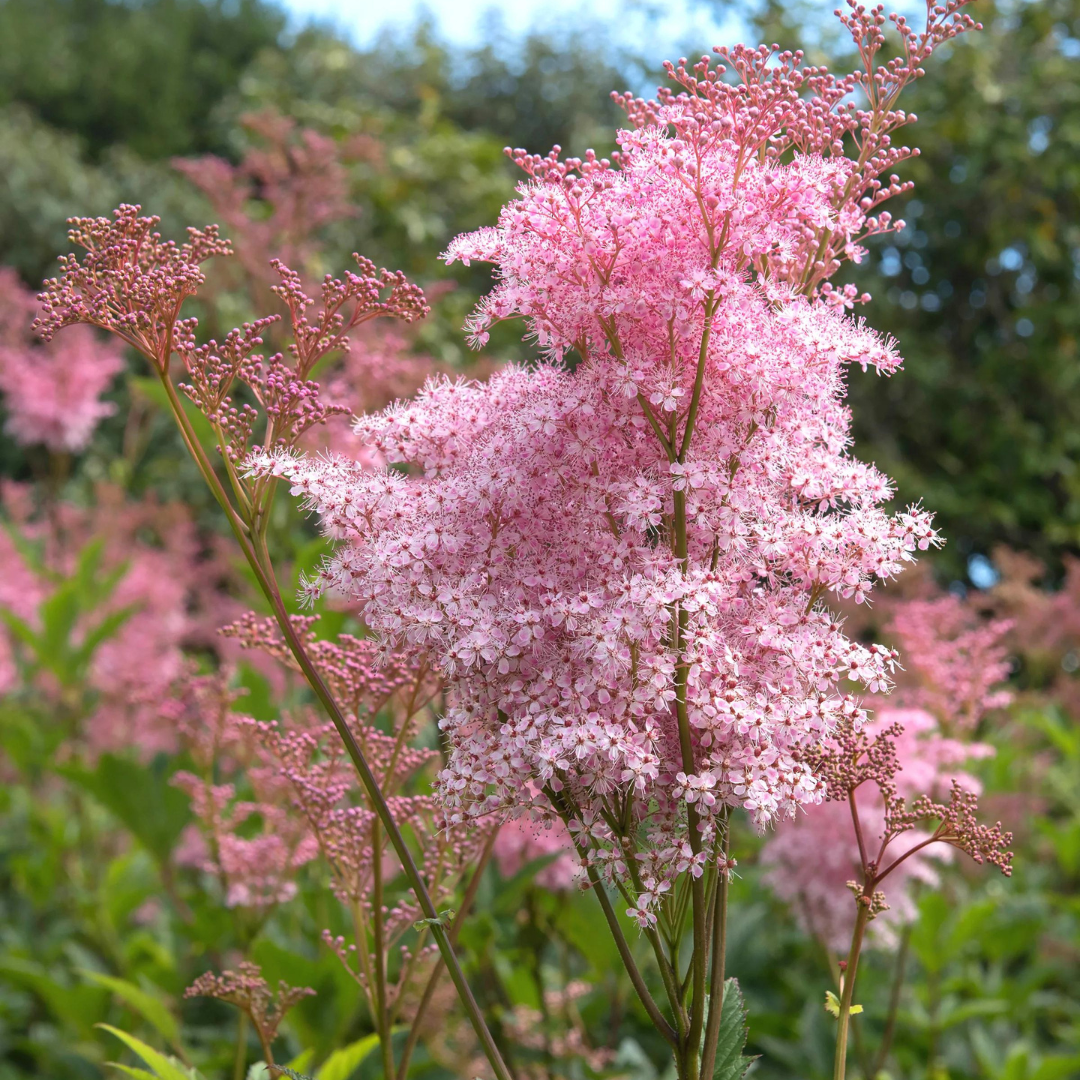
Queen-of-the-prairie doesn't walk into the garden. She towers over it. 'Venusta' throws giant, fluffy deep pink plumes way above your head, like a pink cloud parked over the border. ALL HAIL, NO CURTSY REQUIRED.
Plant Characteristics:
- Botanical Name: Filipendula rubra 'Venusta'
- Common Name: Queen-of-the-Prairie
- Height: 180–240 cm (6–8 ft)
- Spread: 90–120 cm (3–4 ft)
- Flowers: Large, fluffy plumes of tiny deep pink flowers that fade to soft pink
- Bloom Time: Early to late summer (June to August)
- Foliage: Large, deeply lobed, dark green leaves
- Features: Good for cutting, RHS Award of Garden Merit
Where to Plant: Put it at the back of a border, in a rain garden, beside a pond, or in a moist meadow planting where its height has room to shine. It makes a strong vertical accent and a good screen for a damp yard, and it is right at home in wet clay that drowns other plants.
Companion Plants: Hemerocallis Happy Ever Appster™ 'Red Hot Returns' adds red daylilies at 61 to 71 cm from July to September at the base of this tall plant. Miscanthus sinensis 'Adagio' brings a 120 to 150 cm grass that flowers from August to October. Early in the year, Lupinus perennis gives blue spikes in May and June. Plant the group in sun or part sun with room to spread.
Plant Care: Plant in rich, evenly moist to wet soil. It doesn't tolerate drought, and dry soil will brown the leaves by midsummer, so pick a spot that stays damp or be ready to water. A layer of mulch helps. In hotter, drier spots, a little afternoon shade keeps it looking fresh. It spreads slowly by rhizomes into a broad colony. Give it space, and divide it in early spring or fall if it gets too wide. The stems are sturdy, so staking is rarely needed in moist soil. Leave the faded plumes for winter interest, or cut them for arrangements. Cut the plant to the ground in late fall or early spring.
History: Queen-of-the-prairie, Filipendula rubra, is native to the fens, wet prairies and seeps of the eastern and central United States and southeastern Canada. 'Venusta', meaning charming or beautiful, is the most widely grown selection and holds the Royal Horticultural Society's Award of Garden Merit.
Final Thoughts: Give it room at the back of a sunny bed. YOUR TALLEST GUEST, AND EASILY THE BEST DRESSED.



