



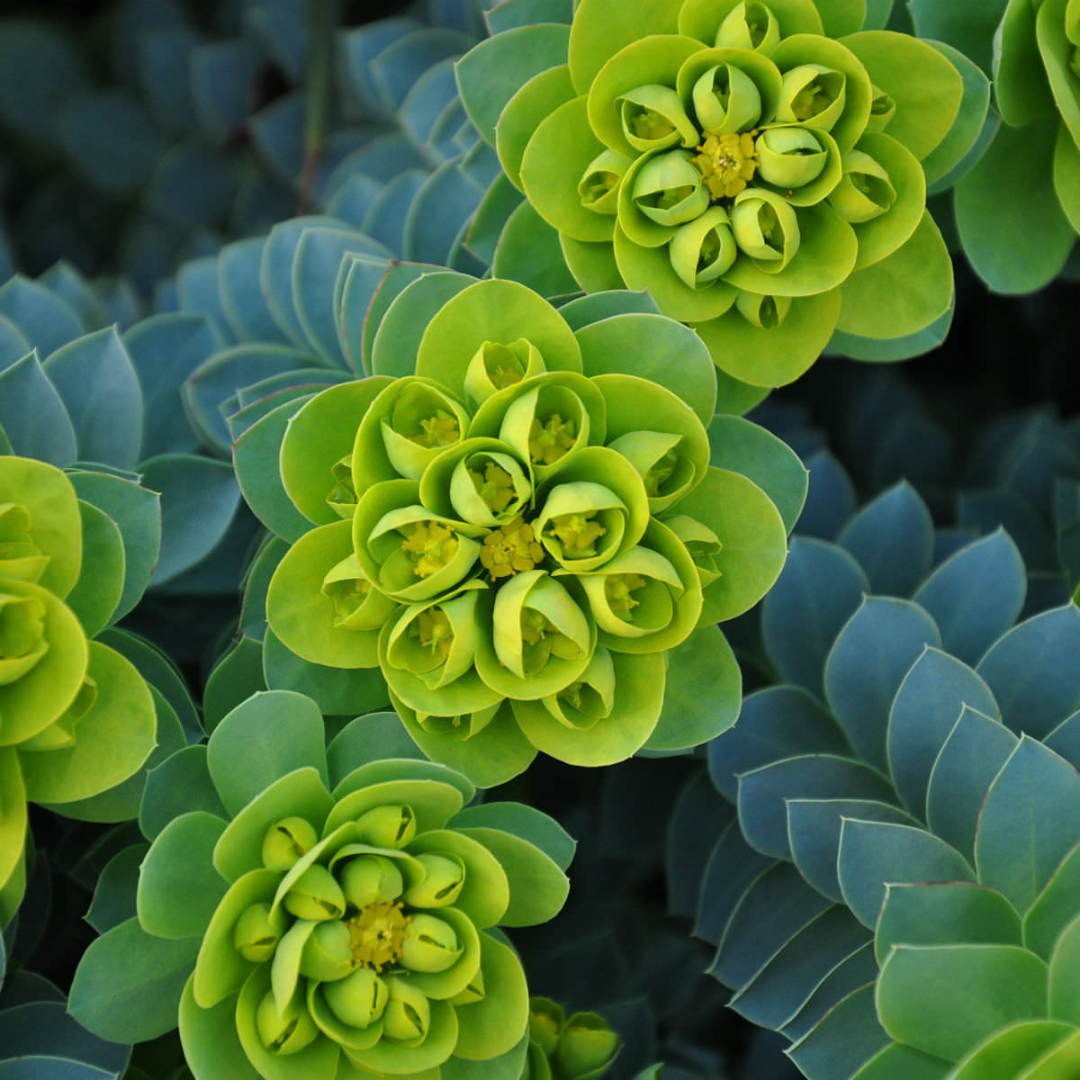
Euphorbia myrsinites
Add to Wishlist Full Sun
 Drought Tolerant
 Deer Resistant
- In stock, ready to ship
Euphorbia myrsinites: Blue-Grey Spirals Spilling Over Walls
Fleshy blue-grey leaves spiral down trailing stems, like a row of tails swishing over the edge of a rock wall. This spurge thrives on heat, drought and neglect. STUBBORN AS A MULE AND TWICE AS GOOD-LOOKING.
Plant Characteristics:
- Botanical Name: Euphorbia myrsinites
- Common Name: Donkey Tail Spurge, Myrtle Spurge
- Height: 15–20 cm (6–8 in)
- Spread: 45–60 cm (18–24 in)
- Flowers: Chartreuse to bright yellow bracts at the stem tips, sometimes flushed pink as they age
- Bloom Time: Spring (May to June)
- Foliage: Fleshy, blue-grey leaves spiralling around trailing stems
- Features: Rabbit resistant, very heat tolerant, semi-evergreen
Where to Plant: Grow it where it can sprawl and spill: over a retaining wall, along the edge of a raised bed, between rocks, or in a gravel garden. It self-seeds, so choose a contained, tended spot away from natural areas, and keep it clear of where small children play, since the milky sap can irritate skin and eyes.
Companion Plants: Sagina 'Aurea' fills the gaps with a 2 to 5 cm carpet and small white flowers from May to July. Gaura 'Monarch Pink' adds airy pink flowers at 45 to 60 cm from June to September, carrying colour on after the spurge's yellow flowers fade. Lavandula 'SuperBlue' brings blue spikes from June to August. All three like full sun and a dry, well-drained spot such as a rock garden.
Plant Care: Plant in full sun in sandy, gravelly or rocky soil with sharp drainage. Poor soil is fine and even preferred. Wet soil, especially in winter, causes rot. Water only until it's established. As the bracts fade, cut the flowered stems to the base. This keeps the plant tidy and stops most of the seeding. Pull any unwanted seedlings while they're small. Individual plants can be short-lived, but they're easy to replace from a seedling you choose to keep.
History: Euphorbia myrsinites is native to rocky, grassy places in southeastern Europe and Asia Minor, and its name refers to a resemblance to myrtle, which explains the common name myrtle spurge. Gardeners have long grown it in rock gardens and dry walls for its unusual, succulent-looking foliage.
Final Thoughts: Let it spill over a hot wall or a gravel bed and watch it sizzle. NO WATERING SCHEDULE, NO NONSENSE.



