



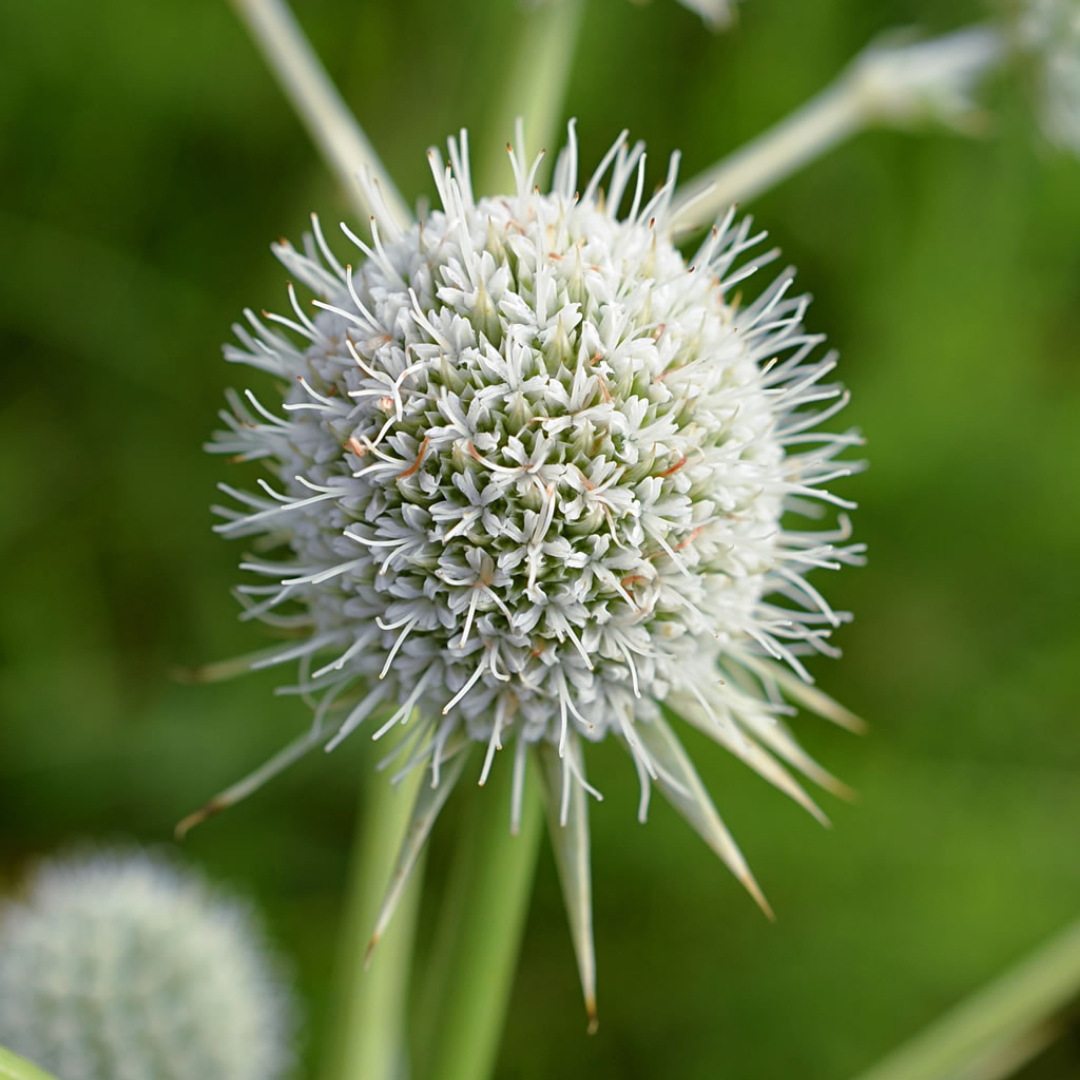
Eryngium yuccifolium
Add to Wishlist Full Sun
 Drought Tolerant
 Pollinator Friendly
 Low Maintenance
- In stock, ready to ship
Eryngium yuccifolium: Spiky Globes With Desert Attitude
With a name like Rattlesnake Master, you expect drama, and this plant delivers. Stiff, sword-shaped leaves, greenish-white spiky balls and a fan club of bees, wasps, flies and butterflies. THE GARDEN'S STRANGEST VIP LIST.
Plant Characteristics:
- Botanical Name: Eryngium yuccifolium
- Common Name: Rattlesnake Master
- Height: 90–150 cm (3–5 ft)
- Spread: 60–90 cm (2–3 ft)
- Flowers: Spherical, greenish-white heads about 2.5 cm (1 in) across, ringed with small whitish pointed bracts, held in branched clusters
- Bloom Time: Midsummer to early fall (July to September)
- Foliage: Long, stiff, sword-shaped blue-green leaves with bristly edges
Where to Plant: Rattlesnake master brings strong structure to prairie gardens, meadows and naturalistic borders. Use it toward the middle or back of a sunny bed, and leave the seed heads standing for structure through winter.
Companion Plants: Lavandula 'Hidcote Blue' sits at the front with purple spikes from June to August. Gaillardia 'Mesa Peach' adds peach blanket flowers at 36 to 41 cm from June to September. Panicum Prairie Winds® 'Cheyenne Sky' brings a 90 cm grass that flowers from August to October, a soft foil for the spiky white globes. Plant them together in full sun.
Plant Care: Plant in full sun in average, well-drained soil. It handles sandy, rocky and even clay soils as long as water doesn't sit around the crown. Rich soil or too much shade makes it flop, so skip the fertilizer. Tall stems sometimes lean; planting a few together lets them hold each other up. Water through the first season. After that, the deep taproot carries it through most droughts. That taproot also means it resents being moved, so plant it where you want it to stay. Leave the stems up over winter and cut them back in early spring. It self-seeds where it's happy, so remove some seed heads in fall if you want to limit volunteers.
History: Eryngium yuccifolium is native to the tallgrass prairies, open woods and savannas of the central and eastern United States, and its species name means "yucca-leaved" for its long, stiff foliage. The common name traces to an old belief that the root could treat rattlesnake bites, a claim that doesn't hold up.
Final Thoughts: Put it in the sunniest spot you've got and let visitors argue about what it is. IT LIKES BEING A MYSTERY.



