



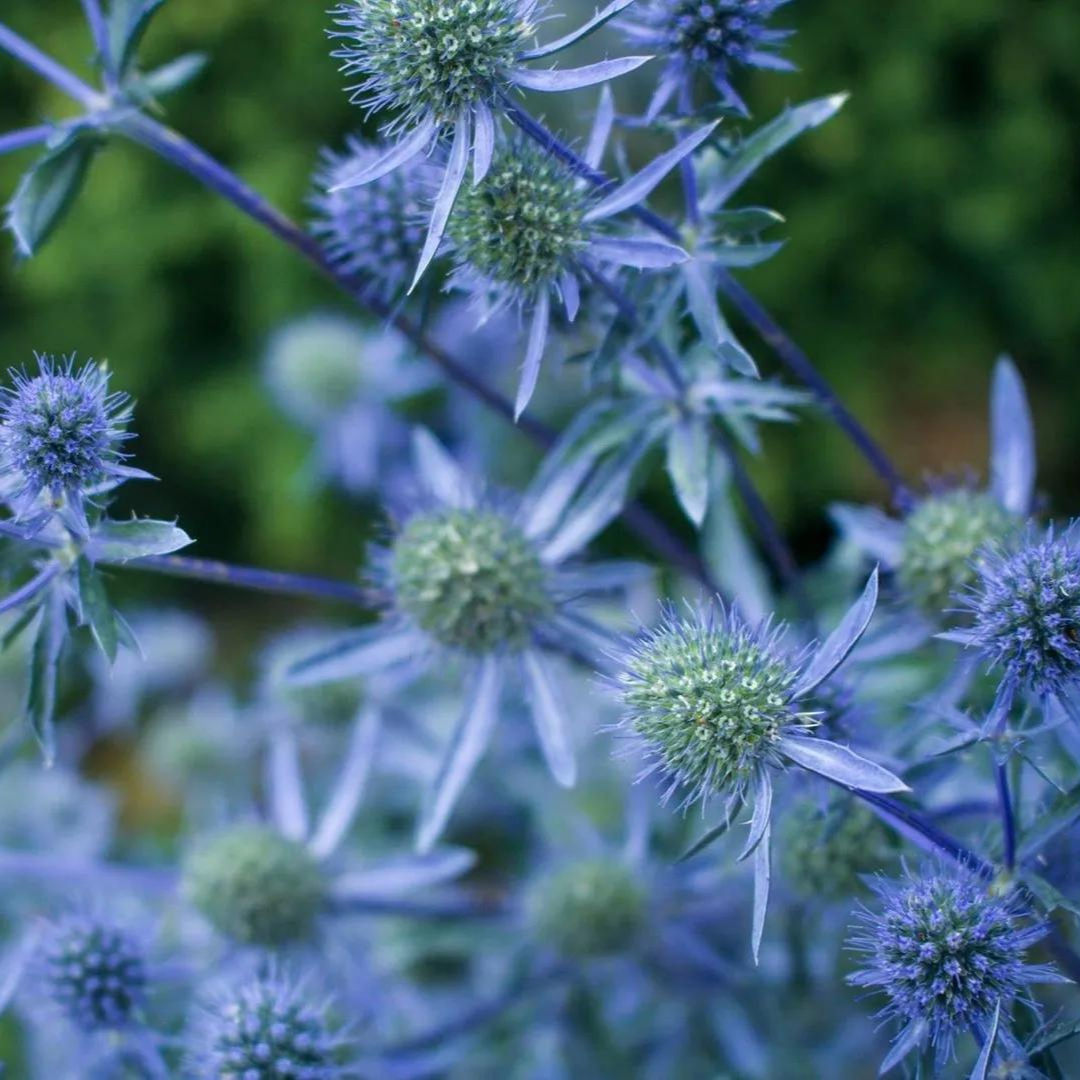
Eryngium 'Blue Cap'
Add to Wishlist Full Sun
 Drought Tolerant
 Deer Resistant
 Pollinator Friendly
- In stock, ready to ship
Eryngium 'Blue Cap': Steely Blue Cones, Salt Spray Welcome
A swarm of small steel-blue heads in spiky collars on blue-tinted stems, like tiny punk rockers who crashed a garden party. 'Blue Cap' takes salty soil without flinching. MOSH PIT ENERGY, PERFECT MANNERS.
Plant Characteristics:
- Botanical Name: Eryngium planum 'Blue Cap' (also sold as 'Blaukappe')
- Common Name: Sea Holly
- Height: 60–75 cm (2–2.5 ft)
- Spread: 45–60 cm (1.5–2 ft)
- Flowers: Small, steel-blue, cone-shaped heads surrounded by spiny bracts, on branching blue-tinted stems
- Bloom Time: Early to late summer (June to August)
- Foliage: Deep green, leathery basal leaves
- Features: Rabbit resistant, tolerates salty soil
Where to Plant: Use it in the middle of a sunny border, a gravel garden or a dry, meadow-style planting. Because it shrugs off salt, it suits hot strips along driveways and sidewalks where winter plow spray lands, and a few extra plants give you stems for drying.
Companion Plants: Alcea 'Polarstar' stands at the back at 150 to 180 cm with white hollyhocks from July to September. Achillea 'Little Moonshine' adds flat yellow flower heads at 30 to 35 cm from June to September, a classic partner for blue. At the edge, Aster 'Wood's Pink' carries pink flowers from August to October. Give the group full sun for best results.
Plant Care: Plant in full sun in average, sandy or gravelly soil that drains well. Lean soil is better than rich soil here, since too much fertility and moisture make the stems flop. Soggy clay in winter is the one thing it truly dislikes. Water through the first season while the roots establish, then water only in long droughts. Sea holly grows a deep taproot, so pick its spot carefully and leave it there. Leave the stems standing for winter interest and cut them back in early spring. Deadheading reduces self-seeding if you'd rather not have volunteers.
History: Eryngium planum is native to the dry grasslands and sandy ground of central and southeastern Europe and western Asia. Its original German name is 'Blaukappe', which simply means blue cap, and it is sold under both names today.
Final Thoughts: Plant it by the road where the winter salt spray lands. IT TAKES THE HIT AND KEEPS ROCKING.



