



Epimedium × rubrum
Add to Wishlist Partial Sun
 Full Shade
 Drought Tolerant
 Deer Resistant
- In stock, ready to ship
Epimedium × rubrum: Red-Edged Leaves, Three Seasons Strong
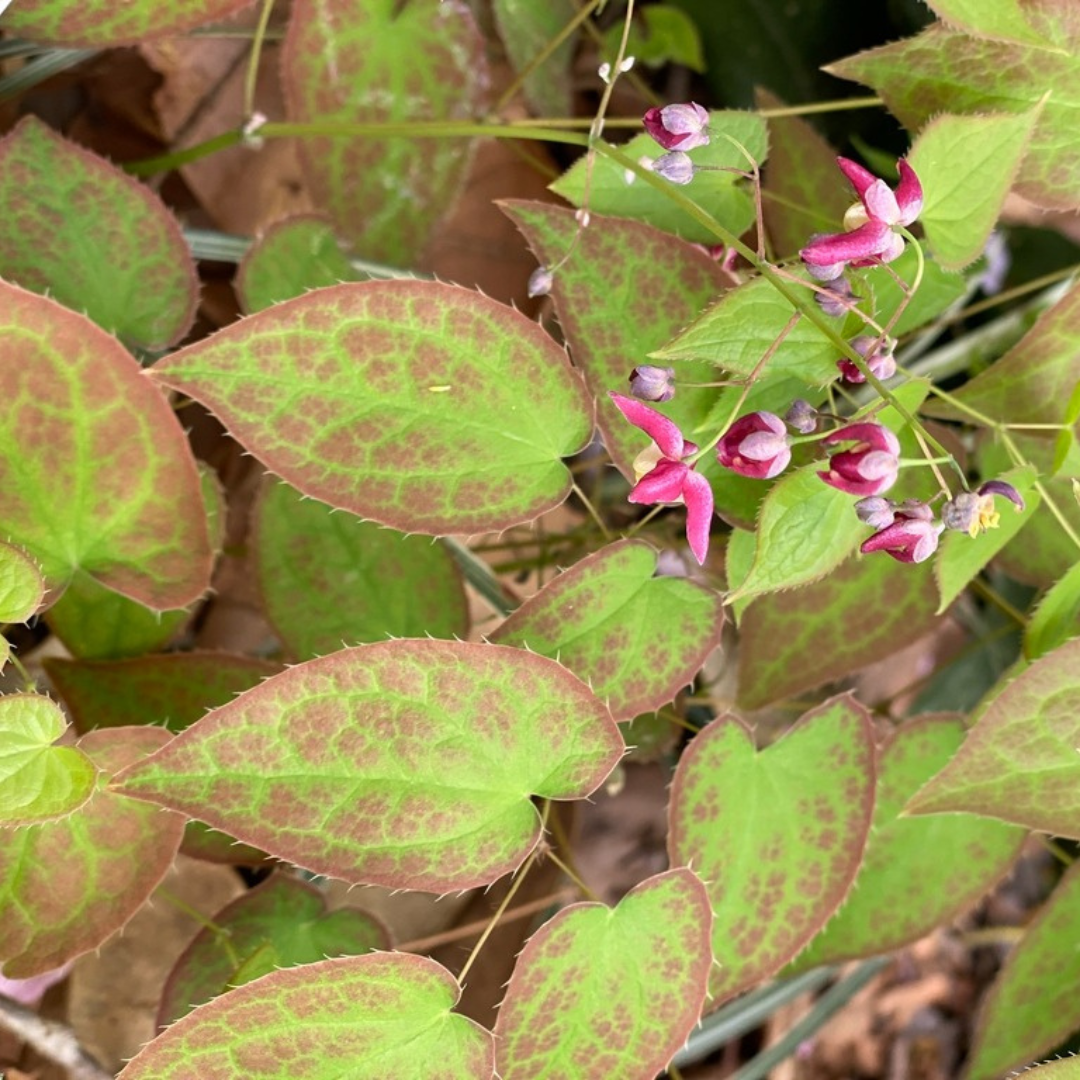
Crimson flowers with creamy spurs and leaves edged in red, like this barrenwort dressed up for spring and decided to stay that way. It creeps across dry shade one heart-shaped leaf at a time. POLISHED, PATIENT AND PRETTY.
Plant Characteristics:
- Botanical Name: Epimedium × rubrum
- Common Name: Red Barrenwort, Bishop's Hat
- Height: 20–30 cm (8–12 in)
- Spread: 30–45 cm (12–18 in), slowly spreading
- Flowers: Small crimson-red sepals with creamy-yellow spurs, about 2 cm across, in loose sprays
- Bloom Time: Spring (April to May)
- Foliage: Deciduous to semi-evergreen, heart-shaped leaflets flushed and edged red in spring, green in summer, bronze-red in fall
- Features: Slow-spreading groundcover
Where to Plant: Use it as a groundcover under trees, along a woodland path, or in a shady front border. The leaves give three seasons of colour, so it earns its place long after the flowers fade.
Companion Plants: Mertensia virginica blooms blue in April and May, right beside the red barrenwort flowers. Geranium macrorrhizum 'Ingwersen's Variety' spreads at 30 to 45 cm with pink flowers from May to July. In late summer, Tricyrtis hirta adds white flowers in August and September. These three thrive in shade or part sun.
Plant Care: Plant in part shade to full shade in humus-rich, well-drained soil. Work in compost at planting and water through the first year. Once established, it handles dry shade and root competition well. It's slow to settle, so give it two or three years to reach full size. In late winter or early spring, cut back the old leaves before the flower stems emerge, so the blooms aren't hidden. Divide in late summer or early fall if you want more plants.
History: Epimedium × rubrum is usually described as a garden hybrid between the European Epimedium alpinum and the Japanese Epimedium grandiflorum, though some specialists think another species is in the mix. It is an old, well-loved garden plant, and the name rubrum is Latin for red.
Final Thoughts: Plant a few under shrubs and let them close the gaps at their own pace. SLOW AND STEADY WINS THE SHADE.



