



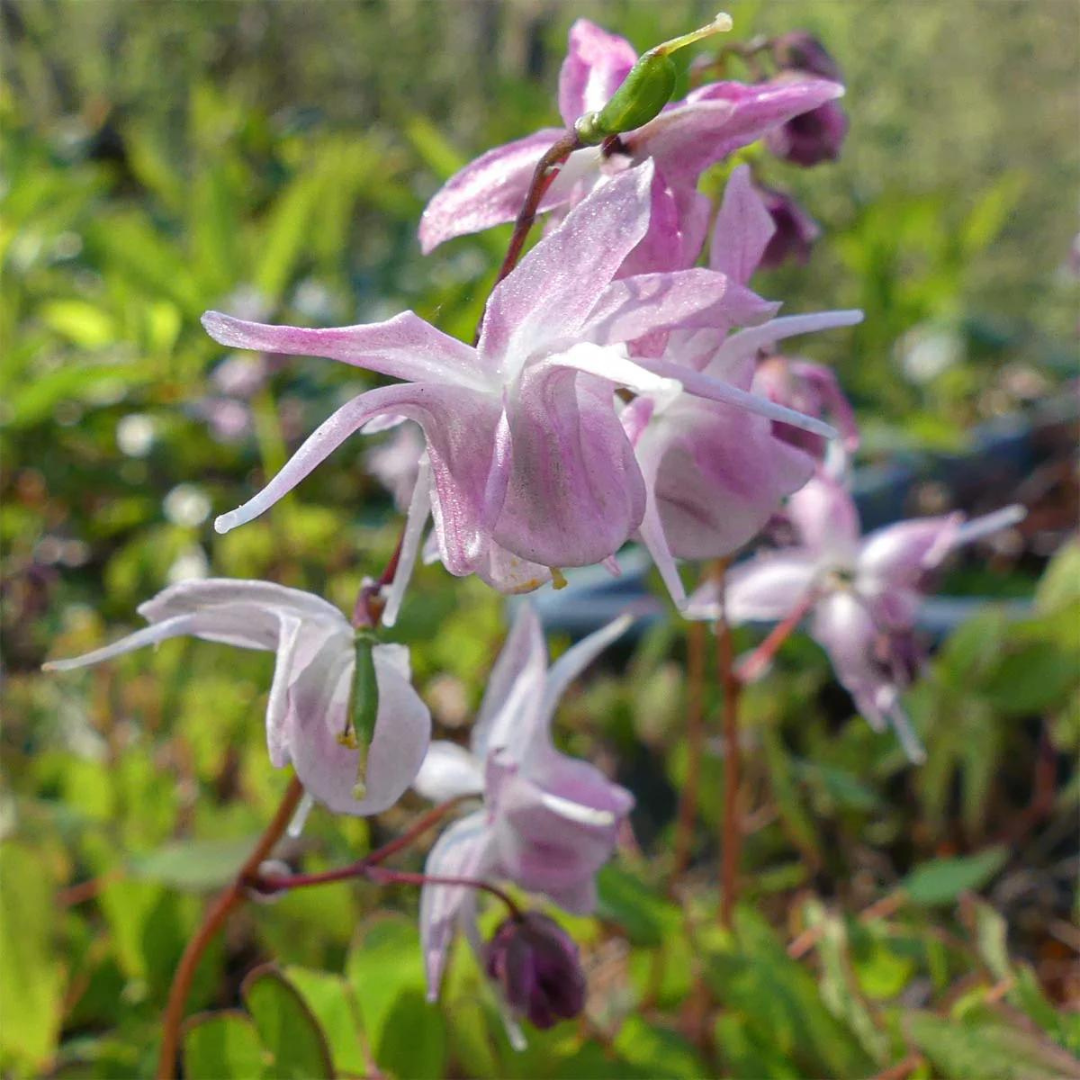
Epimedium 'Roseum'
Add to Wishlist Partial Sun
 Full Shade
 Drought Tolerant
 Deer Resistant
 Pollinator Friendly
- In stock, ready to ship
Epimedium 'Roseum': Rosy Bishop's Hats in Tight Shady Spots
Dusky rose flowers nod in loose sprays, like a crowd of tiny ballroom dancers bowing after every song. 'Roseum' keeps the shade garden blushing for a good long while. ELEGANT, BUT NOT DELICATE.
Plant Characteristics:
- Botanical Name: Epimedium × youngianum 'Roseum'
- Common Name: Barrenwort, Bishop's Hat
- Height: 20–30 cm (8–12 in)
- Spread: 30–45 cm (12–18 in)
- Flowers: Small, pale lilac-pink to dusky rose, bell-like and nodding, in loose sprays over a long season
- Bloom Time: Spring (April to May)
- Foliage: Semi-evergreen to deciduous, heart-shaped leaves with red markings in cool weather
- Features: Tolerates dry shade once established, early flowers
Where to Plant: Plant it at the front of a shady bed, along a path, or in a small group under trees. It is compact enough for small city gardens and narrow side yards where the sun barely visits.
Companion Plants: Brunnera macrophylla sends up blue flowers in April and May, right alongside the pink barrenwort. Astilbe 'Amethyst' rises to 90 to 100 cm with purple plumes in June and July. Late in the season, Eurybia divaricata 'Eastern Star' adds white asters from August to October. This trio keeps a shady bed in flower from spring to fall.
Plant Care: Plant in part shade to full shade in humus-rich, well-drained soil. Add compost at planting and keep it watered through the first season. After that, it copes with typical summer dryness in shade. Like most epimediums, it's slow to establish and fills out over two or three years. Cut the old leaves back in late winter or very early spring, before the flower stems appear, so the blooms are on full display. Divide in late summer or early fall.
History: Epimedium × youngianum is a hybrid of two Japanese species, and 'Roseum' is one of its most common forms in North American gardens, as well as the very first epimedium grown by American expert Darrell Probst. The common name bishop's hat comes from the shape of the flowers, which some see as a bishop's mitre.
Final Thoughts: Plant it under trees where the deer usually help themselves. THEY WON'T, AND THE DANCE CARD STAYS FULL.



