



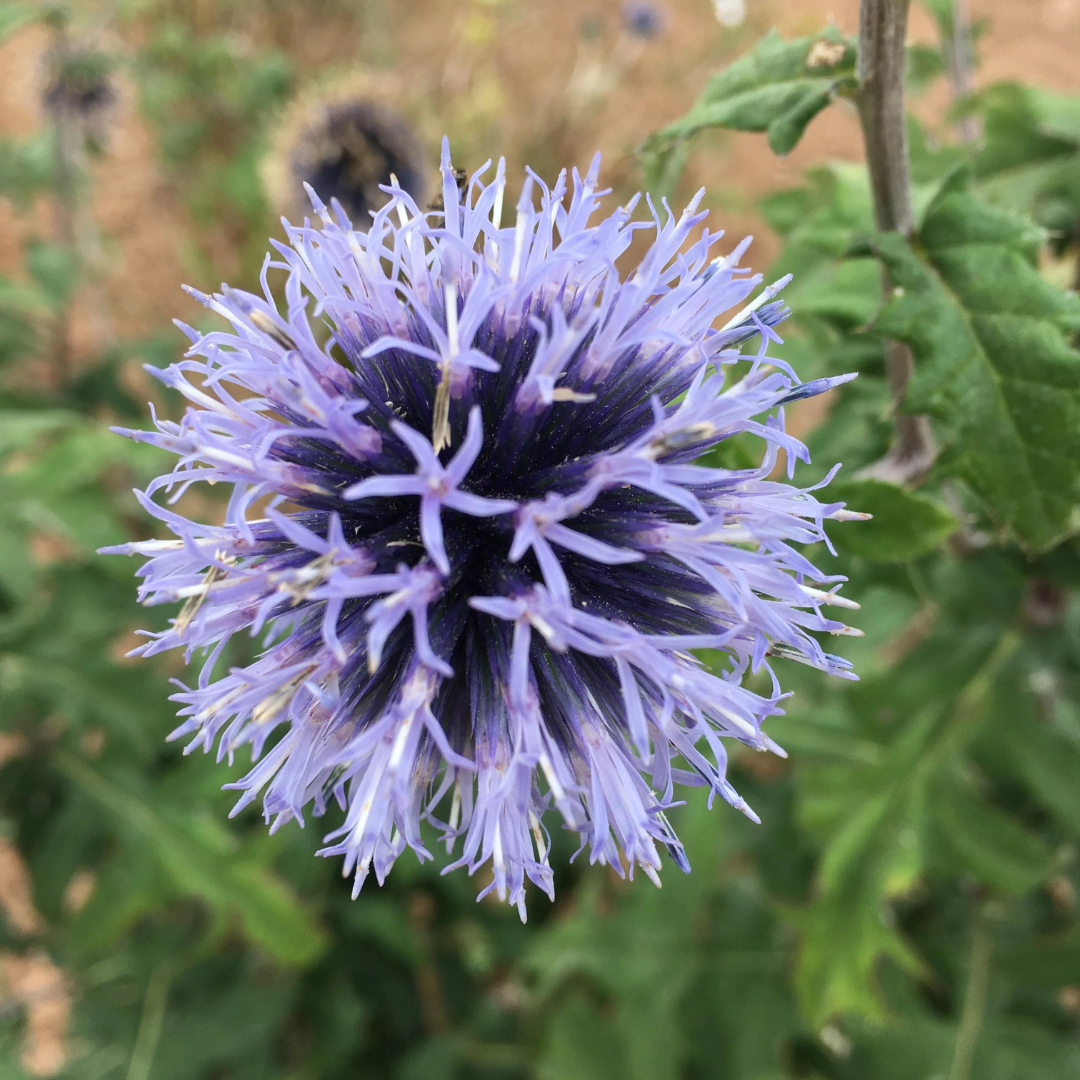
Echinops ritro
Add to Wishlist Full Sun
 Partial Sun
 Drought Tolerant
 Deer Resistant
 Pollinator Friendly
 Low Maintenance
- In stock, ready to ship
Echinops ritro: Spiky Blue Planets Floating on Silver Stems
Spiky steel-blue balls bobbing on tall stems, like a fleet of tiny planets that declared war on boring gardens. This globe thistle is a pollinator magnet with a strict no-deer policy. SPACE AGE, ZERO EFFORT.
Plant Characteristics:
- Botanical Name: Echinops ritro
- Common Name: Globe Thistle, Small Globe Thistle
- Height: 90–120 cm (3–4 ft)
- Spread: 45–75 cm (1.5–2.5 ft)
- Flowers: Round, spiky, steel-blue heads about 2.5–5 cm (1–2 in) across
- Bloom Time: Midsummer to early fall (July to September)
- Foliage: Spiny, deeply lobed dark green leaves with whitish undersides
- Features: Rabbit resistant
Where to Plant: Put it in the middle or back of a sunny border, where the blue globes can float above shorter plants. It is a natural for pollinator gardens, gravel gardens and dry, lean beds near a driveway, and it earns a spot in a cut-flower bed since the heads dry beautifully if picked before they fully open.
Companion Plants: Lupinus 'Gallery Pink' starts the season with pink spikes in June and July. Achillea 'Peter Cottontail' adds clusters of white button flowers at 45 to 60 cm from June to September. At the front, Aster 'Wood's Pink' carries pink flowers from August to October, after the blue globes fade. Plant them in sun or part sun.
Plant Care: Plant it in full sun in poor to average, well-drained soil. Rich, heavy or wet soil makes it floppy and short-lived, so skip the compost. Water through the first season. After that, it handles dry spells on its own. Globe thistle grows a deep taproot, so choose its spot carefully. It doesn't like being moved or divided. Wear gloves when you work around it, because the leaves are prickly. Deadhead after the first flush if you want a few more blooms and fewer seedlings. It can self-seed in loose soil. Cut stems back in late fall, or leave them standing for winter structure.
History: Echinops ritro is native to central and eastern Europe and across into central Asia. The genus name comes from the Greek words for hedgehog and appearance, a fair description of those spiky round flower heads.
Final Thoughts: Plant it toward the back and let the bees orbit. HOUSTON, WE HAVE A SHOWSTOPPER.



