



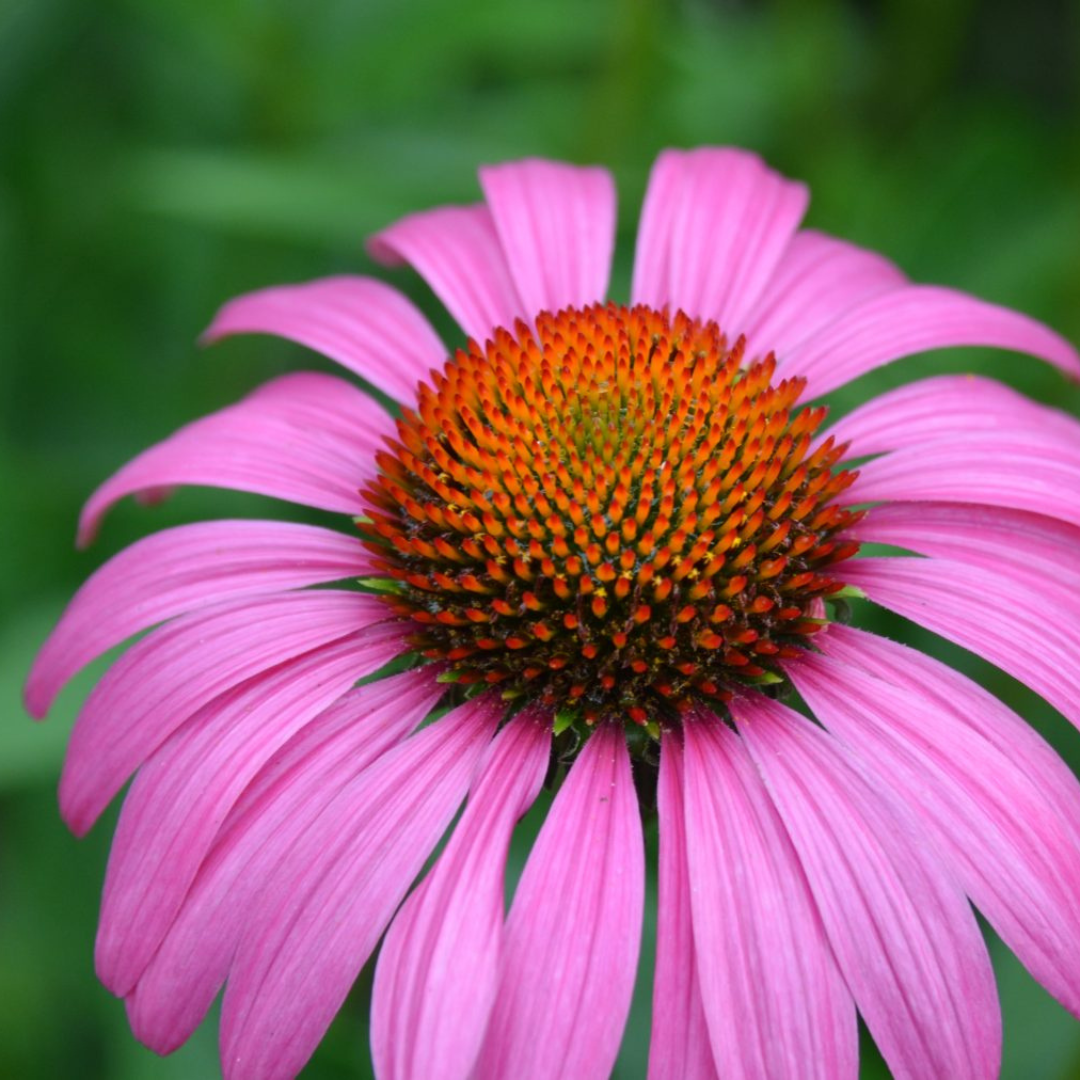
Echinacea 'Ruby Star'
Add to Wishlist Full Sun
 Partial Sun
 Drought Tolerant
 Deer Resistant
 Pollinator Friendly
- In stock, ready to ship
Echinacea 'Ruby Star': Ruby Red and Ramrod Straight
'Ruby Star' holds its deep carmine petals out flat like it's posing for a red carpet only it can see. Tall, sturdy and totally confident in its angles. THE PAPARAZZI ARE BUTTERFLIES.
Plant Characteristics:
- Botanical Name: Echinacea purpurea 'Rubinstern'
- Common Name: Purple Coneflower
- Height: 90–100 cm (35–39 in)
- Spread: 45–60 cm (18–24 in)
- Flowers: Large, deep carmine-pink petals held flat around a brown cone
- Bloom Time: Midsummer to early fall (July to September)
- Foliage: Deep green, coarse leaves on an upright clump
- Features: Good cut flower, seed heads for winter interest and birds
Where to Plant: At close to a metre tall, it belongs in the middle or back of a sunny border, in a meadow planting or in a pollinator garden. It handles cold winters easily and tolerates clay, as long as the drainage is decent.
Companion Plants: Paeonia 'Cora Louise' brings white peony flowers in June and July at 60 to 70 cm. Aruncus aethusifolius adds cream plumes and ferny leaves at the front in June and July. Kalimeris 'Blue Star' keeps small blue daisies coming from June to September. Plant them with the coneflowers in sun or part sun for a long, easy display.
Plant Care: Plant in full sun to part sun in average, well-drained soil. Rich soil isn't needed and can make the stems flop. Water regularly the first season, then only during long dry spells. Deadhead through summer for more flowers, but leave the last round standing. Goldfinches love the seeds, and the cones look good in snow. Cut back in early spring. Divide in spring every few years if the clump gets crowded, and move any self-sown seedlings then too.
History: 'Ruby Star', known in German as 'Rubinstern', was produced by Jelitto Seeds of Germany. Its parent, Echinacea purpurea, is a wildflower of open woods and prairies in central and eastern North America.
Final Thoughts: Leave the seed heads standing in winter and the birds will keep the show going. A STAR THAT NEVER CANCELS THE TOUR.



