



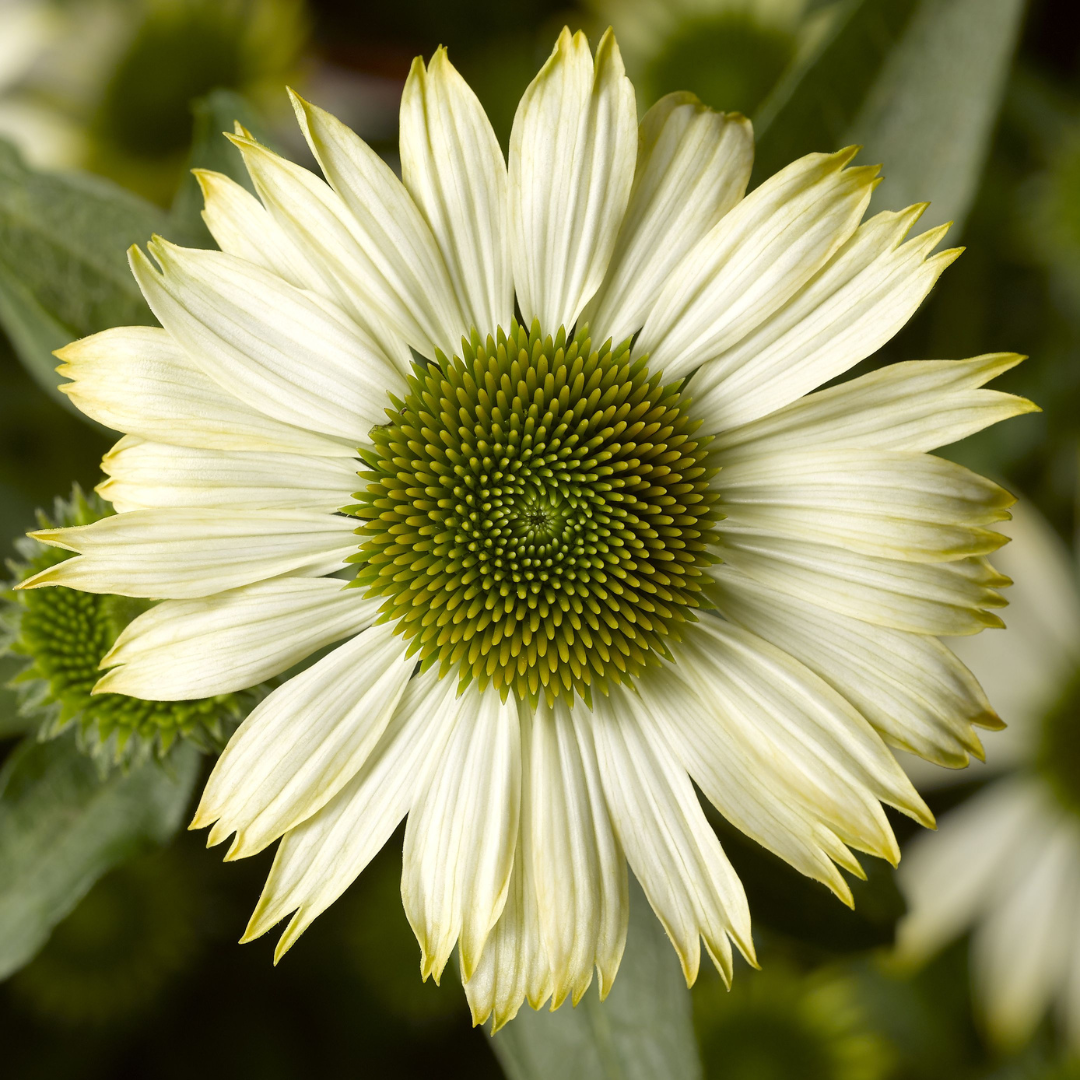
Echinacea Prairie Splendor™ Compact White
Add to Wishlist Full Sun
 Drought Tolerant
 Deer Resistant
 Pollinator Friendly
- In stock, ready to ship
Echinacea Prairie Splendor™ Compact White: Balcony-Sized Blooms Ahead of Schedule
This compact white coneflower got up early, ironed its petals and was blooming before you found your keys. Crisp white around a golden-orange cone, on a plant small enough for the patio. PUNCTUAL, POLISHED, MILDLY SMUG.
Plant Characteristics:
- Botanical Name: Echinacea purpurea
- Common Name: Coneflower
- Series: Prairie Splendor™ Compact, from Syngenta Flowers
- Height: 35–40 cm (14–16 in)
- Spread: 15–20 cm (6–8 in)
- Flowers: White petals around a golden-orange cone, on a well-branched plant
- Bloom Time: Early summer to early fall (June to September)
- Foliage: Dark green, coarse leaves in a compact, upright clump
- Features: Early and first-year flowering
Where to Plant: Use it at the front of a sunny border, in containers, along a walkway or in a small courtyard garden, where white ties mixed colours together. It glows in the evening, which makes it a nice choice near a deck or patio.
Companion Plants: Gaillardia 'Arizona Sun' stays low at 20 to 25 cm with bicolour flowers from June to September. Aster 'Pink Crush' adds pink asters in September and October, keeping colour going after summer. Verbena stricta sends up lavender spikes at 60 to 100 cm from June to September. White, pink and lavender make a soft, sunny planting.
Plant Care: Plant in full sun in average, well-drained soil. Avoid soggy winter spots and lighten heavy clay before planting. Water regularly the first season, then only during long dry spells. Deadhead through summer to keep flowers coming. Leave the last flower heads standing for winter interest and the birds, and cut back in early spring. Divide in spring every few years if the clump gets crowded.
History: Prairie Splendor™ Compact is a seed-grown series from Syngenta Flowers, bred as a shorter, well-branched version of the original Prairie Splendor™ coneflower that flowers in its first year without a cold period. The genus name comes from the Greek echinos, meaning hedgehog.
Final Thoughts: Pair it with its rosy sibling and let them argue over who bloomed first. SPOILER: IT WAS A TIE.



