



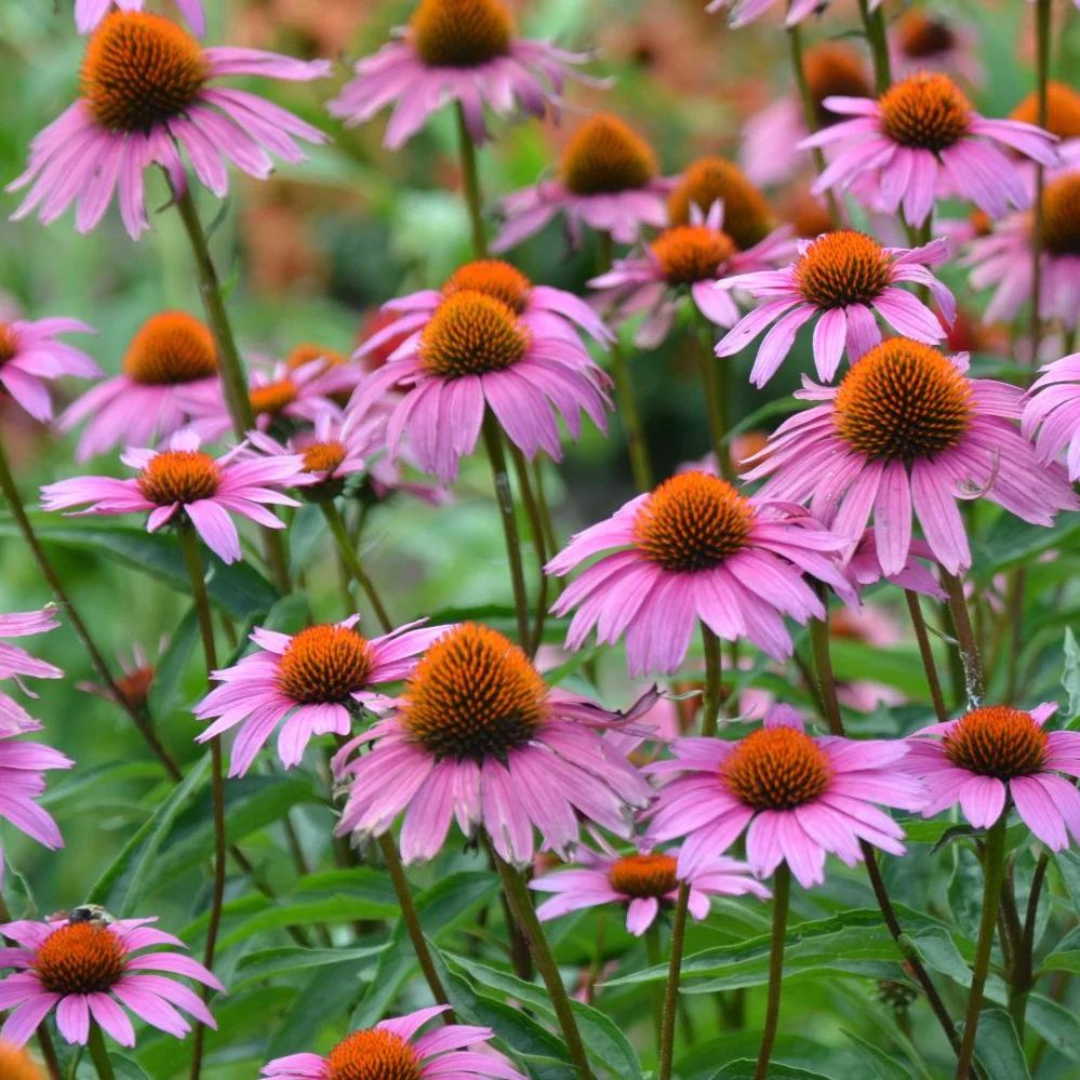
Echinacea 'Magnus'
Add to Wishlist Full Sun
 Partial Sun
 Drought Tolerant
 Deer Resistant
 Pollinator Friendly
- In stock, ready to ship
Echinacea 'Magnus': The Award Winner With Level Petals
Most coneflowers let their petals droop like they're tired of standing at a cocktail party. 'Magnus' holds them flat and wide, rose-purple and proud, like a plant that never once slouched in a family photo. CHIN UP, PETALS OUT.
Plant Characteristics:
- Botanical Name: Echinacea purpurea 'Magnus'
- Common Name: Coneflower
- Height: 90–100 cm (3–3.3 ft)
- Spread: 45–60 cm (18–24 in)
- Flowers: Large rose-purple daisies with flat, horizontal petals around an orange-brown cone
- Bloom Time: Midsummer to early fall (July to September)
- Foliage: Dark green, coarse leaves in an upright clump
- Features: Seed heads feed finches, good cut flower
Where to Plant: Put it in the middle of a sunny border, a pollinator garden or a prairie-style planting, where it is tall enough to hold its own, and grow extra for cutting. It copes with cold Ottawa winters and hot, dry August spells, and it doesn't mind average clay as long as winter water drains away.
Companion Plants: Baptisia Decadence® Deluxe 'Pink Truffles' grows 120 to 140 cm with pink flowers in June and July, a sturdy backdrop for the big purple cones. Calamintha 'White Cloud' forms an airy mound of white from June to September at the front. Late in the season, Chelone 'Black Ace' adds white flowers at 120 to 150 cm from August to October. All three are at home in sun or part sun.
Plant Care: Plant in full sun, or part sun with at least six hours of light, in average, well-drained soil. Rich soil is not needed and can make stems flop. Water regularly the first season, then only in long droughts. Deadhead through summer for more flowers. Leave the last heads in fall, because goldfinches love the seeds and the cones look good in snow. Cut back in early spring. Divide every four years or so in spring if the clump gets crowded or the centre thins out. It may also self-seed lightly.
History: Swedish nurseryman Magnus Nilsson spent more than ten years selecting this coneflower for its flat, horizontal petals, and Klaus Jelitto of Jelitto Perennial Seeds in Germany named it after him and introduced it in 1985. It was the Perennial Plant Association's Perennial Plant of the Year® for 1998 and holds the Royal Horticultural Society's Award of Garden Merit.
Final Thoughts: Tough, tall and loved by everything with wings. A CLASSIC FOR A REASON, AND THE REASON IS THAT IT WORKS.



