



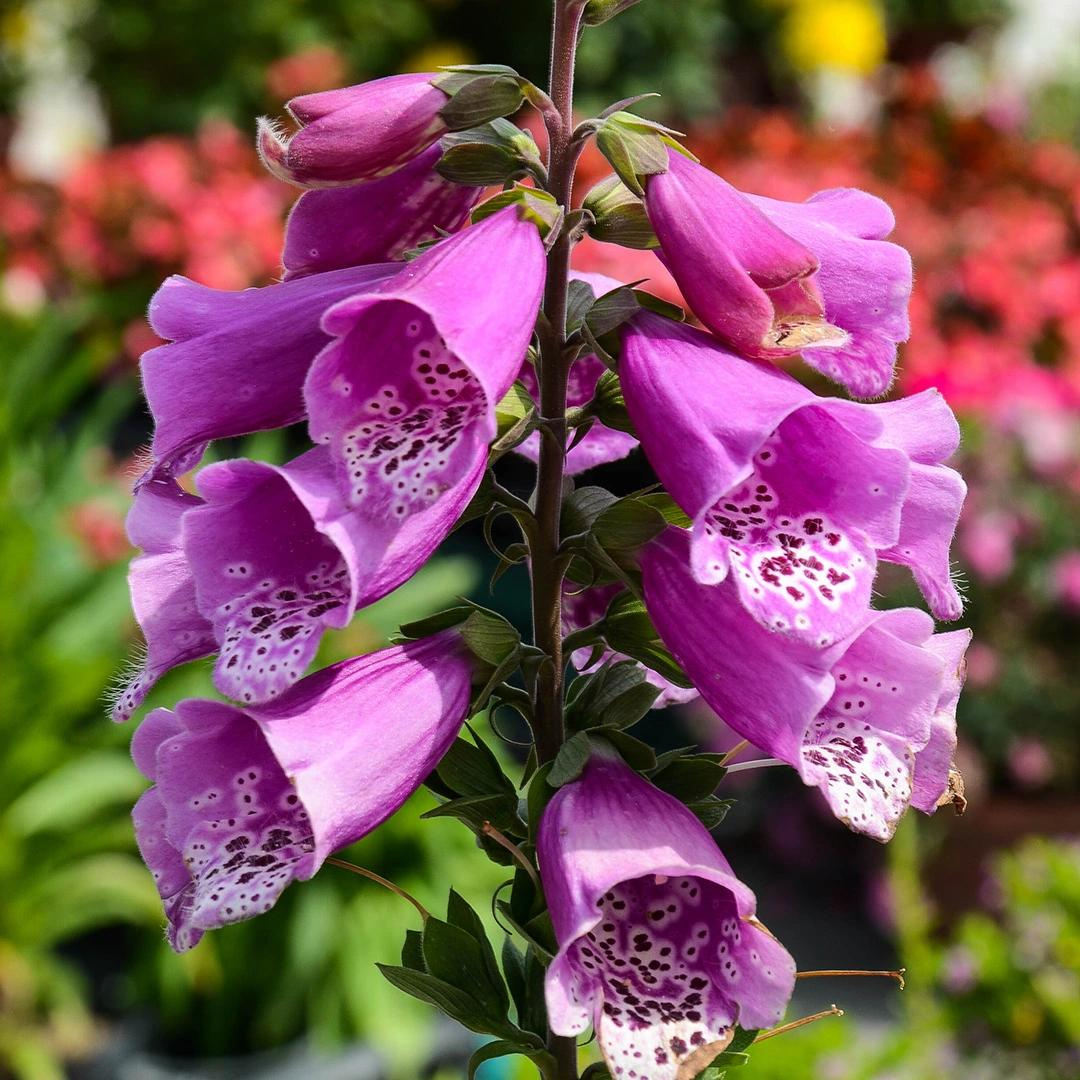
Digitalis 'Dalmatian Purple'
Add to Wishlist Full Sun
 Partial Sun
 Deer Resistant
 Pollinator Friendly
- In stock, ready to ship
Digitalis 'Dalmatian Purple': Polka-Dotted Purple in a Hurry
'Dalmatian Purple' has spots, swagger and absolutely no intention of waiting until next year to bloom. Rich lilac-purple bells with maroon-speckled throats line up on upright spikes. THE BUMBLEBEES CRAWL RIGHT IN AND DON'T COME OUT.
Plant Characteristics:
- Botanical Name: Digitalis purpurea 'Dalmatian Purple'
- Common Name: Common Foxglove
- Series: Dalmatian series
- Height: 40–60 cm (16–24 in)
- Spread: 30–36 cm (12–14 in)
- Flowers: Rich lilac-purple bells with maroon-spotted throats, held outward on upright spikes
- Bloom Time: Early to midsummer (June to July)
- Foliage: Green, lance-shaped leaves in a low rosette
- Features: First-year flowering, good cut flower
Where to Plant: Tuck it into the middle of a border, a cottage garden or a big patio pot for a quick shot of vertical colour. Group three or more for the best effect, and cut a few spikes for the house.
Companion Plants: Echinacea 'Magnus Superior' follows on with pink coneflowers at 90 to 100 cm from July to September. Elymus canadensis adds the soft, nodding texture of a native grass behind the purple spires. Along the edge, Sedum 'Voodoo' stays low at 10 to 15 cm with rose flowers from June to August. Spires, daisies and grass give good contrast in full sun or partial sun.
Plant Care: Plant in full sun to part sun in moist, well-drained soil with compost added. Shade in the hottest part of the afternoon helps. Avoid soggy clay over winter. Water during dry spells. Cut spent spikes back to the leaves to tidy the plant and encourage side shoots. It's a biennial or short-lived perennial. Let some flowers go to seed in its second year so it can self-sow, then move small seedlings in spring. All parts are toxic if eaten, so wear gloves and keep it away from pets that chew.
History: Common foxglove grows wild across western and southern Europe, and its species name purpurea simply means purple. It is the original source of the heart medicine digitalis, and the Dalmatian series was bred to flower in its first year from seed.
Final Thoughts: Plant it in a cottage border and let the deer go sulk somewhere else. MORE SPOTS THAN A FIREHOUSE.



