



Digitalis grandiflora
Add to Wishlist Full Sun
 Partial Sun
 Deer Resistant
 Pollinator Friendly
- In stock, ready to ship
Digitalis grandiflora: Butter Yellow Bells Built to Last
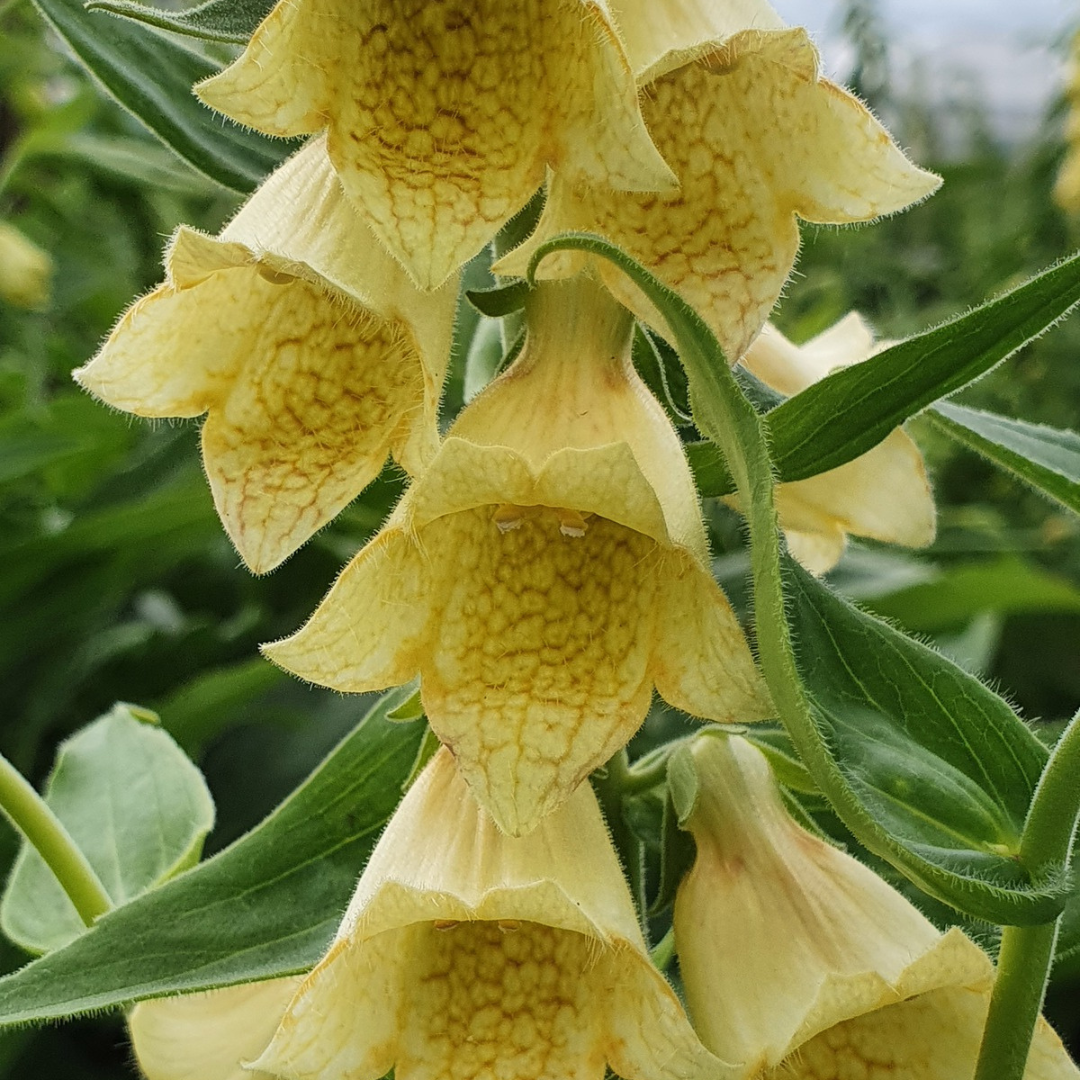
Pale yellow bells with brown netting inside, like tiny lanterns somebody wired in a hurry. Unlike its flashier cousins, this foxglove actually sticks around year after year. COMMITMENT? IN THIS ECONOMY?
Plant Characteristics:
- Botanical Name: Digitalis grandiflora
- Common Name: Yellow Foxglove
- Height: 60–90 cm (2–3 ft)
- Spread: 30–45 cm (12–18 in)
- Flowers: Pale yellow bells about 4–5 cm (1.5–2 in) long, marked with brown netting inside, along upright spikes
- Bloom Time: Early to late summer (June to August)
- Foliage: Deep green, lance-shaped leaves in a low clump
- Features: RHS Award of Garden Merit, all parts toxic if eaten
Where to Plant: Its soft yellow blends instead of shouting, so use it along woodland edges, in part-shade borders and in cottage plantings. It is one of the hardier foxgloves and a good bet for colder gardens, but keep it away from where pets graze, since the plant is poisonous.
Companion Plants: Iris 'Black Joker' adds deep purple flowers in May and June, a moody contrast before the yellow foxgloves open. Amsonia 'Blue Ice' keeps low at 30 to 40 cm with blue stars in May and June. For the back of the bed, Aconitum carmichaelii 'Arendsii' rises to 120 to 150 cm with blue hoods from August to October. Yellow and blue look fresh together in sun or part sun.
Plant Care: Plant in humus-rich soil that holds some moisture but drains in winter. It handles clay or loam as long as water doesn't sit around the crown. Part shade is ideal, especially with hot afternoon sun; full sun is fine if the soil stays evenly moist. Water during long dry spells. Cut faded flower stalks back after the first bloom to encourage more flowers. Leave a stalk or two to ripen if you'd like the plant to seed around a little, which helps keep a planting going for years. Tidy the old leaves in spring. Wear gloves when handling it.
History: This foxglove is native from Europe east to western Siberia and western Asia, where it grows in mountain woodlands, clearings and stony slopes, and grandiflora simply means large-flowered. It holds the Royal Horticultural Society's Award of Garden Merit.
Final Thoughts: Tuck it into a lightly shaded border and let the bees disappear into the lanterns. LIGHTS ON, BEES IN.



