



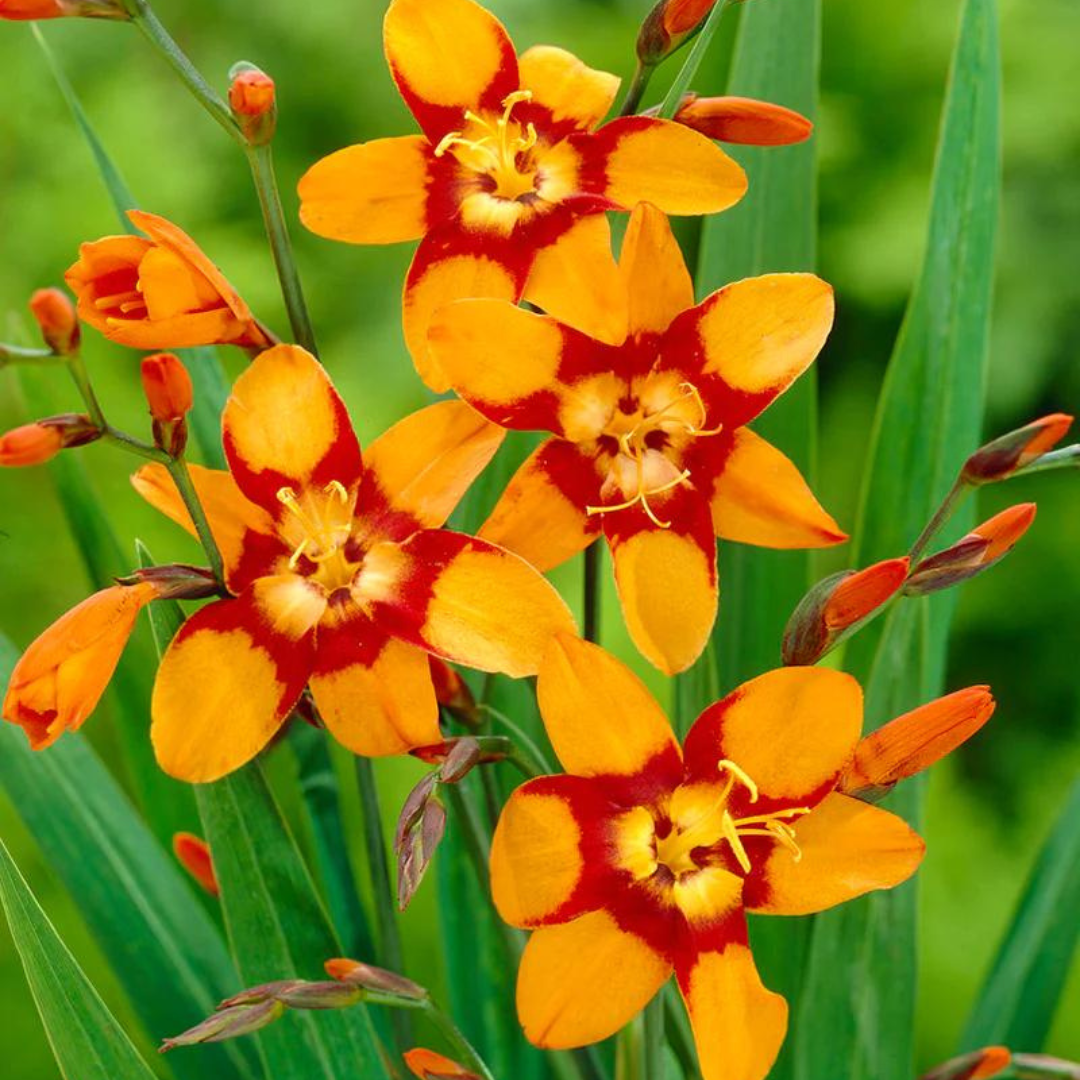
Crocosmia 'Emily McKenzie'
Add to Wishlist Full Sun
 Partial Sun
 Deer Resistant
 Pollinator Friendly
- In stock, ready to ship
Crocosmia 'Emily McKenzie': Orange Blooms With a Mahogany Wink
Big, deep orange trumpets with a dark mahogany ring in the throat, nodding on arching stems like they're whispering secrets to the hummingbirds. This crocosmia is all warm tones and sly glances. GOSSIP, BUT GORGEOUS.
Plant Characteristics:
- Botanical Name: Crocosmia × crocosmiiflora 'Emily McKenzie'
- Common Name: Montbretia
- Height: 60–85 cm (2–2.8 ft)
- Spread: 30–45 cm (1–1.5 ft)
- Flowers: Large, slightly nodding, deep orange tubular flowers with a dark mahogany-red ring at the centre, on gracefully arching stems
- Bloom Time: Midsummer to early fall (July to September)
- Foliage: Upright, sword-shaped, mid-green leaves in fans
- Features: Good cut flower
Where to Plant: Plant it in groups in the middle of a sunny border, where the arching stems can lean out over shorter plants. It brings a late-summer lift when much of the border is fading, and the stems are excellent in a cutting bed.
Companion Plants: Echinacea angustifolia brings pink coneflowers in June and July, just before the orange flowers open. Aruncus aethusifolius adds fine, ferny leaves and cream plumes at the front in June and July. Behind, Aconitum carmichaelii 'Arendsii' brings deep blue hoods from August to October, a strong contrast to orange. All three grow well in sun to part sun.
Plant Care: Plant in full sun to part sun in moist but well-drained soil enriched with compost. Crocosmia grows from corms that rot in soggy winter soil, so improve heavy clay with organic matter or plant on a slight rise. Water during dry spells in summer. Our winters are at the edge of what it can take. Choose a sheltered spot, plant the corms about 10–15 cm (4–6 in) deep, and leave the foliage standing until spring. Add a thick layer of leaf or straw mulch after the ground freezes. In the coldest gardens, lift the corms in fall and store them in a frost-free place. Cut old leaves back in early spring. Divide crowded clumps every few years in spring to keep flowering strong.
History: Garden montbretias (Crocosmia × crocosmiiflora) go back to the 1880s, when the French nursery of Victor Lemoine crossed two South African species, C. aurea and C. pottsii. 'Emily McKenzie' has been in gardens since at least the 1950s and holds the Royal Horticultural Society's Award of Garden Merit.
Final Thoughts: Deer resistant and a fantastic cut flower. Plant a clump and set up a lawn chair for the hummingbird show. BRING POPCORN.



