



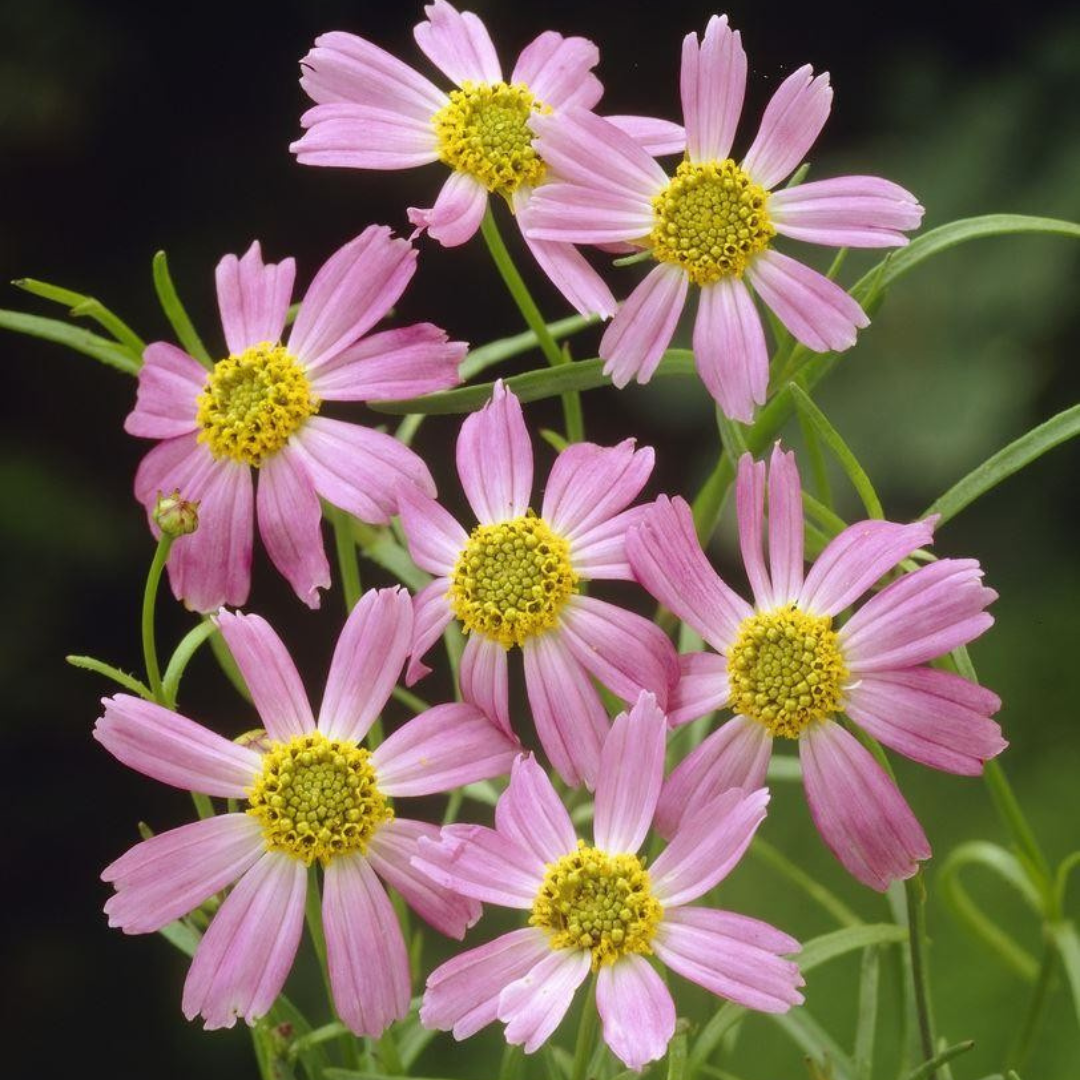
Coreopsis 'American Dream'
Add to Wishlist Full Sun
 Deer Resistant
 Pollinator Friendly
- In stock, ready to ship
Coreopsis 'American Dream': Pink Tickseed That Loves Wet Feet
This tickseed went pink when all its cousins went yellow, and it has never once apologized. Light pink daisies float over feathery, needle-fine leaves for months. THE BLACK SHEEP OF THE TICKSEEDS.
Plant Characteristics:
- Botanical Name: Coreopsis rosea 'American Dream'
- Common Name: Pink Tickseed
- Height: 30–40 cm (12–16 in)
- Spread: 45–60 cm (18–24 in)
- Flowers: Small, light pink daisies with yellow centres
- Bloom Time: Early summer to early fall (June to September)
- Foliage: Fine, needle-like green leaves with a soft, airy texture
- Features: Long blooming, rabbit resistant, good for cutting, a selection of an eastern North American species
Where to Plant: Use it at the front of a sunny border, along a path, or spilling over the edge of a raised bed or container, planted in groups so the fine leaves knit together. It prefers soil that stays a bit moist, so it suits the low, damp corner of a sunny bed or the edge of a rain garden.
Companion Plants: Panicum Prairie Winds® 'Cheyenne Sky' adds upright red-tinted grass at 90 cm, a fine backdrop for the soft pink daisies. Nepeta Whispurr™ Blue brings blue flowers from June to September. Paeonia 'Bartzella' opens yellow blooms in May and June, before the tickseed starts. All three love full sun.
Plant Care: Plant in full sun in average to moist, well-drained soil. Don't let it dry out completely, especially in its first summer. It handles heat and humidity well. Shear the plant back by about a third in midsummer if it starts to look tired, and it will push out a fresh round of flowers. Cut it back in late fall or early spring. It spreads slowly by underground stems. Divide every two or three years in spring to keep it vigorous and in bounds.
History: Pink tickseed, Coreopsis rosea, grows wild on sandy, wet lakeshores and pond edges in scattered pockets of eastern North America, including southwestern Nova Scotia, and it is listed as endangered in Canada. The name tickseed comes from the small seeds, which people thought looked like ticks.
Final Thoughts: Butterflies love it, deer and rabbits skip it, and it's lovely in a vase. Plant a few and welcome it to the flock. OUR KIND OF PLANT.



