



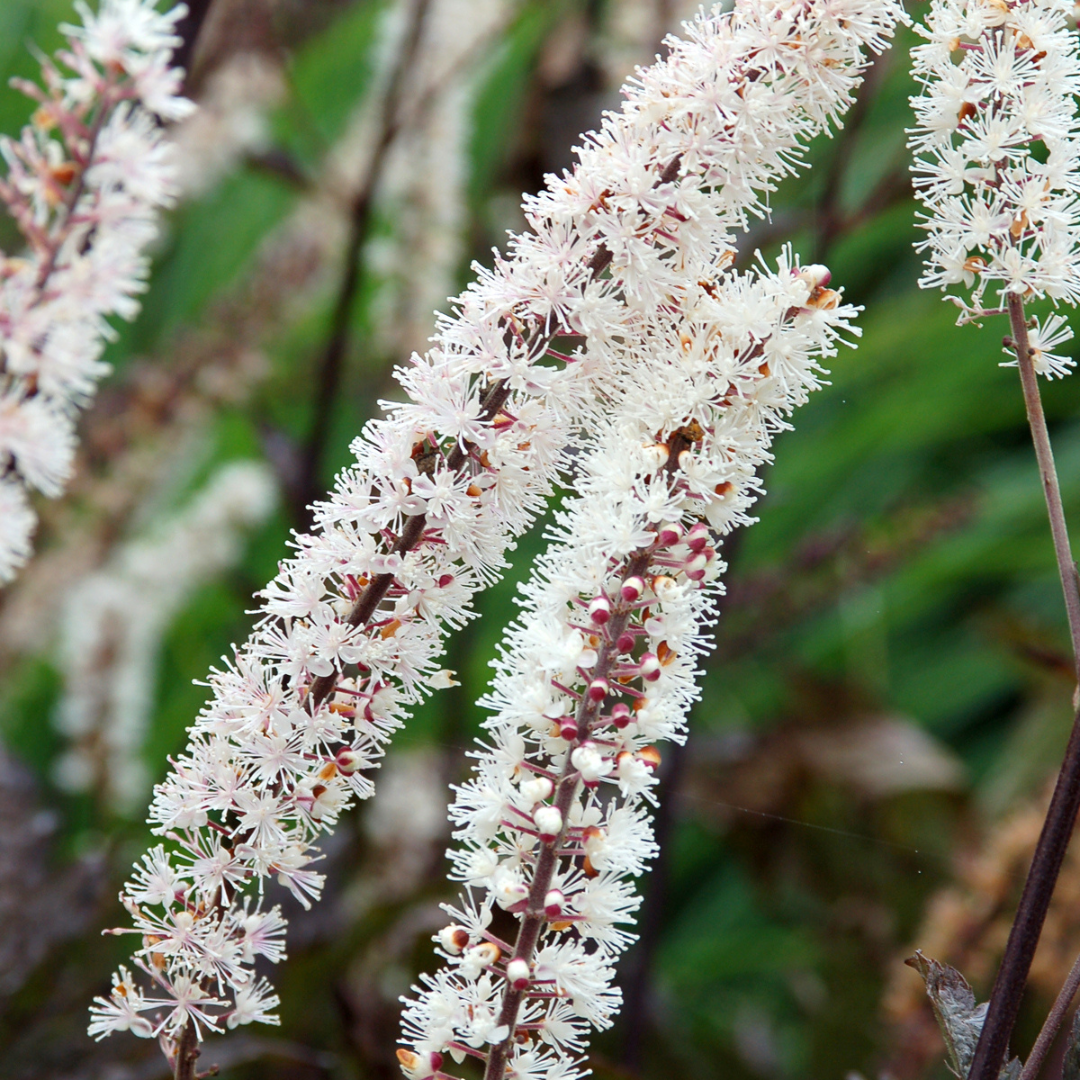
Cimicifuga 'Hillside Black Beauty'
Add to Wishlist Partial Sun
 Full Shade
 Deer Resistant
 Pollinator Friendly
- In stock, ready to ship
Cimicifuga 'Hillside Black Beauty': Goth Foliage, Sweet-Smelling Spires
Lacy purple-black leaves so dark they look dipped in espresso. 'Hillside Black Beauty' is the goth kid of the shade garden, and those white spires smell way too good for somebody this moody. BROODING NEVER SMELLED SO SWEET.
Plant Characteristics:
- Botanical Name: Actaea simplex (Atropurpurea Group) 'Hillside Black Beauty' (syn. Cimicifuga ramosa 'Hillside Black Beauty')
- Common Name: Bugbane
- Height: 150–175 cm (5–5.75 ft) in flower
- Spread: 60–80 cm (2–2.5 ft)
- Flowers: Fragrant white flowers with a pale pink blush, on slender bottlebrush spires
- Bloom Time: Late summer to early fall (August to September)
- Foliage: Lacy, deeply divided, dark purple-black leaves
- Features: Very dark foliage, rabbit resistant, fragrant
Where to Plant: Give it a spot at the back of a shady border or woodland garden where the tall spires have room. The fall spikes look lovely against a dark fence or hedge.
Companion Plants: Ligularia 'Little Rocket' sends up yellow spikes from June to August, a bright contrast to the near-black leaves. Dicentra 'Gold Heart' adds golden foliage and pink hearts in May and June. Symphyotrichum cordifolium brings blue asters in September and October. Together they give the bed colour from spring to fall.
Plant Care: Plant in moist, humus-rich, well-drained soil in part shade. A little morning sun helps the dark colour, but hot afternoon sun and dry soil will brown the leaf edges. Keep it watered in dry spells and mulch each year. Bugbane is slow to establish and dislikes being moved, so plant it once in a good spot and let it build up over a few years. Cut back in late fall or early spring. Division is rarely needed. All parts are toxic if eaten.
History: 'Hillside Black Beauty' was found by Mary Ann McGourty in her home garden in northwest Connecticut as a seedling of a purple-leaved bugbane, and it received US Plant Patent 9,988 in 1997. It went on to become a widely grown standard for dark-leaved bugbanes.
Final Thoughts: Pair it with chartreuse hostas for maximum drama. Deer and rabbits get the cold shoulder. MOODY AND MAGNIFICENT.



