



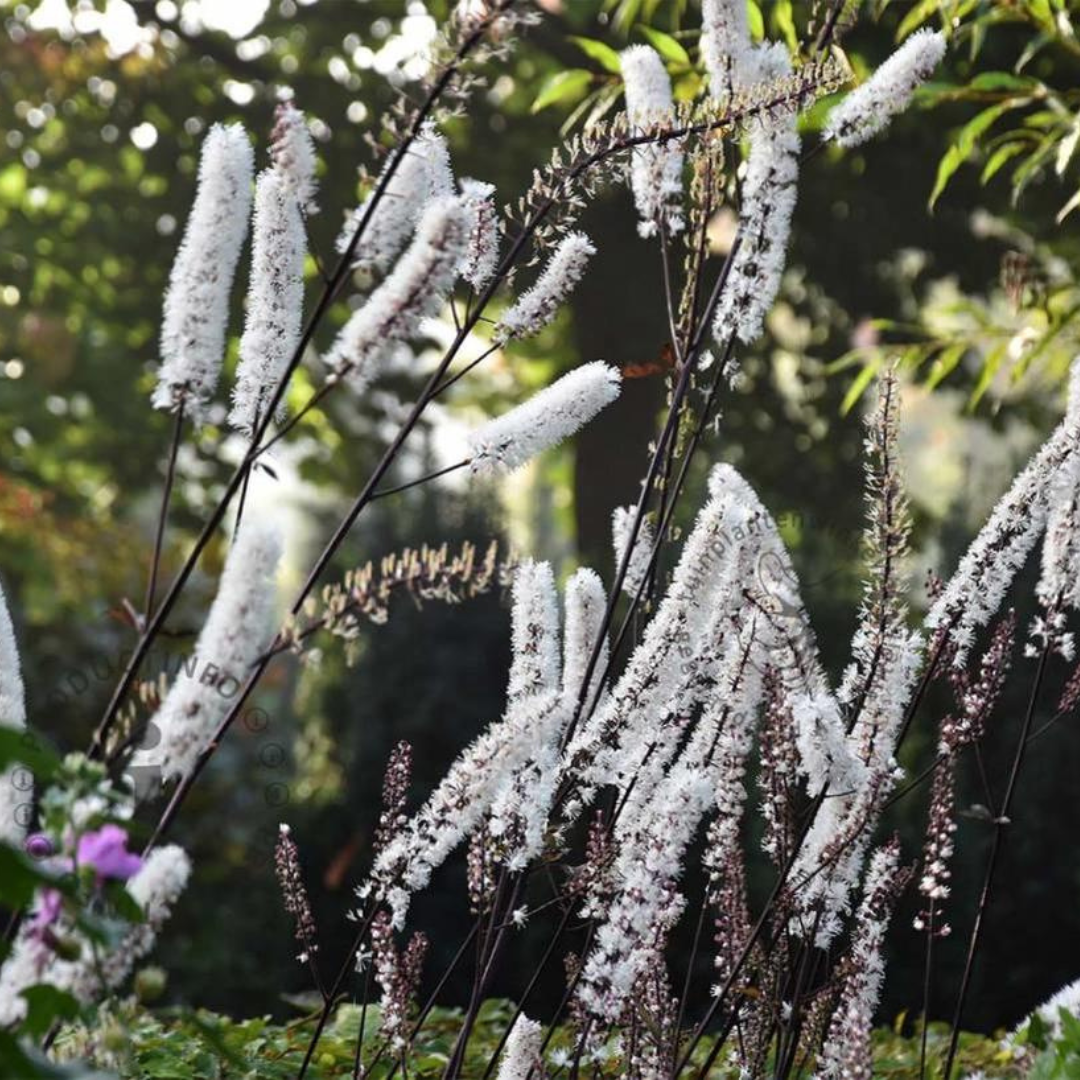
Cimicifuga 'Atropurpurea'
Add to Wishlist Partial Sun
 Full Shade
 Deer Resistant
 Pollinator Friendly
- In stock, ready to ship
Cimicifuga 'Atropurpurea': Towering Perfumed Wands for Shady Corners
Bronze-purple leaves all season, then towering white bottlebrush spikes that perfume the whole shade garden. This bugbane is basically a lighthouse for late-season pollinators. TALL, DARK AND FRAGRANT.
Plant Characteristics:
- Botanical Name: Actaea simplex Atropurpurea Group (syn. Cimicifuga ramosa 'Atropurpurea')
- Common Name: Bugbane
- Height: 150–180 cm (5–6 ft) in flower
- Spread: 60–90 cm (2–3 ft)
- Flowers: Small, fragrant, creamy white flowers on long bottlebrush spikes, often tinted purple-pink in bud
- Bloom Time: Late summer to fall (August to October)
- Foliage: Large, deeply divided leaves, bronze-purple to deep green on purple stems
- Features: Rabbit resistant, fragrant
Where to Plant: Plant it at the back of a shady border, at a woodland edge, or as a vertical accent among lower plantings, where the tall spikes can rise above their neighbours and catch low autumn light. Site it near a path or patio so you can enjoy the scent.
Companion Plants: Hosta 'August Moon' adds broad leaves and lavender flowers in July and August at the bugbane's feet. Astilbe 'Bressingham Beauty' brings pink plumes in July and August. Dicentra 'Gold Heart' opens the season with golden leaves and pink hearts in May and June. The tall white wands then rise above it all from August to October.
Plant Care: Plant in rich, moist, well-drained soil in part shade. It can take more sun in a cool spot with steady moisture, but hot afternoon sun scorches the leaves. Water well during dry spells, and mulch to keep the roots cool. Bugbane is slow to settle in and usually takes about three years to reach full size, so be patient. Choose its spot carefully because it doesn't like being moved. Cut it back in late fall or early spring. Division is rarely needed. All parts are toxic if eaten, so keep it away from curious pets.
History: Bugbane is native to eastern Asia, from Russia and Mongolia through China, Korea and Japan, and botanists have since moved it from Cimicifuga, meaning bug repeller, to Actaea. The Atropurpurea Group covers the purple-leaved forms, often grown from seed, so leaf colour can vary a little from plant to plant.
Final Thoughts: Deer and rabbits keep their distance, and you get the last big show of the year. PLANT IT WHERE THE NEIGHBOURS CAN SMELL IT.



