



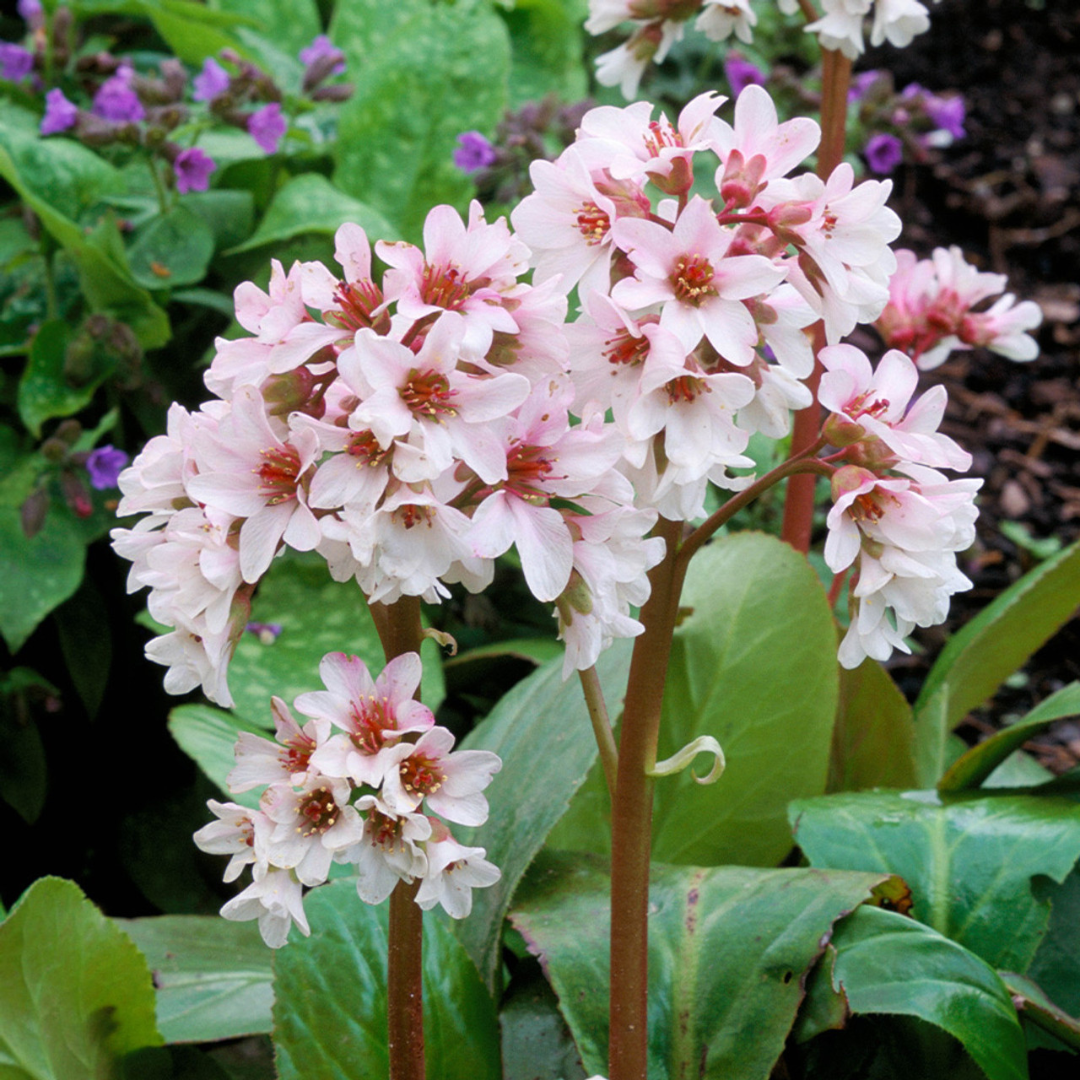
Bergenia 'Bressingham White'
Add to Wishlist Full Sun
 Partial Sun
 Deer Resistant
 Pollinator Friendly
- In stock, ready to ship
Bergenia 'Bressingham White': Snow-White Bells, Red Stems, Big Leaves
Pure white flowers on reddish stems, rising out of big leathery leaves like a bride who still wears hiking boots. 'Bressingham White' is elegant up top and tough as a snowplow down below. FANCY BUT FUNCTIONAL.
Plant Characteristics:
- Botanical Name: Bergenia 'Bressingham White'
- Common Name: Pigsqueak, Elephant's Ears
- Height: 30–35 cm (12–14 in) in flower
- Spread: 40–50 cm (16–20 in)
- Flowers: Pure white clusters on upright reddish stems, sometimes fading to a pale blush
- Bloom Time: Spring (April to May)
- Foliage: Large, rounded, leathery evergreen leaves, deep green with bronze tones in cold weather
- Features: Evergreen, RHS Award of Garden Merit
Where to Plant: White flowers glow in shade, so use it to brighten a north-facing bed or the front of a woodland border. It makes a sturdy edging along paths and a low groundcover. It copes with clay and some dryness once established, which helps in root-filled spots where many plants sulk.
Companion Plants: Paeonia 'Julia Rose' brings warm orange blooms in May and June, just as the white flowers finish. Penstemon hirsutus adds lavender tubes at 30 to 60 cm at the same time. Aquilegia canadensis nods red flowers in May and June at 30 to 75 cm. The white bergenia ties it all together at the front.
Plant Care: Plant in moist, well-drained soil enriched with compost. Part shade is easiest; in full sun, keep the soil from drying out. Water regularly through the first season. Leave the foliage over winter. In spring, cut away leaves that are brown or ragged, and remove the flower stems after blooming to keep things tidy. Divide every few years in spring or early fall if the clump gets crowded or bare in the centre. Keep an eye out for slugs.
History: This cultivar is linked to the famous Bressingham nursery in Norfolk, England, has been grown for decades and earned the RHS Award of Garden Merit. Bergenias come from central and eastern Asia, and the genus is named for Karl August von Bergen, an 18th-century German botanist and physician.
Final Thoughts: The evergreen leaves pick up bronze tones in the cold, so the show keeps going after the bees go home. NOBODY GETS LEFT AT THE ALTAR.



