



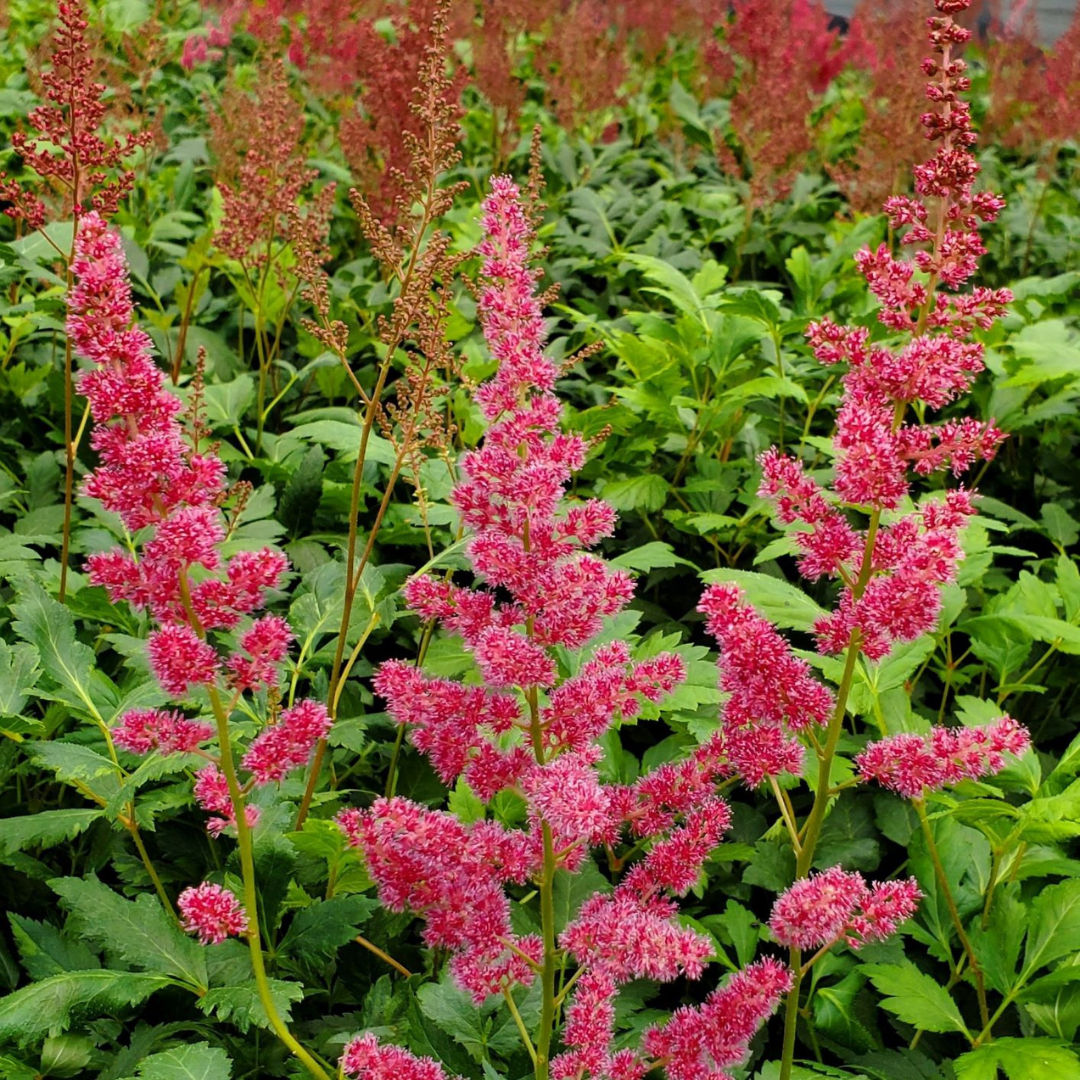
Astilbe 'Red Sentinel'
Add to Wishlist Partial Sun
 Full Shade
 Deer Resistant
 Pollinator Friendly
- In stock, ready to ship
Astilbe 'Red Sentinel': Scarlet Guard on Shady Duty
Every shade garden needs security, and this astilbe took the night shift. Crimson plumes stand guard on dark red stems, scanning the perimeter for anything boring. NOBODY IN BEIGE GETS PAST THE VELVET ROPE.
Plant Characteristics:
- Botanical Name: Astilbe japonica hybrid
- Common Name: False Spirea, Japanese Astilbe
- Height: 60–80 cm (24–31 in)
- Spread: 45–50 cm (18–20 in)
- Flowers: Deep crimson to scarlet red, in dense, upright plumes on dark red stems
- Bloom Time: Early summer (June to July)
- Foliage: Glossy, divided, dark green, tinged dark red in spring
- Features: Rabbit resistant, good cut flower
Where to Plant: Use it in groups in the middle of a shade border, in a moist woodland bed, or beside a pond where the soil stays damp. The red reads best against light-coloured foliage.
Companion Plants: Astilboides tabularis makes a bold contrast to the fine red plumes, with huge leaves and cream flowers in June and July. Pulmonaria 'Pink-a-Blue' starts the year with pink and blue flowers in May and June at the front of the bed. Eurybia divaricata 'Eastern Star' carries on with white asters from August to October. This planting stays fresh in shade to part sun from spring to fall.
Plant Care: Plant in spring or early fall in rich, moist, humus-rich soil. Morning sun and afternoon shade is ideal. Add compost to heavy clay or sandy soil before planting. Water deeply during dry spells and mulch to keep the roots cool. Astilbes never forgive dry soil in July, and the leaves brown at the edges. Leave the dried plumes for winter interest or trim them after flowering. Cut the stems back in late fall or early spring. Divide in spring every three to four years when the clump crowds itself.
History: Astilbe japonica is native to moist, shaded mountain woods in Japan. Most garden astilbes, including 'Red Sentinel', came from crosses between this species and other East Asian astilbes, work begun by German and Dutch nurseries in the early 20th century.
Final Thoughts: Deer and rabbits get turned away at the door. Florists get a bouquet. PLANT ONE AND CONSIDER YOUR SHADE PATROLLED.



