



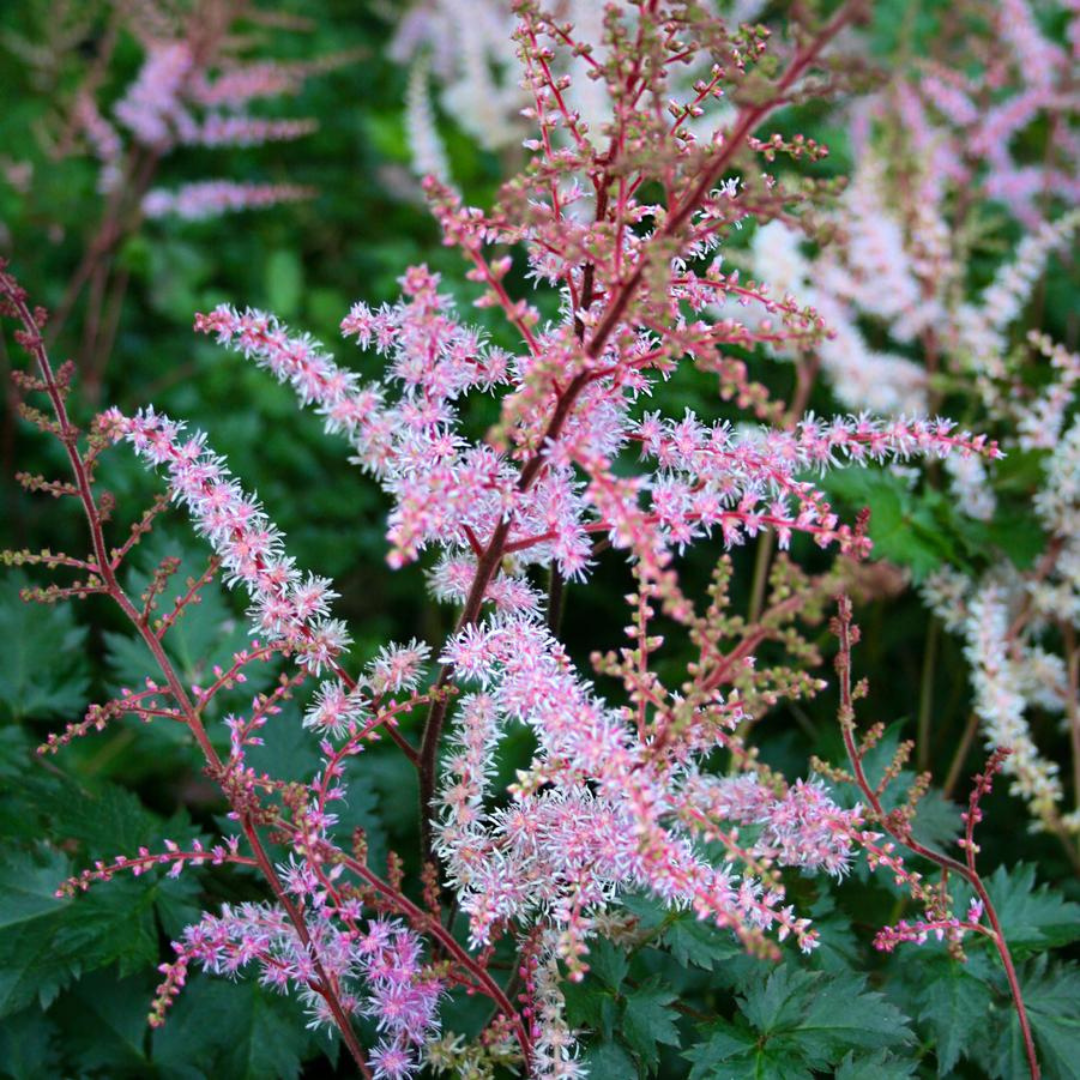
Astilbe 'Delft Lace'
Add to Wishlist Partial Sun
 Full Shade
 Deer Resistant
 Pollinator Friendly
- In stock, ready to ship
Astilbe 'Delft Lace': Blue-Green Lace on Ruby Stems
Waxy blue-green leaves on red stems, soft apricot-pink plumes and burgundy tints in fall. 'Delft Lace' looks good before it blooms, while it blooms and after it blooms. THREE SEASONS, ONE PLANT, NO EXCUSES.
Plant Characteristics:
- Botanical Name: Astilbe hybrid
- Common Name: False Spirea, Astilbe
- Height: 65–80 cm (26–31 in) in bloom
- Spread: 45–50 cm (18–20 in)
- Flowers: Deep salmon-pink buds opening to soft apricot-pink plumes on reddish stems
- Bloom Time: Midsummer to late summer (July to August)
- Foliage: Finely cut, waxy, blue-green leaves on red stems, with burgundy tints in fall
- Features: Multi-season foliage interest, red seed heads after bloom
- Plant Patent: USPP 19,839
Where to Plant: Use it in a part-shade border where you want foliage that earns its keep all season. It does well in damp spots, including the moist clay many city gardens are built on, and makes a good mass planting in high, dappled shade.
Companion Plants: Aralia 'Sun King' brings golden leaves and height, reaching 90 to 180 cm with white flowers from July to September. Hosta 'Brother Stefan' fills the middle ground with bold foliage and white flowers in early summer. Carpet the ground with Galium odoratum, which covers the soil with starry white flowers in May and June. The pink plumes of the astilbe float nicely over this mix of gold and green.
Plant Care: Plant in part shade in rich, evenly moist soil. Add compost at planting and mulch to keep the roots cool. Water during dry spells, especially in the first year. Astilbes don't like to dry out. Leave the red seed heads standing for late-season interest. Cut back in late fall or early spring. Divide every three to four years in spring if the clump starts to thin in the centre.
History: 'Delft Lace' was bred in Zuidwolde, the Netherlands, by Henricus Holtmaat from open-pollinated seed in 1998, and was selected in 2001 for its colour and foliage. Its parents were unnamed astilbe hybrids, which is why it's sold simply as an Astilbe hybrid.
Final Thoughts: Plant it in moist shade and enjoy the red seed heads after the flowers fade. Deer move on. THE GIFT THAT KEEPS ON GIVING.



