



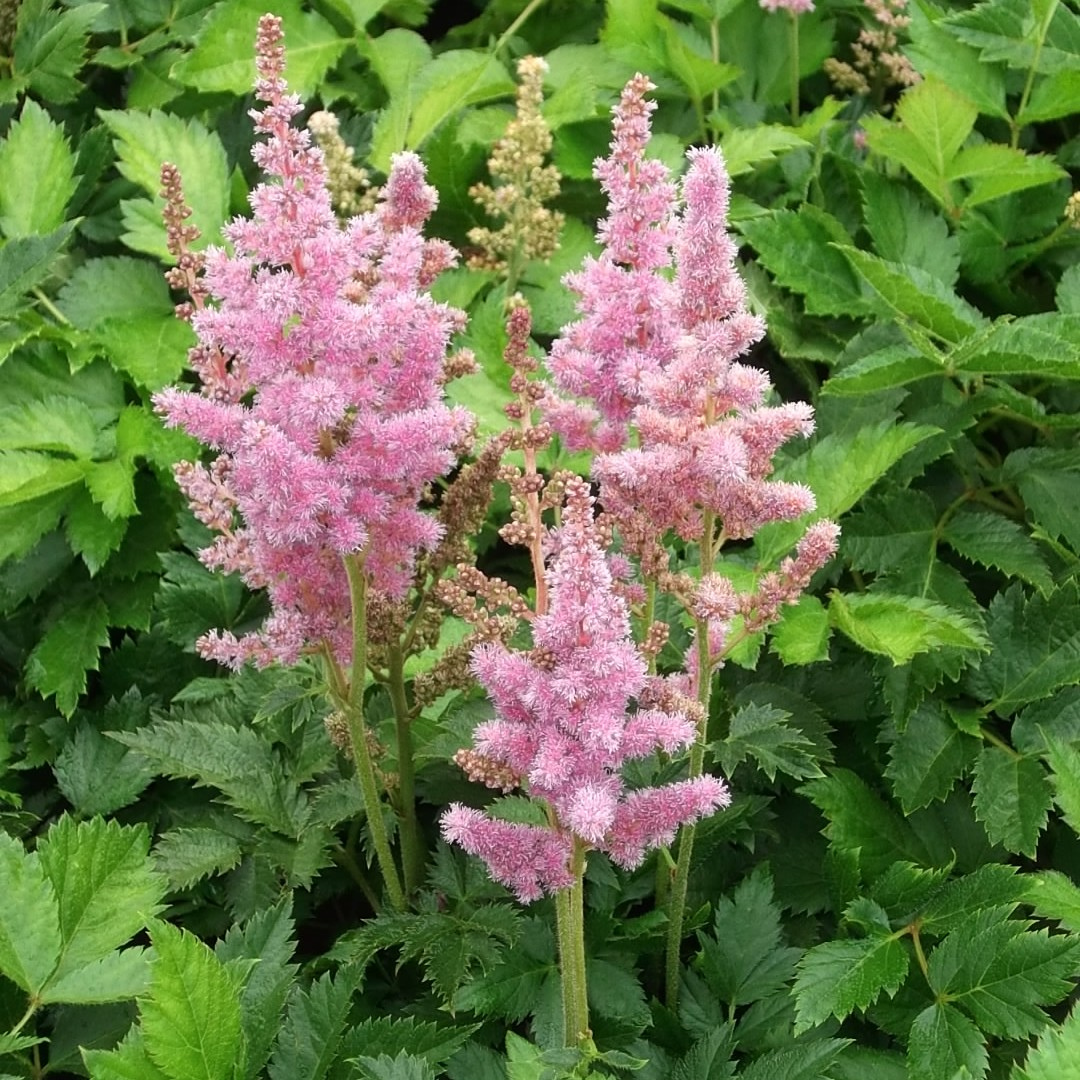
Astilbe 'Vision in Pink'
Add to Wishlist Partial Sun
 Full Shade
 Deer Resistant
 Pollinator Friendly
- In stock, ready to ship
Astilbe 'Vision in Pink': Soft Pink That Shrugs Off Dry Spells
Some flowers fade and fall apart. 'Vision in Pink' fades to green and somehow looks even better, like an ex who moved on and took up yoga. Soft pink plumes, lacy leaves, ZERO REGRETS.
Plant Characteristics:
- Botanical Name: Astilbe chinensis 'Vision in Pink'
- Common Name: Chinese Astilbe, False Spirea
- Height: 40–50 cm (16–20 in)
- Spread: 45–60 cm (18–24 in)
- Flowers: Soft pink, in dense, upright plumes that fade to green and stay attractive into fall
- Bloom Time: Mid to late summer (July to August)
- Foliage: Lacy, glossy, dark green with a bluish cast
- Features: Rabbit resistant, more tolerant of dry spells than most astilbes, good cut flower
- Plant Patent: USPP 11,860
Where to Plant: Use it in the front or middle of a shade border, in mass plantings, or in containers on a shady deck. It's a better choice than most astilbes for spots that get some sun or dry out between rains.
Companion Plants: Set Cimicifuga 'Atropurpurea' behind this astilbe, where its tall white wands rise to 150 to 180 cm and carry the show from August into October. Run Heuchera 'Paris' along the front edge for low rose flowers that bloom from May right through August. Tuck in Brunnera 'Sea Heart' for blue forget-me-not sprays in April and May, long before the pink plumes open. All three love the same shade to part sun, so the bed stays lush from spring to fall.
Plant Care: Plant in spring or early fall in rich soil with compost mixed in. It tolerates more sun than most astilbes, but give it some afternoon shade in hot spots. Water regularly in its first summer. Once established, it shrugs off short dry spells better than Japanese or Arendsii types, though it still looks best with steady moisture. Mulch helps. Leave the plumes for fall and winter interest. Cut back in late fall or early spring. Divide in spring every three to four years.
History: 'Vision in Pink' was bred by Gert van Buren in Noorden, the Netherlands, who crossed Astilbe chinensis 'Superba' with 'Kremhilde' in 1997, and it received a US plant patent in 2001. It went on to parent the dwarf 'Little Vision in Pink'.
Final Thoughts: It handles a dry spell better than most astilbes and still looks good when the season wraps up. AGING GRACEFULLY IS A CHOICE.



