



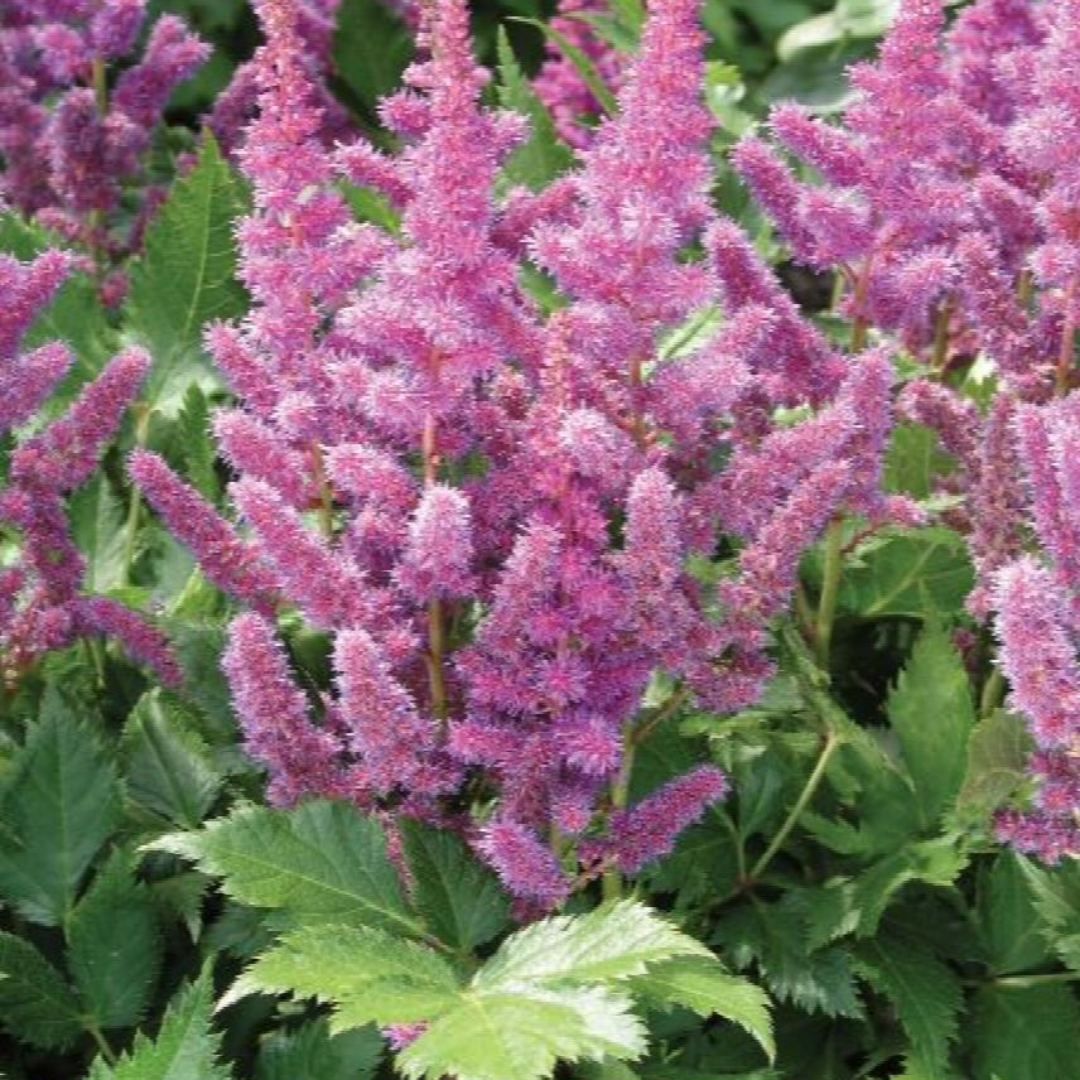
Astilbe 'Visions'
Add to Wishlist Partial Sun
 Full Shade
 Deer Resistant
 Pollinator Friendly
- In stock, ready to ship
Astilbe 'Visions': Raspberry Pink With a Forgiving Streak
Most astilbes look pretty and smell like nothing, but 'Visions' showed up wearing perfume. Raspberry-pink pyramids of fluff that the bees follow around like a cologne ad. FRAGRANT, IN THE SHADE? SHOW-OFF.
Plant Characteristics:
- Botanical Name: Astilbe chinensis 'Visions'
- Common Name: False Spirea, Chinese Astilbe
- Height: 36–41 cm (14–16 in)
- Spread: 30–38 cm (12–15 in)
- Flowers: Raspberry pink, fragrant, in dense, pyramid-shaped plumes
- Bloom Time: Midsummer (July to August)
- Foliage: Lacy, dark green with a bronze tint
- Features: Fragrant, rabbit resistant, good for cutting
Where to Plant: Its tidy size suits the front of a shade border, a woodland path or a container on a shaded patio. Plant it in groups of three or five for a solid ribbon of pink. It's a bit more forgiving of dry spells than the common hybrids, which helps along the edges of beds.
Companion Plants: Galium odoratum spreads a low carpet of white flowers in May and June. Rodgersia aesculifolia adds huge, bold leaves and cream flowers at 90 to 120 cm. Eurybia divaricata brings white asters from August to October, once the pink astilbe finishes. Give the group shade to partial shade.
Plant Care: Plant it in rich, moist soil with plenty of organic matter. It flowers best in light shade or filtered sun, and blooms less in deep shade. Afternoon sun is fine only if the soil stays moist. Water during dry spells, especially in the first season, and mulch to keep the roots cool. Cut the foliage and old plumes back in early spring. Divide every three or four years in spring to keep it vigorous.
History: The origin of 'Visions' hasn't been confirmed, but its species, Astilbe chinensis, is native to China, Korea and eastern Russia and has a reputation for coping better with heat and dry soil. The genus name comes from Greek for "without brightness", a reference to the dull leaves of one early species.
Final Thoughts: Cut a handful for the kitchen and let everyone assume you have your life together. THE PLUMES WILL KEEP YOUR SECRET.



