



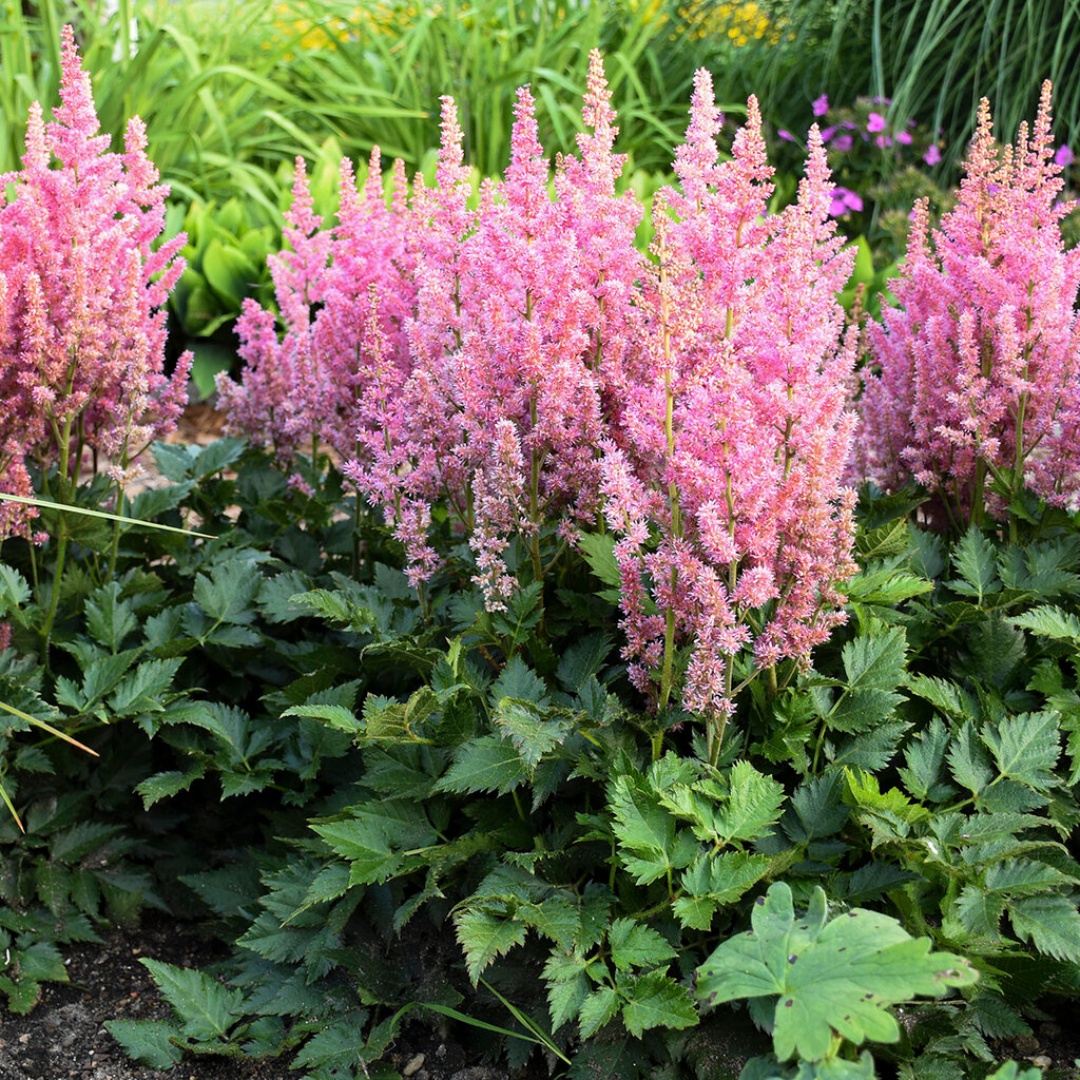
Astilbe 'Little Vision in Pink'
Add to Wishlist Partial Sun
 Full Shade
 Deer Resistant
 Pollinator Friendly
- In stock, ready to ship
Astilbe 'Little Vision in Pink': Small Plumes, Big Pink Energy
Deep pink plumes over lacy, bronze-tinged leaves in a tidy little mound. 'Little Vision in Pink' is short, sweet and apparently able to see the future. PREDICTION: YOU'LL BUY THREE.
Plant Characteristics:
- Botanical Name: Astilbe hybrid, a Chinese astilbe (Astilbe chinensis) type
- Common Name: False Spirea, Astilbe
- Height: 35–40 cm (14–16 in)
- Spread: 35–40 cm (14–16 in)
- Flowers: Deep pink, in dense, upright plumes
- Bloom Time: Mid to late summer (July to August)
- Foliage: Lacy, finely cut, dark green with a bronze cast, forming a tidy mound
- Features: Rabbit resistant, good for cutting
- Plant Patent: USPP 21,886
Where to Plant: Use it where a full-size astilbe would swallow the view: the front of a shade border, along a path, or in drifts through a shady bed. It also fits nicely in containers on a shady porch.
Companion Plants: Cornus canadensis forms a low groundcover with white flowers in late spring. Hosta 'Abiqua Drinking Gourd' adds big, cupped leaves at 45 to 60 cm, a bold contrast to the fine astilbe leaves. Tricyrtis hirta follows with white flowers in August and September. Plant the trio in shade to partial shade.
Plant Care: Plant it in spring or early fall in rich, moist soil with plenty of organic matter. Heavy clay is workable if you mix in compost and the spot doesn't bake. Space plants about 30–40 cm apart and add a layer of mulch to keep the roots cool. Consistent moisture is the whole secret with astilbe. Water during dry spells, especially in its first summer. Crispy brown leaf edges mean it's thirsty. The spent plumes dry in place and can stay up for winter interest. Cut the stems back in late fall or early spring. Divide the clump in spring every few years, when the centre starts to thin.
History: 'Little Vision in Pink' was bred by Wilhelmus van Veen in Noorden, the Netherlands, from a 2004 cross using 'Vision in Pink' as the pollen parent, and the compact seedling was picked out in 2006. It received a US plant patent in 2011.
Final Thoughts: Plant it along a shady path where everyone can admire the view. Deer and rabbits never saw it coming. CRYSTAL BALL SAYS PINK.



