



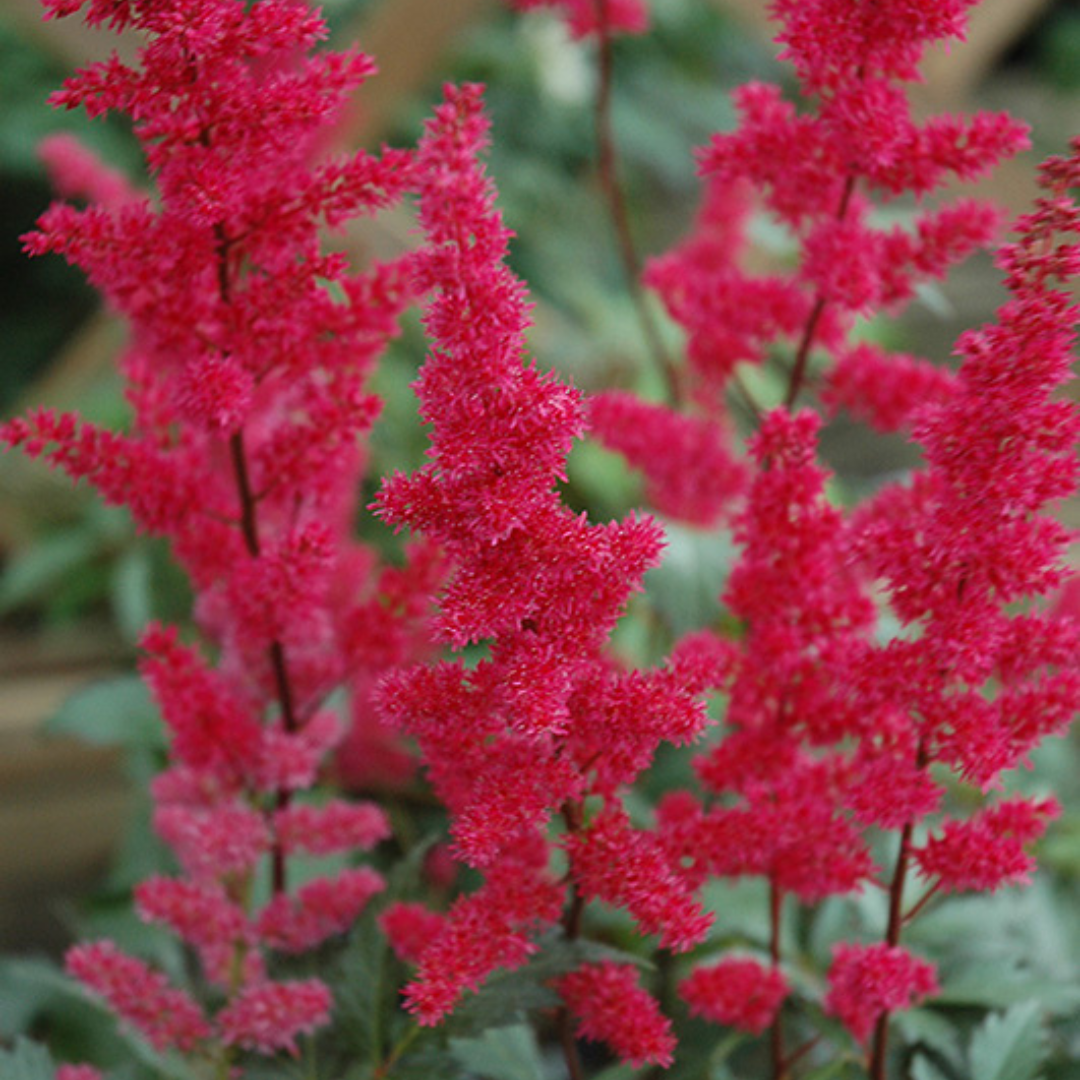
Astilbe 'Fanal'
Add to Wishlist Partial Sun
 Full Shade
 Deer Resistant
 Pollinator Friendly
- In stock, ready to ship
Astilbe 'Fanal': Signal-Fire Red for the Shady Bed
Deep crimson plumes over bronze-red young leaves, burning in the shade like a road flare. 'Fanal' is an old favourite that still blinds the competition. RED ALERT IN THE SHADE GARDEN.
Plant Characteristics:
- Botanical Name: Astilbe × arendsii 'Fanal'
- Common Name: False Spirea, Astilbe
- Height: 60 cm (24 in) in bloom
- Spread: 45 cm (18 in)
- Flowers: Dense, narrow plumes of deep crimson red, up to about 25 cm (10 in) long
- Bloom Time: Early to midsummer (June to July)
- Foliage: Divided, ferny leaves that open bronze-red and mature to dark reddish green
- Features: RHS Award of Garden Merit, rabbit resistant, good cut and dried flower
Where to Plant: Use it at the front or middle of a shady border, or mass it for a bold block of red. It loves damp soil near ponds and downspouts and copes with clay, as long as the ground doesn't bake dry in summer.
Companion Plants: Phlox divaricata 'May Breeze' brings white flowers in May and June, just before the red plumes open. Hosta 'June Fever' adds bright leaves at 40 cm and lavender flowers in July and August. Ligularia 'Othello' rises to 120 cm with orange flowers from July to September. All three like shade to partial shade and steady moisture.
Plant Care: Plant in part shade in rich, evenly moist soil. Add compost at planting and keep a layer of mulch around it. Water during dry spells. Without enough moisture, the leaf edges turn brown and crispy. The dried plumes turn a deep rusty colour and look good through winter, so leave them standing and cut back in early spring. Divide every three to four years in spring.
History: Fanal is German for a beacon or signal fire, fitting for one of the brightest reds in the genus. It belongs to the Arendsii group developed in Germany in the early twentieth century by Georg Arends and holds the Royal Horticultural Society's Award of Garden Merit.
Final Thoughts: Plant it in moist shade, cut some fresh and dry some for winter. Deer and rabbits keep away. TOO HOT TO HANDLE, TOO RED TO MISS.



