



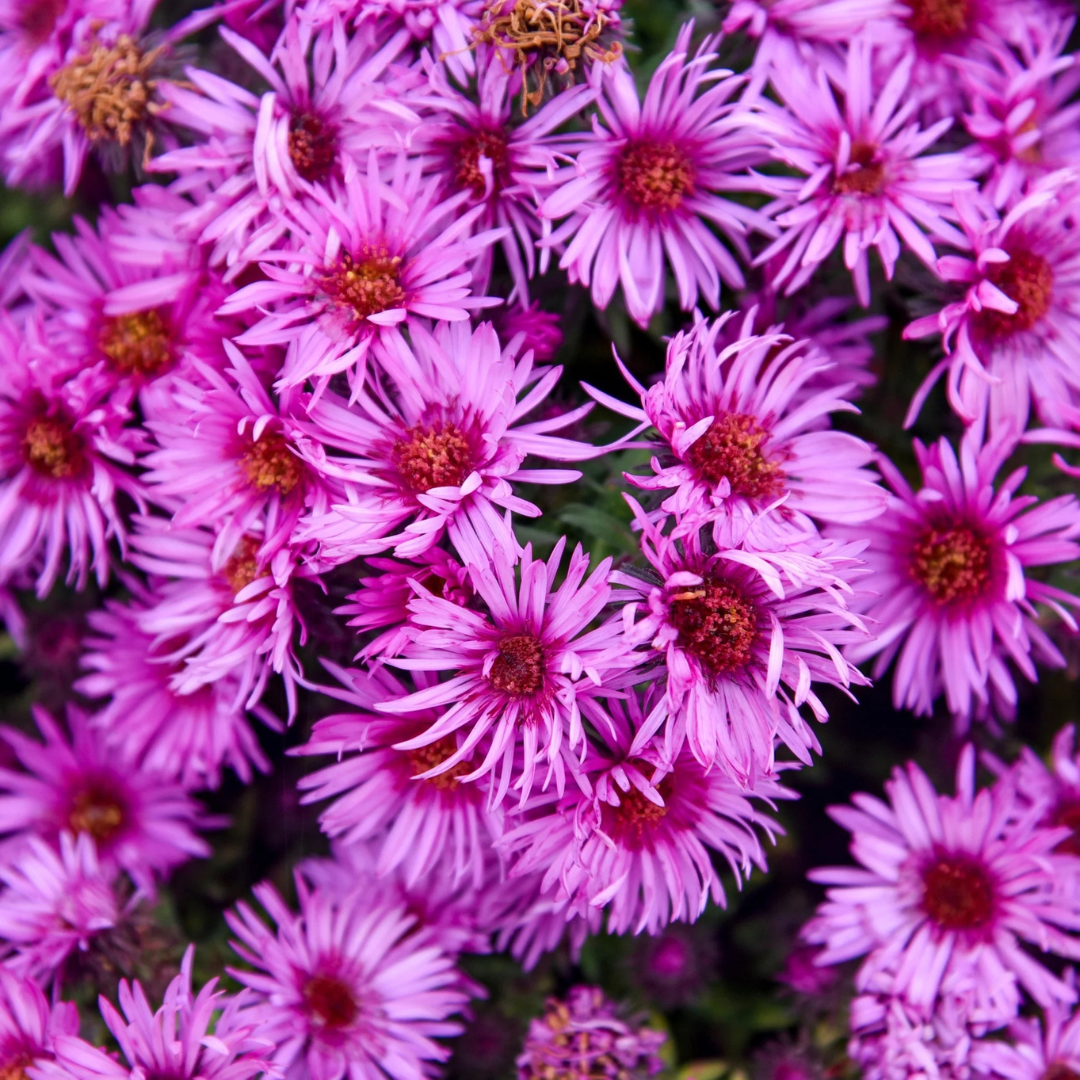
Aster 'Pink Crush'
Add to Wishlist Full Sun
 Deer Resistant
 Pollinator Friendly
 Low Maintenance
- In stock, ready to ship
Aster 'Pink Crush': A Pink Fall Pillow, No Stakes Needed
Rose-pink daisies smothering a low, wide mound, blooming late like a crush you just can't shake. 'Pink Crush' is easy to grow and impossible to ignore. BLUSHING SINCE DAY ONE.
Plant Characteristics:
- Botanical Name: Symphyotrichum novae-angliae 'Pink Crush' (sold as Aster novae-angliae)
- Common Name: New England Aster
- Height: 51–61 cm (20–24 in)
- Spread: 86–97 cm (34–38 in)
- Flowers: Rose-pink daisies with yellow centres, held in dense clusters that cover the mound
- Bloom Time: Early to mid-fall (September to October)
- Foliage: Dark green, forming a mounded clump that is wider than tall
Where to Plant: Put it near the front or middle of a sunny border, where its broad shape can fill space without hiding anything behind it. It's handy for edging a path or softening the corner of a bed, and it brings late colour to a pollinator garden. It tolerates clay soil better than many late bloomers, which helps in a lot of Toronto and Ottawa yards.
Companion Plants: Echinacea Prairie Splendor™ Compact White sits in front with white coneflowers from June to September. Agastache 'Blue Fortune' adds blue spikes from midsummer into early fall, just as the pink asters begin. Panicum Prairie Winds® 'Totem Pole' stands tall at 180 cm through fall. All three thrive in full sun.
Plant Care: Plant in full sun in average, well-drained soil that doesn't dry out completely. Water regularly in the first season while roots establish. After that, water during long dry spells. Good air flow around the plant helps keep the leaves clean, so don't crowd it. Its compact habit means it shouldn't need pinching or staking. Leave the stems up through winter for structure and birds, then cut them to the ground in early spring. Divide every three or four years in spring if the centre starts to thin.
History: 'Pink Crush' was bred by Hans Hansen at Walters Gardens in Zeeland, Michigan, from a seedling selected after a 2015 cross, and it is shorter than its sibling 'Grape Crush'. It is a selection of New England aster, a wildflower native to much of eastern North America, including Ontario and Quebec, where it grows in moist meadows and along roadsides.
Final Thoughts: Plant it front and centre and let the bees and butterflies fall for it. Deer are not interested. DON'T FIGHT THE FEELING.



