



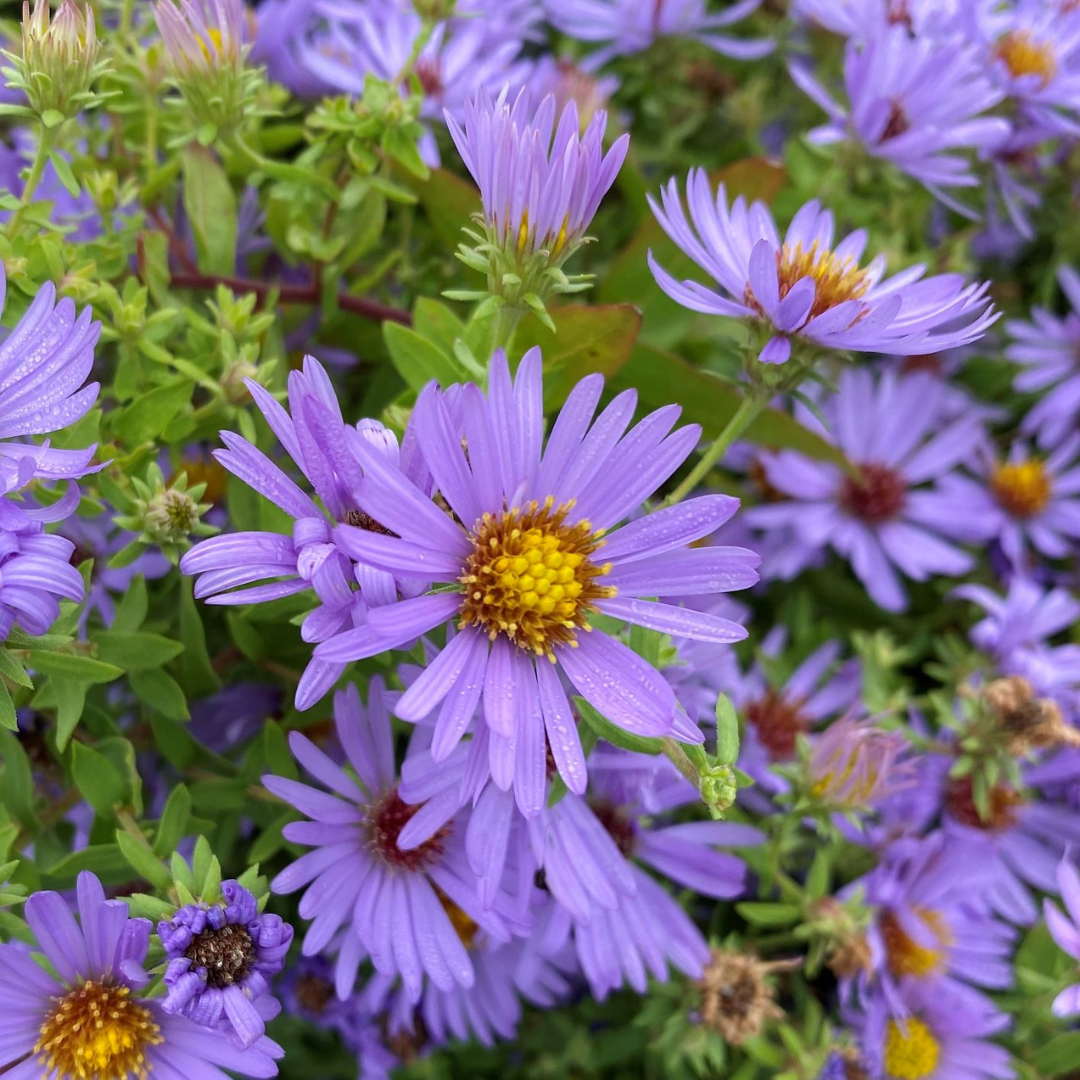
Aster 'October Skies'
Add to Wishlist Full Sun
 Drought Tolerant
 Deer Resistant
 Pollinator Friendly
- In stock, ready to ship
Aster 'October Skies': Low, Blue and Smells Like Herbs
A dense, shrubby mound buried in lavender-blue daisies, showing up late in the season when the bees are desperate for a meal. 'October Skies' even smells good. THE LAST BUFFET BEFORE WINTER.
Plant Characteristics:
- Botanical Name: Symphyotrichum oblongifolium 'October Skies' (formerly Aster oblongifolius)
- Common Name: Aromatic Aster
- Height: 45–60 cm (1.5–2 ft)
- Spread: 45–60 cm (1.5–2 ft)
- Flowers: Lavender-blue daisies with yellow centres, up to about 3 cm (1 in) across, produced in big numbers
- Bloom Time: Early to mid-fall (September to October)
- Foliage: Small, rough green leaves on a dense, shrubby mound. Fragrant when crushed.
Where to Plant: Its low, broad shape suits the front of a sunny border, a slope, or a dry, lean bed where taller plants would flop. Plant it in groups for a sheet of blue in fall.
Companion Plants: Sedum SunSparkler® 'Plum Dazzled' keeps the front low with pink flowers from July to September. Echinacea Prairie Splendor™ Compact Rose adds pink coneflowers at 35 to 40 cm through the summer. Solidago rigida rises behind up to 150 cm with yellow flowers from August to October, bright beside lavender. Give everything full sun.
Plant Care: Plant in full sun in average to lean, well-drained soil. It handles sandy and rocky ground well, and heavy clay is fine if water doesn't sit around the crown. Water through the first season, then only in long dry spells. Skip the fertilizer, which mostly makes it floppy. For an even tighter mound, cut the stems back by about a third once or twice before early summer. Leave the stems up over winter for the birds and cut them back in spring. Divide every few years in spring if the centre thins out. Young plants may need protection from rabbits until they're established.
History: Aromatic aster grows wild across much of North America east of the Rocky Mountains, mostly on dry prairies, bluffs and rocky slopes, and its common name comes from the scent of the crushed foliage. 'October Skies' was chosen for its compact, mounded habit.
Final Thoughts: Drought, deer and a forgetful gardener just get a shrug. Plant it in sun. BLUE SKIES, GUARANTEED.



