



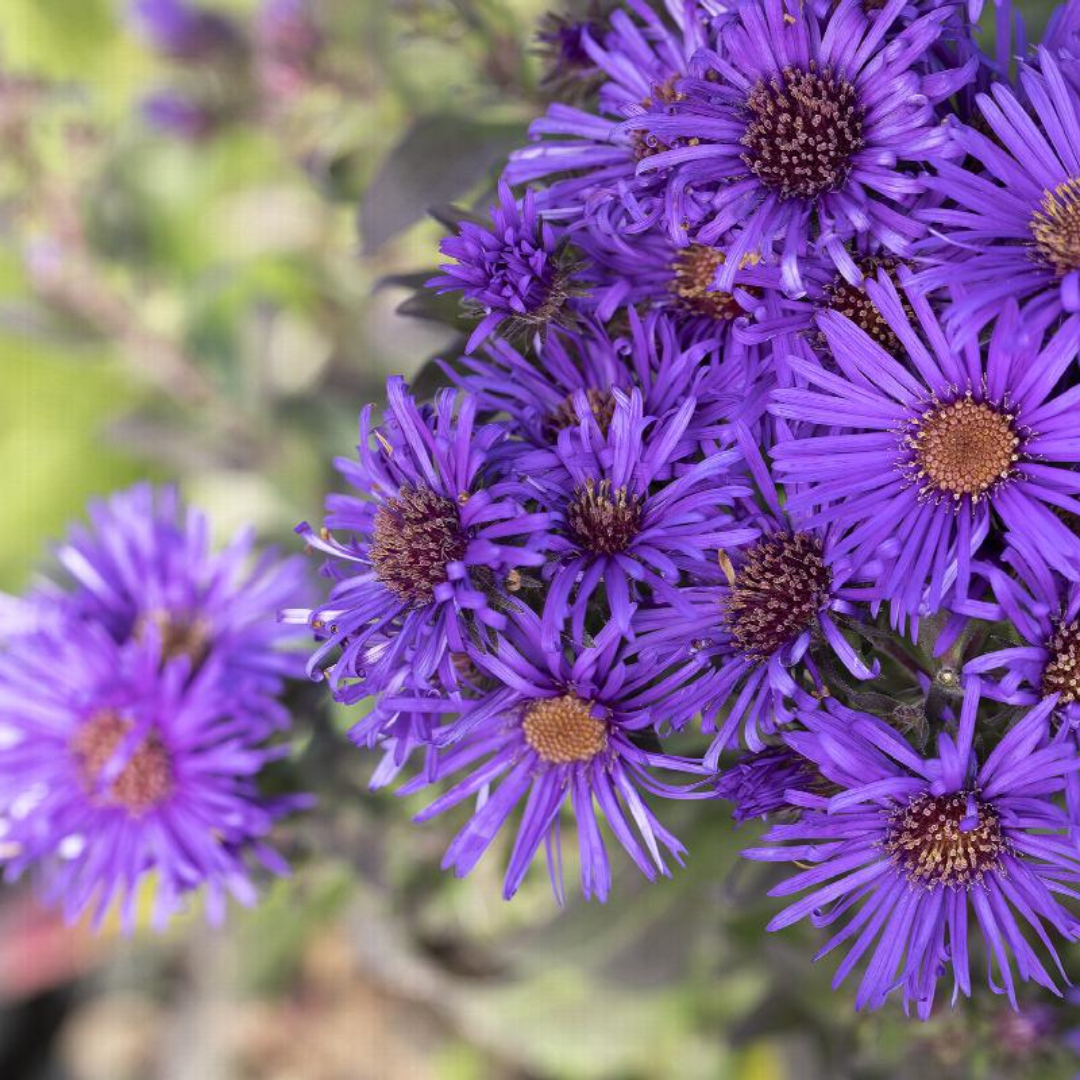
Aster 'Grape Crush'
Add to Wishlist Full Sun
 Pollinator Friendly
 Low Maintenance
- In stock, ready to ship
Aster 'Grape Crush': Dark Purple Fall Colour Without the Flop
Very dark purple daisies with yellow centres, packed so densely they look like a crate of grapes at harvest. 'Grape Crush' stays upright without a single stake. NO STOMPING REQUIRED.
Plant Characteristics:
- Botanical Name: Aster novae-angliae 'Grape Crush' (syn. Symphyotrichum novae-angliae)
- Common Name: New England Aster
- Height: 66–76 cm (26–30 in)
- Spread: 100–110 cm (40–44 in)
- Flowers: Very dark purple daisies with yellow centres, densely packed with layered petals
- Bloom Time: Late summer to mid-fall (August to September)
- Foliage: Dark green, narrow leaves on heavily branched stems forming a rounded mound
- Features: Compact habit that doesn't need staking
- Plant Patent: USPP 33,612
Where to Plant: Use it at the front or middle of a sunny border, in a pollinator garden, or in a large container for fall colour. Its tidy mound makes it a good fit for smaller gardens where taller, floppier types would take over.
Companion Plants: Salvia 'Rose Marvel' adds rose spikes at 30 to 35 cm from early summer to early fall. Veronica 'Snow Candles' brings white spikes from July to September, a crisp partner for purple. Pennisetum 'Red Head' adds soft fountain grass plumes up to 120 cm from July into October. Plant the group in full sun.
Plant Care: Plant in full sun in average, well-drained soil. Water regularly in its first season and during long dry spells; New England asters do best with steady moisture and can drop lower leaves if they dry out badly. Because it's naturally compact, there's no need to pinch or stake it. Cut the stems back after flowering or in early spring. Leaving them over winter gives birds a chance at the seeds. Divide every three or four years in spring if the centre of the clump starts to thin out.
History: 'Grape Crush' was bred by Hans Hansen at Walters Gardens in Zeeland, Michigan, from a 2015 cross, and was selected for its compact, very rounded habit and darker flowers than older varieties such as 'Purple Dome'. Its parent species, New England aster, is a native wildflower of eastern North America, including Ontario and Quebec.
Final Thoughts: Plant it in sun for a late season crush the bees and butterflies can't resist. VINTAGE FALL, BOTTLED IN THE BORDER.



