



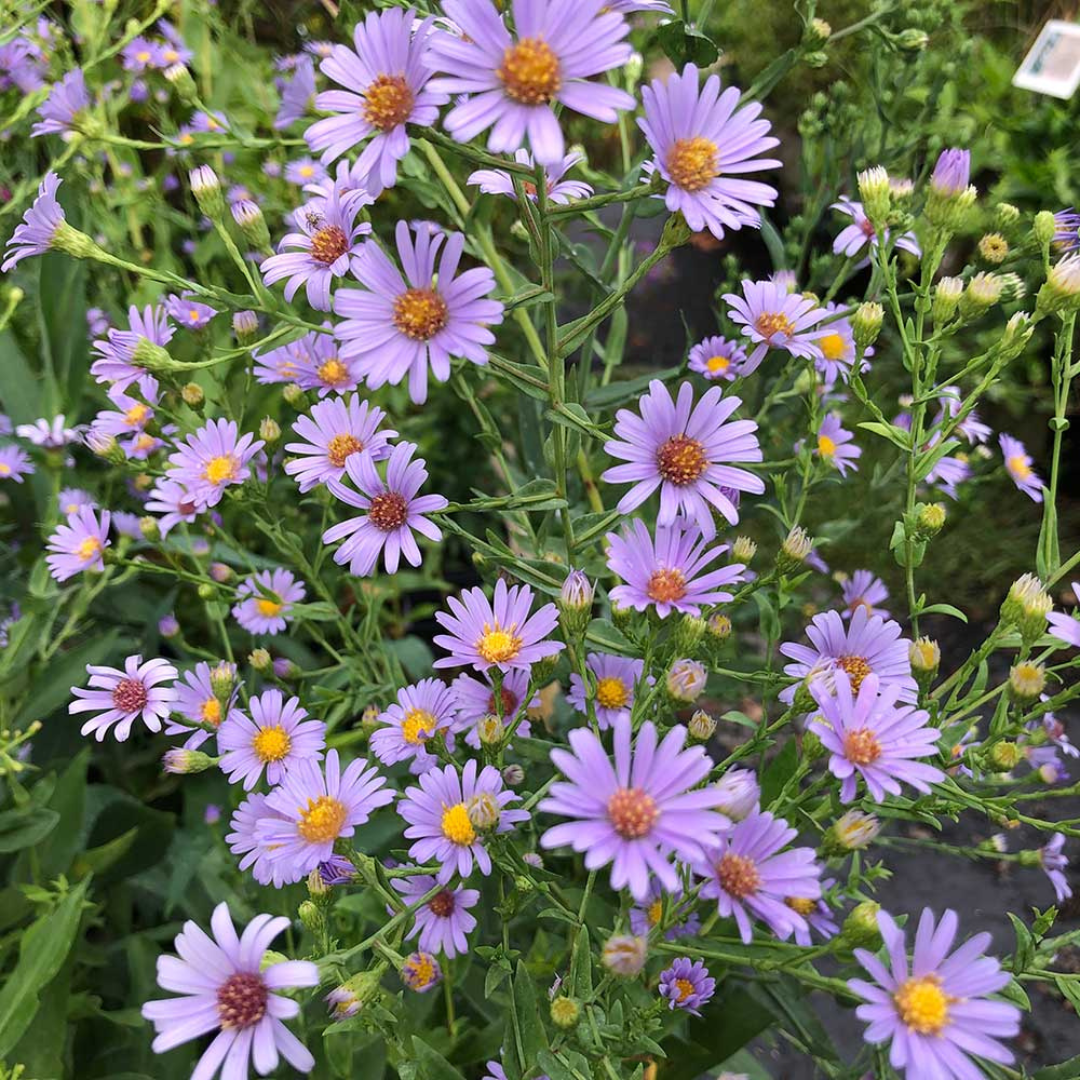
Symphyotrichum laeve
Add to Wishlist Full Sun
 Partial Sun
 Drought Tolerant
 Pollinator Friendly
 Native
- In stock, ready to ship
Symphyotrichum laeve: A Smooth Operator in Lavender Blue
Smooth blue aster has smooth blue-green leaves and even smoother moves. Lavender-blue daisies with yellow centres float up when summer is winding down. SMOOTH OPERATOR, NATIVE EDITION.
Plant Characteristics:
- Botanical Name: Symphyotrichum laeve (formerly Aster laevis)
- Common Name: Smooth Blue Aster, Smooth Aster
- Height: 60–100 cm (2–3.3 ft)
- Spread: 30–60 cm (1–2 ft)
- Flowers: Lavender to light blue-violet daisies, about 3 cm (1 in) across, with yellow centres, in loose sprays at the stem tips
- Bloom Time: Late summer to fall (August to October)
- Foliage: Thick, smooth, blue-green leaves; the upper ones clasp the stem
- Features: Host plant for the pearl crescent butterfly
Where to Plant: It fits well in prairie and meadow gardens, sunny borders, rain garden edges and pollinator plantings, where the upright stems add height in the middle of a bed. It tolerates dry, rocky soil and moderate road salt.
Companion Plants: Leucanthemum 'Snowcap' sits at the front with white daisies from June to August. Phlox Super Ka-Pow™ Coral adds coral flowers at 45 to 50 cm through the summer. Monarda Sugar Buzz® 'Rockin' Raspberry' brings purple flowers in July and August, just ahead of the lavender asters. All three suit full sun or partial sun.
Plant Care: Plant in full sun or part sun in average to dry, well-drained soil. Sandy and loamy soils suit it best, though it adapts to many conditions. Water regularly in its first season, then only during long dry spells. In rich soil or too much shade the stems can lean, so keep it lean and sunny. Good air flow helps prevent powdery mildew. It reseeds lightly. Cut back in late fall or leave the stems for winter birds and cut in early spring. Divide in spring every few years.
History: Smooth blue aster has a very wide native range across North America, including southern Ontario and Quebec, where it grows in open woods, fields, meadows, prairies and roadside ditches. It was long known as Aster laevis before North American asters were moved to Symphyotrichum, and laeve is Latin for smooth.
Final Thoughts: Drought tolerant, butterfly approved and happy in sun. The bees are already in its DMs. SLIDE INTO THE CART.



