



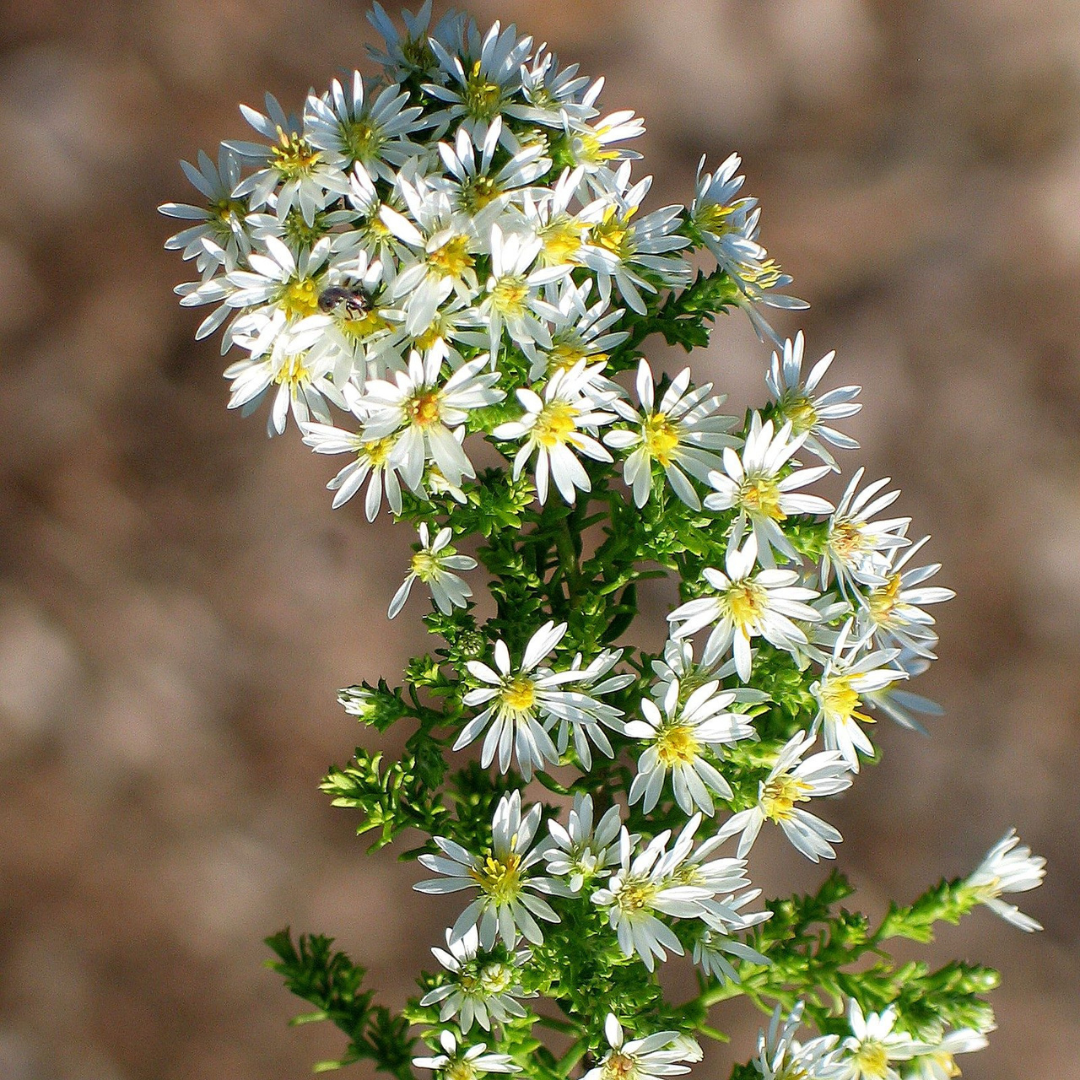
Symphyotrichum ericoides
Add to Wishlist Full Sun
 Drought Tolerant
 Deer Resistant
 Pollinator Friendly
 Native
- In stock, ready to ship
Symphyotrichum ericoides: Tiny White Daisies by the Thousand
Heath aster looks like somebody spilled a jar of tiny white daisies down every arching branch. Thousands of them, packed in tight like rush hour on the subway. NATIVE AND STANDING ROOM ONLY.
Plant Characteristics:
- Botanical Name: Symphyotrichum ericoides (formerly Aster ericoides)
- Common Name: Heath Aster, White Heath Aster
- Height: 30–90 cm (1–3 ft)
- Spread: 60–90 cm (2–3 ft)
- Flowers: Tiny white daisies, about 1 cm (1/3–1/2 in) across, with yellow centres that turn reddish with age, crowded along arching branches
- Bloom Time: Late summer to fall (August to October)
- Foliage: Small, narrow, heath-like leaves on stiff, bushy stems
- Features: Host plant for the pearl crescent butterfly, salt tolerant
Where to Plant: It's at home in prairie and meadow plantings, on dry sunny slopes, in gravelly roadside beds and in pollinator gardens. Because it tolerates salt, it's a good candidate for the strip along a driveway or sidewalk.
Companion Plants: Eryngium 'Blue Hobbit' stays low with spiky blue flowers from June to August. Agastache 'Pinky Pie' adds pink spikes at 46 to 51 cm from midsummer to early fall. Delphinium 'Pagan Purples' stands behind at up to 180 cm with purple flowers in summer, before the small white asters cover the bed. All three like full sun.
Plant Care: Plant in full sun in average to dry, well-drained soil. Sandy or rocky soil is ideal. Rich, moist soil makes it floppy and more aggressive. Water through the first season, then only in long droughts. It spreads by rhizomes and self-seeds, so in a small bed you may want to pull extras each spring. Grown alone in an open spot, the stems can lean; neighbouring plants or a mid-June trim by a third keep it upright. Cut back in early spring.
History: Heath aster is native across much of North America, including southern Ontario and Quebec, where it grows on dry prairies, sand plains, open fields and roadsides. The species name ericoides means heath-like, after its small, narrow leaves, and it was long known as Aster ericoides.
Final Thoughts: Deer, drought and salt can't shake it, and pearl crescent butterflies raise their babies on it. PLANT IT AND PACK THE PLACE.



