



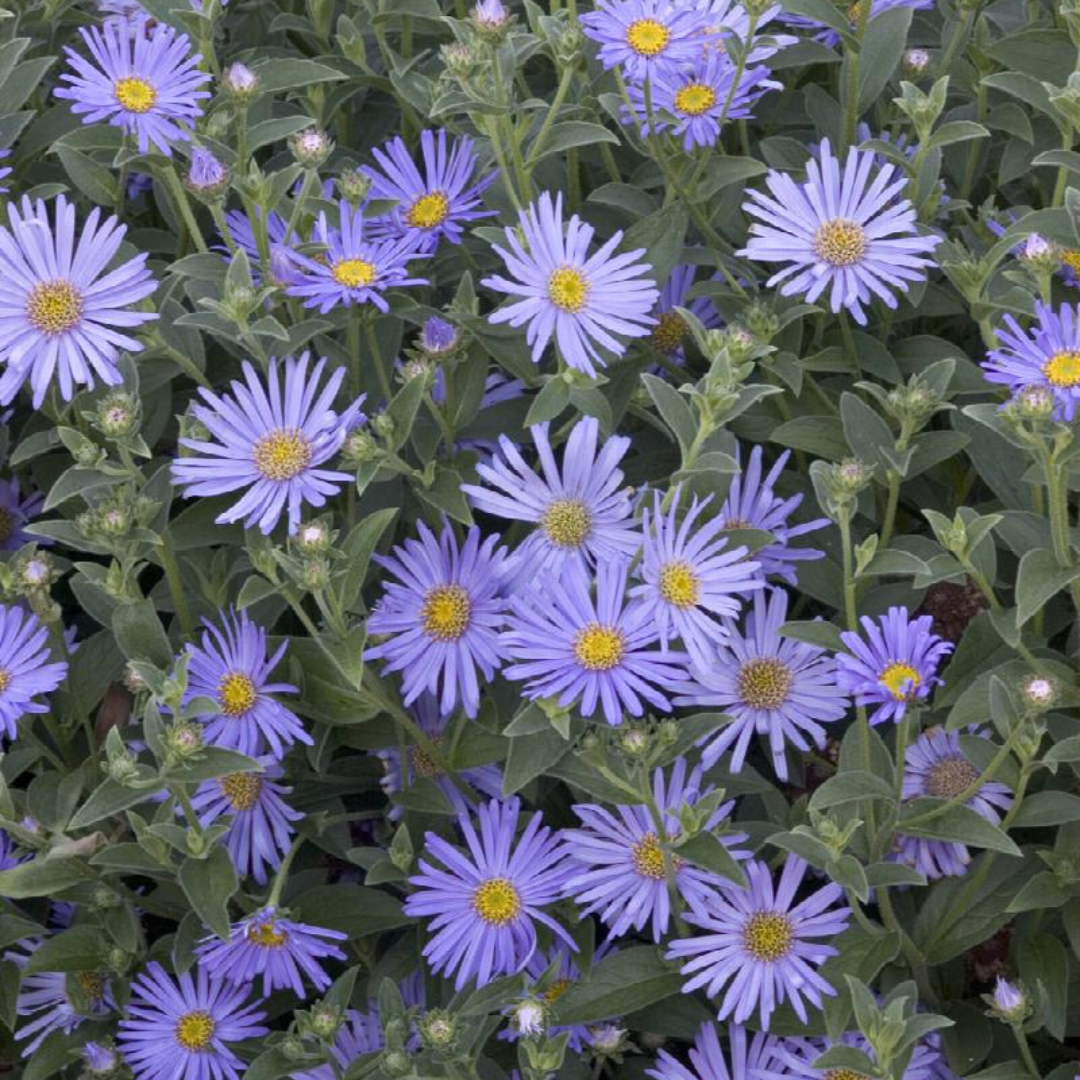
Aster 'Wood's Light Blue'
Add to Wishlist Full Sun
 Partial Sun
 Deer Resistant
 Pollinator Friendly
 Low Maintenance
- In stock, ready to ship
Aster 'Wood's Light Blue': Little Blue Cushions, Big Fall Finish
Small light lavender-blue daisies in dense clusters, on a tidy mound that shrugs off mildew. 'Wood's Light Blue' is the short, sweet aster for the front of the line. FIRST IN LINE, LAST TO LEAVE.
Plant Characteristics:
- Botanical Name: Symphyotrichum 'Wood's Light Blue' (sold as Aster dumosus)
- Common Name: Dwarf Aster, Michaelmas Daisy
- Height: 30–40 cm (12–16 in)
- Spread: 40–50 cm (16–20 in)
- Flowers: Small light lavender-blue daisies with yellow centres, in dense clusters
- Bloom Time: Late summer to fall (August to October)
- Foliage: Narrow, dark green leaves on a compact, mounded clump. Good mildew resistance.
- Features: Compact habit
Where to Plant: Use it to edge a sunny bed or path, tuck it between earlier perennials that finish by August, or plant it in fall containers. A row of them makes a soft blue border in September.
Companion Plants: Campanula 'Rapido White' sits at the front with white bells from June to September. Echinacea 'Mellow Yellows' adds soft yellow coneflowers at 80 cm that last into October, a nice partner for light blue. Sanguisorba obtusa rises behind to 150 cm with pink flowers in summer, before the asters open. Plant them in full sun or partial sun.
Plant Care: Plant in full sun or part sun in average, well-drained soil that stays evenly moist. It flowers best with at least six hours of sun. Water through the first season and during dry spells. Good air flow keeps the foliage clean. For the densest mound, cut the stems back by about a third once or twice before early summer. Cut back to the ground in late fall or early spring. Divide every two or three years in spring to keep the clump vigorous.
History: The Wood's asters are traced to nurseryman Edsel (Ed) Wood of Portland, Oregon, and were introduced by Lynn Caton. Many fall asters are called Michaelmas daisies because they bloom around Michaelmas, the feast of St. Michael on September 29.
Final Thoughts: Pair it with mums for a fall container or edge a sunny bed with it. Deer pass, bees don't. COOL, CALM AND COMPACT.



