



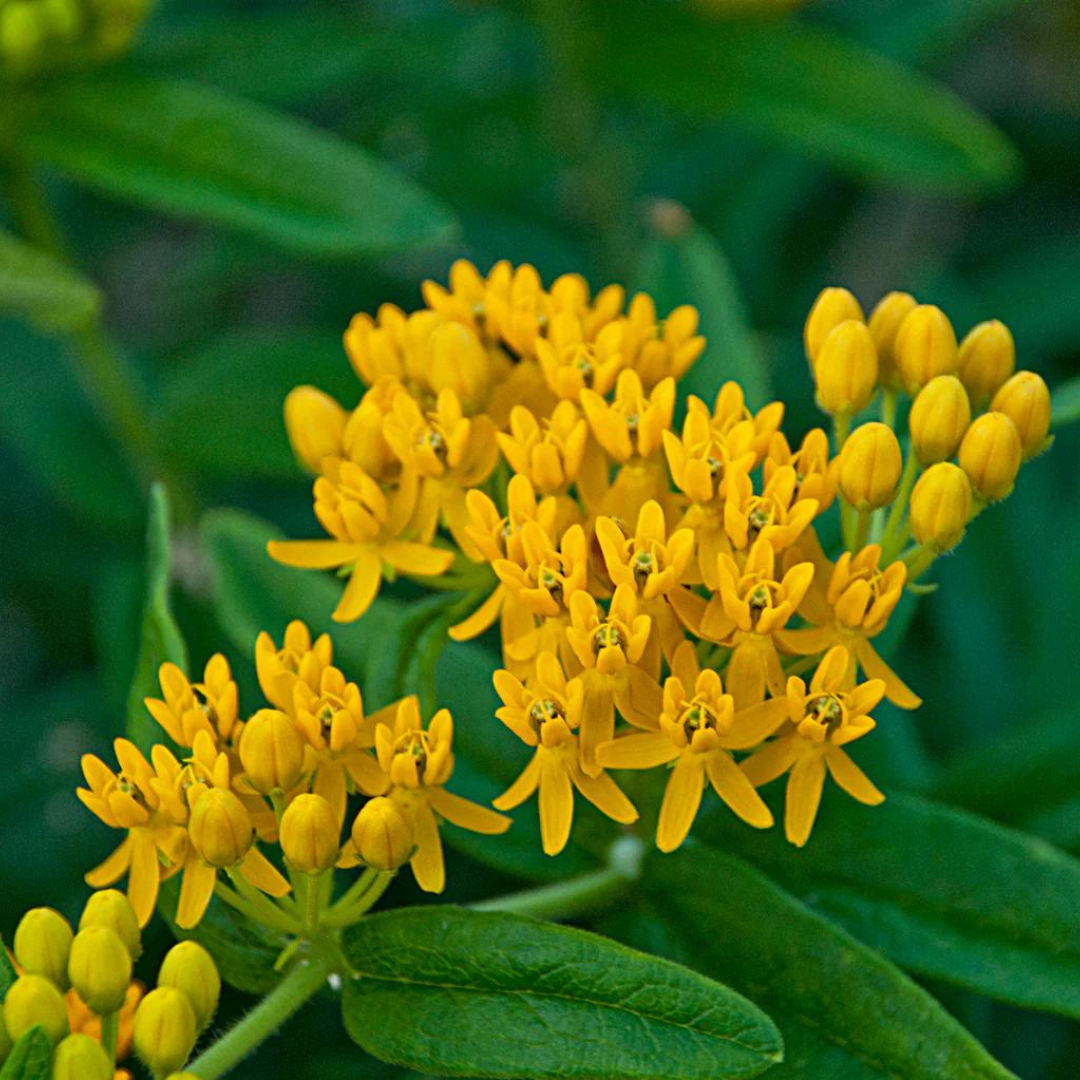
Asclepias 'Hello Yellow'
Add to Wishlist Full Sun
 Drought Tolerant
 Deer Resistant
 Pollinator Friendly
- In stock, ready to ship
Asclepias 'Hello Yellow': Butterfly Weed Goes Golden
Golden yellow clusters that greet every monarch, bee and hummingbird like old friends at the airport. 'Hello Yellow' is the cheeriest weed you'll ever buy on purpose. WELCOME ABOARD.
Plant Characteristics:
- Botanical Name: Asclepias tuberosa 'Hello Yellow'
- Common Name: Butterfly Weed
- Height: 45–60 cm (18–24 in)
- Spread: 45–60 cm (18–24 in)
- Flowers: Golden yellow, in flat-topped clusters at the stem tips, followed by slim green seed pods with silky seeds
- Bloom Time: Early to late summer (June to August)
- Foliage: Narrow, lance-shaped, green leaves on a clumping, upright plant
- Features: Monarch host plant, good cut flower
Where to Plant: A mid-sized plant for the front or middle of a sunny border, a dry slope, a gravel garden or a pollinator patch. Yellow is easier to blend than orange, so it slips into cool colour schemes as well as hot ones. Leave the seed pods for late-season interest.
Companion Plants: Echinacea Prairie Splendor™ Compact Rose adds pink coneflowers at 35 to 40 cm from June to September. Perovskia 'Blue Jean Baby' brings lavender spires from July to September, a cool partner for bright yellow. Sporobolus heterolepis adds a fine prairie grass that looks good into fall. All three suit full sun and lean soil.
Plant Care: Plant in full sun in well-drained soil. Sandy, gravelly or average soil works well. Avoid heavy, soggy clay, which can rot the root. Water through the first season, then only in extended drought. It's slow to emerge in spring, often not appearing until late May or June, so mark where it is. Deadheading the first flowers can encourage a second round. Wear gloves when cutting, because the sap can irritate skin. Butterfly weed grows a deep taproot and resents being moved or divided. Choose a permanent spot. Cut it back in late fall, or in early spring if you leave the pods for winter.
History: Asclepias tuberosa grows wild on dry prairies, open fields and sandy ground across much of eastern and central North America, as far north as southern Ontario, and wild plants are usually orange. 'Hello Yellow' is a yellow-flowered seed strain of the species, and its original breeder isn't documented.
Final Thoughts: Plant it in sun, leave it alone once it settles and watch the caterpillars eat their way to wings. HELLO GORGEOUS, GOODBYE BORING.



