



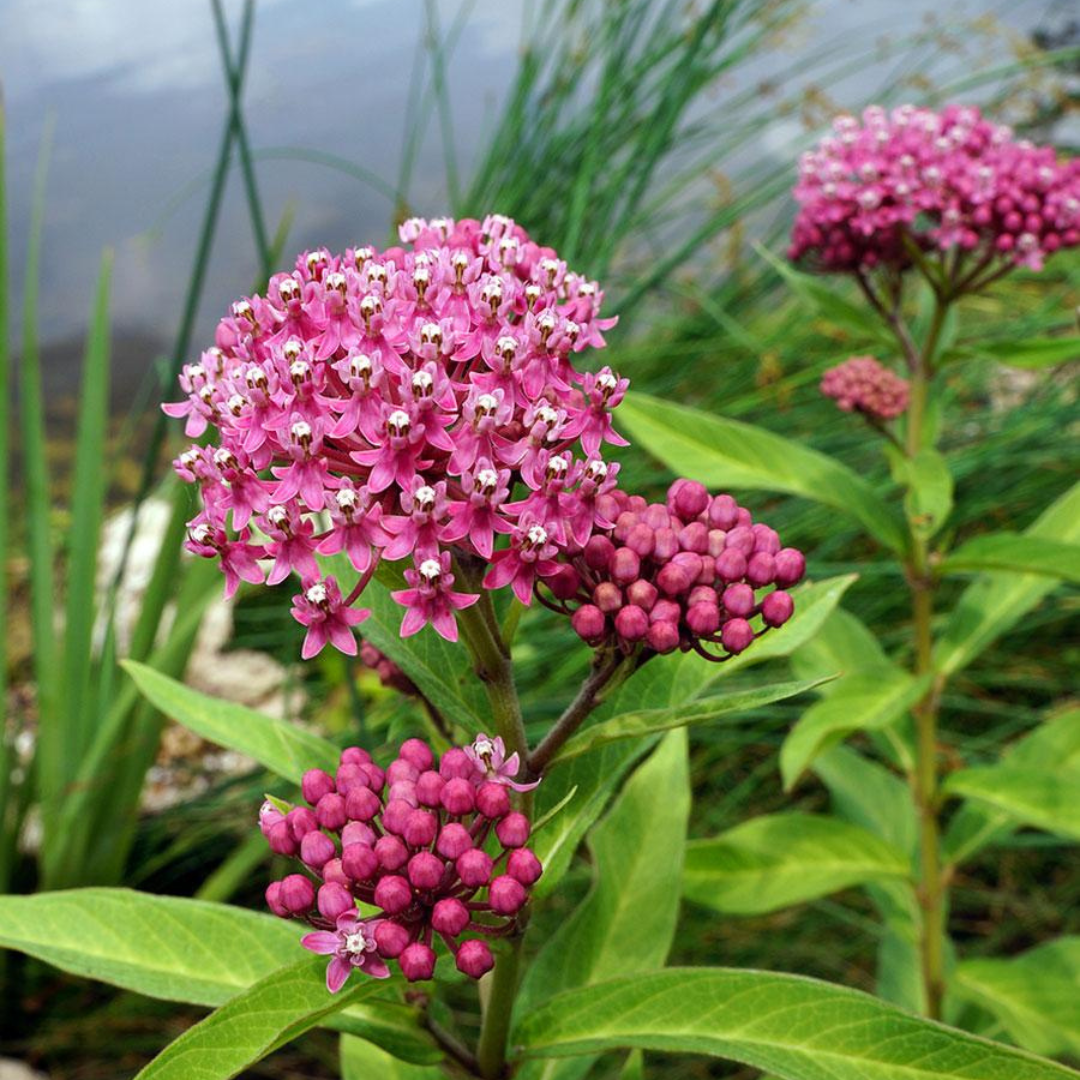
Asclepias incarnata
Add to Wishlist Full Sun
 Deer Resistant
 Pollinator Friendly
 Native
- In stock, ready to ship
Asclepias incarnata: Monarch Food for the Soggy Corner
Native swamp milkweed with sweetly fragrant pink clusters, built for the wet ground most plants refuse. Monarchs treat it like the only daycare in town. ENROLMENT IS OPEN.
Plant Characteristics:
- Botanical Name: Asclepias incarnata
- Common Name: Swamp Milkweed
- Height: 90–150 cm (3–5 ft)
- Spread: 60–75 cm (2–2.5 ft)
- Flowers: Small pink to rose-mauve flowers in rounded clusters, sweetly fragrant, followed by slender upright seed pods
- Bloom Time: Midsummer to early fall (July to September)
- Foliage: Narrow, lance-shaped, mid-green leaves on sturdy, branching stems
- Features: Monarch host plant, tolerates wet soil and clay
Where to Plant: Plant it in rain gardens, wet meadows, pond and stream edges, or any sunny bed with moist soil. It's a cornerstone for pollinator and naturalized gardens, and it also behaves well in a regular border, since it stays in a clump and doesn't run.
Companion Plants: Lavandula 'Ellagance Snow' makes a white edge at 30 to 40 cm from June to August. Gaillardia 'Mesa Peach' adds peach flowers from June to September, soft beside the pink milkweed. Liatris cylindracea brings purple spikes from July to September at mid height. All three like full sun and will draw plenty of pollinators.
Plant Care: Plant in full sun in moist to wet soil. It also grows well in average garden soil if watered during dry spells. Heavy clay is fine. It's late to emerge in spring, so mark the spot. Leave some pods if you want seeds, or snip them before they split if you don't want seedlings. The milky sap is toxic and can irritate skin, so wear gloves. Cut stems back in late fall or early spring. Older clumps develop a deep root and prefer not to be moved.
History: Swamp milkweed grows wild in marshes, wet meadows, ditches and along shorelines across much of eastern and central North America, from Quebec to Manitoba and south to the Gulf of Mexico. The species name incarnata means flesh-coloured, a nod to its pink flowers, and it's one of the milkweeds monarch butterflies depend on to complete their life cycle.
Final Thoughts: Plant it in the soggy bed, the clay or the ditch. The bees will hum and the caterpillars will eat. CONSERVATION NEVER SMELLED THIS GOOD.



