



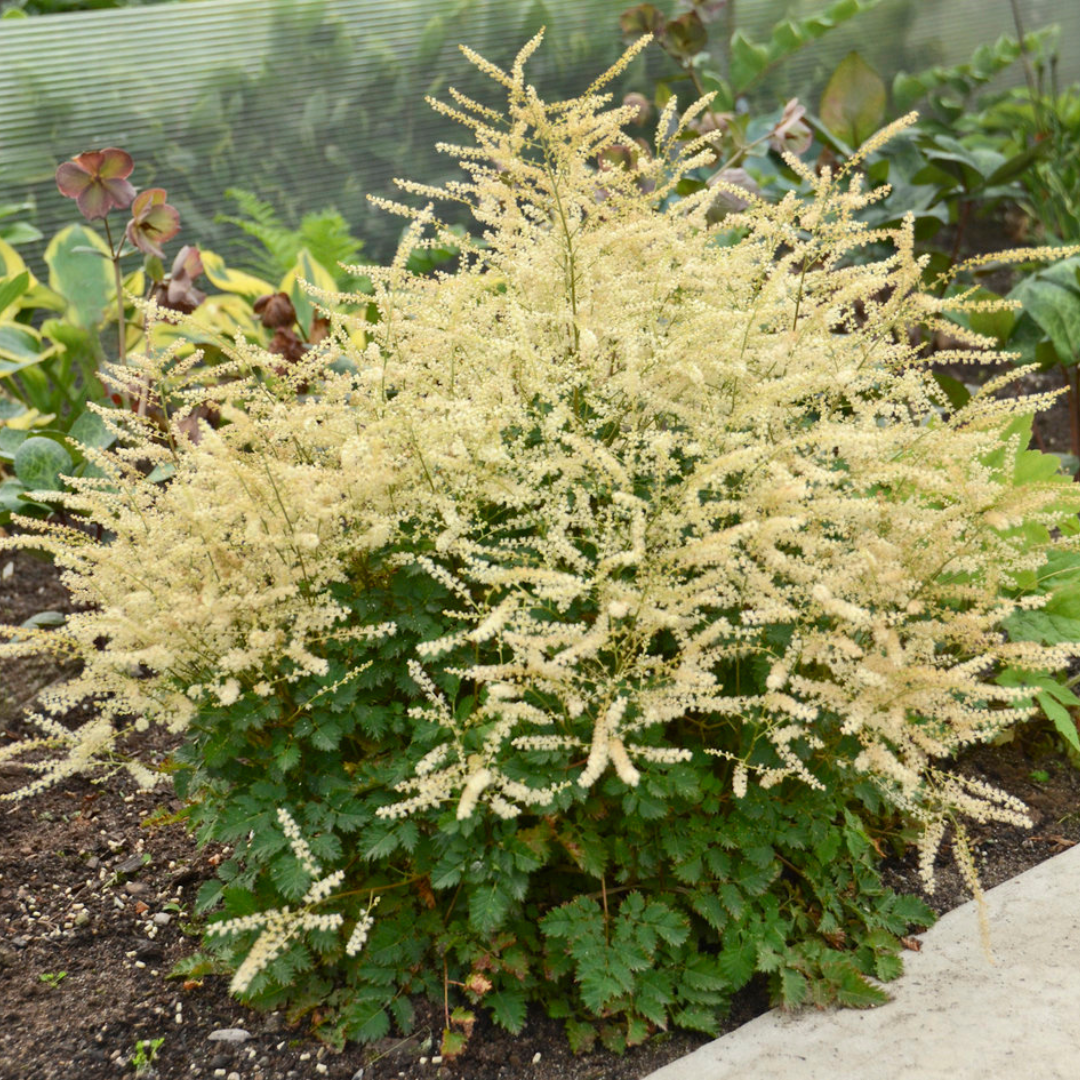
Aruncus 'Chantilly Lace'
Add to Wishlist Full Sun
 Partial Sun
 Full Shade
 Deer Resistant
 Pollinator Friendly
- In stock, ready to ship
Aruncus 'Chantilly Lace': Frothy Cream Lace That Handles a Dry Spell
Creamy white, lacy sprays over a bushy mound, like the shade garden finally got a tablecloth from a very nice restaurant. 'Chantilly Lace' handles dry spells better than astilbe does. FANCY, BUT LOW MAINTENANCE.
Plant Characteristics:
- Botanical Name: Aruncus hybrid
- Common Name: Goat's Beard
- Series: A Proven Winners® perennial
- Height: 60–80 cm (24–32 in)
- Spread: 100–120 cm (40–48 in)
- Flowers: Creamy white, lacy, branched sprays
- Bloom Time: Early to midsummer (June to July)
- Foliage: Green, divided leaves forming a bushy, mounded clump
- Features: More drought tolerant than astilbe, good cut flower
- Plant Patent: USPP 30,740 / Can 6,259
Where to Plant: It's wide enough to act like a small shrub in a part-shade border, a woodland edge or the north side of the house. Plant it in groups for a soft, frothy summer show. Morning sun and afternoon shade give the best look, and it can take more sun as long as the soil stays reasonably moist.
Companion Plants: Heuchera 'Berry Timeless' edges the bed with pink flowers from June to October. Carex 'Blue Zinger' adds fine, grassy texture at 30 to 45 cm beside the lacy cream plumes. Liriope 'Big Blue' picks up in August and September with lavender spikes. All three grow in full sun, partial sun or shade.
Plant Care: Plant in moist, humus-rich, well-drained soil. Work in compost at planting time. Water regularly through the first season. It's slow to establish, so be patient in year one. Give it its full width from the start. Goat's beard grows a tough root system and doesn't like being moved once it's settled. Leave the flowers for a soft brown seed-head effect or cut them off after blooming for a tidier look. Cut the foliage to the ground in late fall or early spring. Dividing is rarely needed.
History: 'Chantilly Lace' comes from Walters Gardens and is a hybrid of native and non-native Aruncus species. Goat's beard as a group grows in rich woodlands across the Northern Hemisphere, and the common name comes from the plume-like flower sprays.
Final Thoughts: Plant it in part shade, cut a few for the table and let the bees fuss over it. Deer keep moving. LACE ISN'T JUST FOR SPECIAL OCCASIONS.



