



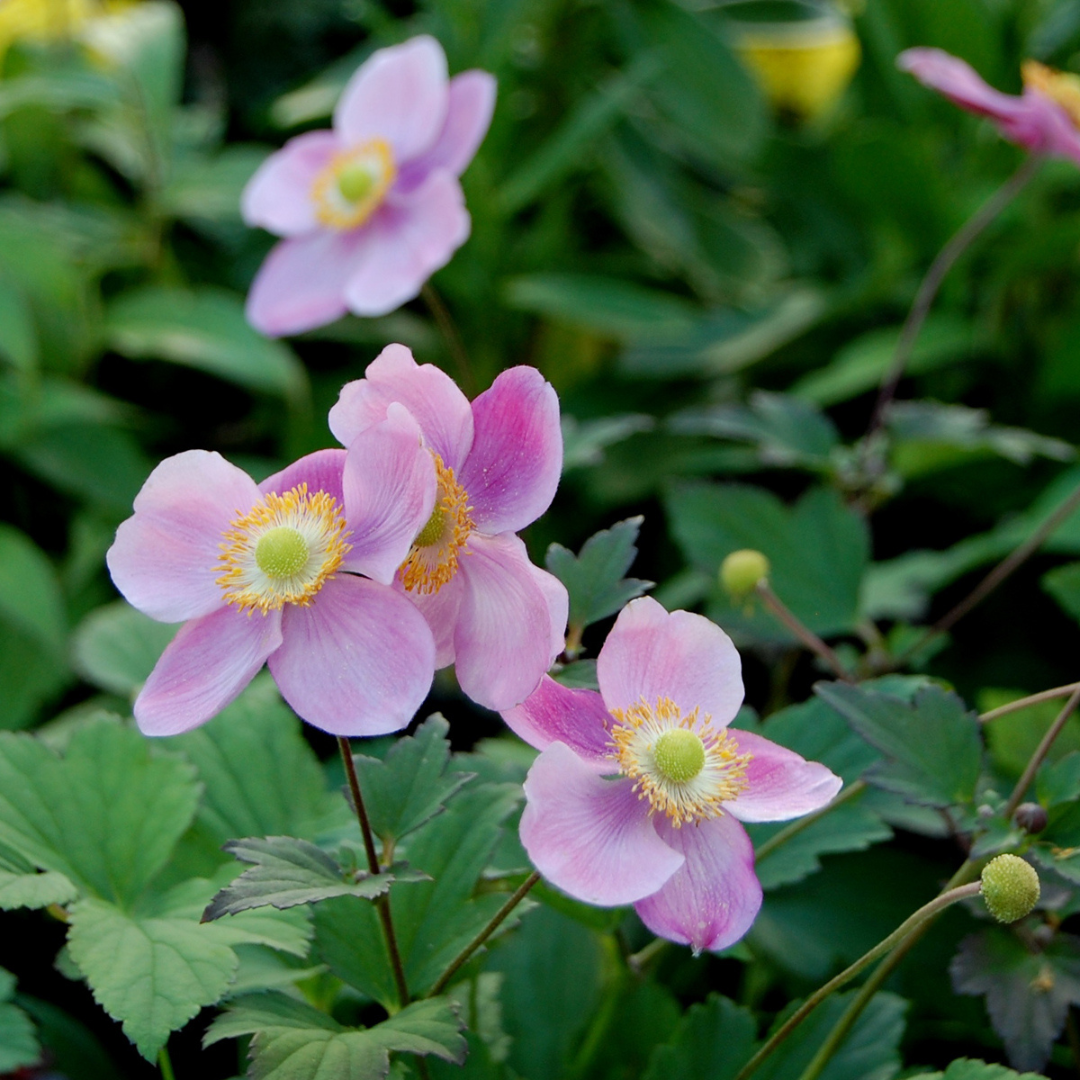
Anemone 'Robustissima'
Add to Wishlist Full Sun
 Partial Sun
 Deer Resistant
 Pollinator Friendly
- In stock, ready to ship
Anemone 'Robustissima': The Toughest Pink in the Fall Border
Mauve-pink flowers on tall stems, coarse grape-like leaves and cold hardiness that laughs at winter. 'Robustissima' sounds like an opera singer and hits every high note. VERY ROBUST. VERY MUCH.
Plant Characteristics:
- Botanical Name: Anemone tomentosa 'Robustissima'
- Common Name: Grape-leaf Anemone, Windflower
- Height: 90–120 cm (3–4 ft)
- Spread: 60–90 cm (2–3 ft), spreading into colonies
- Flowers: Single, mauve-pink, about 6 cm (2.5 in) across, with showy yellow stamens
- Bloom Time: Late summer to fall (September to October)
- Foliage: Coarse, deep green, grape-like leaves with felted undersides
- Features: Very cold hardy, rabbit resistant, fluffy seed heads for winter interest
Where to Plant: Give it space: the back of a large border, a woodland edge, a slope, or a spot where you want a big sweep of fall colour. It fills ground fast, so keep it away from small, delicate neighbours. It tolerates clay and alkaline soil.
Companion Plants: Chrysanthemum 'Mary Stoker' brings soft yellow flowers from August to October, a warm match for the pink anemones. Phlox Luminary® 'Backlight' adds white flowers at 71 to 76 cm from July to September. Aster 'Wood's Light Blue' keeps the front edge low with blue asters into October. Give the planting full sun or partial sun.
Plant Care: Plant in moist, well-drained soil with plenty of organic matter. It grows best in part shade but handles full sun if the soil stays moist. Once established, it copes with an occasional dry spell. This is a vigorous spreader by underground runners. Divide every couple of years in spring and dig out runners where you don't want them. Leave the seed heads up for winter interest if you like, then cut everything back in early spring.
History: Anemone tomentosa comes from the mountains of northern China, and its species name refers to the soft, woolly hairs on the leaf undersides. 'Robustissima' has long been grown in colder gardens as the toughest of the fall-blooming anemones.
Final Thoughts: Fluffy seed heads stick around for winter, so the show goes on. Deer and rabbits sit this one out. THE ARIA NEVER ENDS.



