



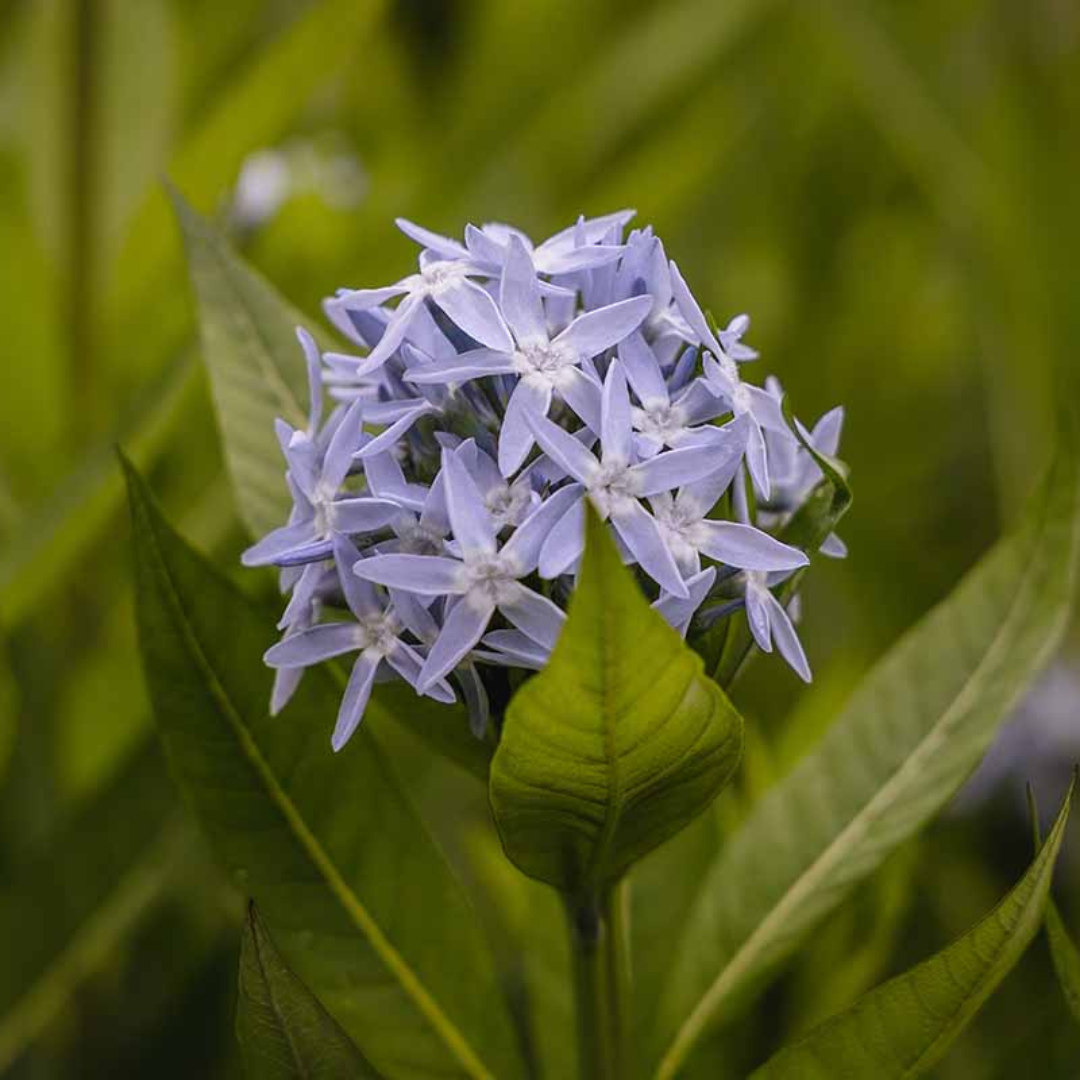
Amsonia 'Blue Ice'
Add to Wishlist Full Sun
 Partial Sun
 Deer Resistant
 Pollinator Friendly
 Low Maintenance
- In stock, ready to ship
Amsonia 'Blue Ice': All the Periwinkle, Half the Size
Periwinkle stars opening from darker buds in spring, then the whole mound turns gold in fall. 'Blue Ice' is a short, cool customer that gives you two seasons for the price of one. ICE COLD, THEN SOLID GOLD.
Plant Characteristics:
- Botanical Name: Amsonia 'Blue Ice'
- Common Name: Blue Star
- Height: 30–40 cm (12–16 in)
- Spread: 45–60 cm (18–24 in)
- Flowers: Clusters of periwinkle-blue, star-shaped flowers opening from darker buds
- Bloom Time: Late spring to early summer (May to June)
- Foliage: Glossy, lance-shaped green leaves in a dense mound, turning golden yellow in fall
- Features: Rabbit resistant, tolerates clay, fairly drought tolerant once established
Where to Plant: Use it at the front or middle of a border, along a walkway, or massed as a low, shrub-like edging. It's a good fit for small gardens that want fall colour without a big plant, and it handles clay soil well.
Companion Plants: Campanula 'Rapido White' makes a neat white edge from June to September, picking up as the blue stars fade. Tradescantia 'Innocence' adds white flowers and grassy leaves at 50 to 60 cm. Sanguisorba obtusa rises behind to 150 cm with pink bottlebrush flowers from June to August. Plant the group in full sun or partial sun.
Plant Care: Plant in full sun to part sun in average, well-drained soil. Full sun gives the best flowering and fall colour. In too much shade, it can get loose and floppy. Water regularly through the first season, then only during long dry spells. Amsonia needs very little. If you'd like a tidier mound after bloom, cut the stems back by about a third once the flowers fade. Cut it to the ground in late fall, or leave the golden foliage standing and cut it in early spring. Divide in spring only if needed, as established plants have tough roots. The stems contain a milky sap that can irritate skin, so wear gloves when cutting.
History: 'Blue Ice' was found among Amsonia tabernaemontana seedlings at White Flower Farm in Connecticut, and its exact parentage is unknown. It was long sold as a hybrid of the North American native, but later trials at Mt. Cuba Center suggest it is closer to Amsonia orientalis.
Final Thoughts: Clay soil, deer and rabbits get a shrug while it stays tidy. Plant it along a front edge. THE LOW MAINTENANCE FRIEND EVERYONE DESERVES.



