



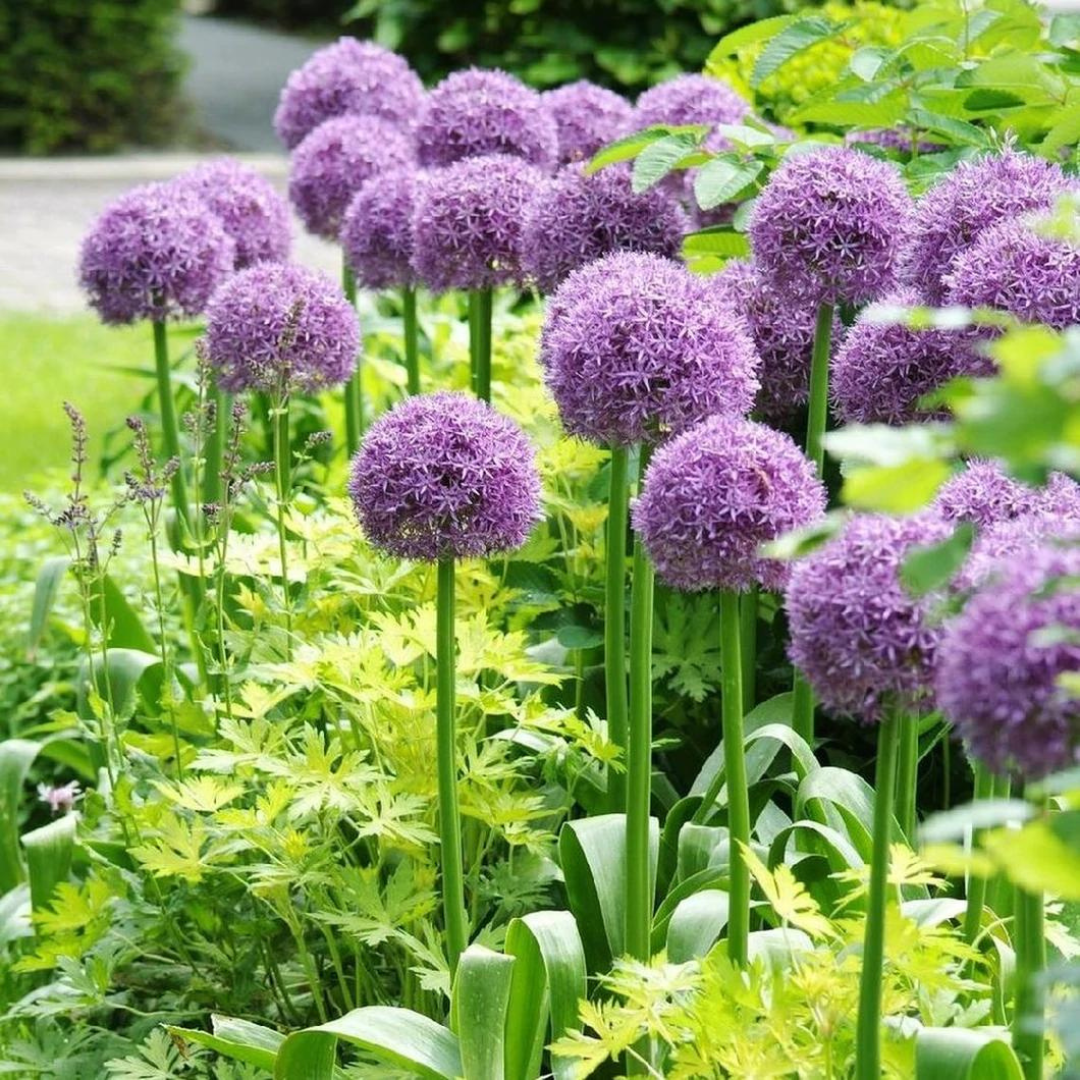
Allium giganteum
Add to Wishlist Full Sun
 Drought Tolerant
 Deer Resistant
 Pollinator Friendly
 Low Maintenance
- In stock, ready to ship
Allium giganteum: Giant Purple Lollipops on Stilts
Lilac-purple heads packed with hundreds of tiny flowers, floating on stems taller than the kids. Giant Ornamental Onion doesn't do subtle. SIZE MATTERS, AND IT KNOWS IT.
Plant Characteristics:
- Botanical Name: Allium giganteum
- Common Name: Giant Ornamental Onion
- Height: 90–150 cm (3–5 ft)
- Spread: 30–45 cm (1–1.5 ft)
- Flowers: Dense, round heads about 10–15 cm (4–6 in) across, packed with hundreds of small lilac-purple flowers
- Bloom Time: Late spring to early summer (May to June)
- Foliage: Broad, strap-shaped, grey-green basal leaves that die back around flowering time
- Features: Rabbit resistant, good cut and dried flower
Where to Plant: Use it where height counts: the back of a border, rising through lower plantings in the middle, or in a tight cluster as a focal point. Repeat it along a long bed for rhythm, and give it leafy neighbours, since its own leaves fade as the flowers open.
Companion Plants: Lavandula 'Ellagance Snow' makes a low white edge from June to August, just as the purple globes fade. Coreopsis 'American Dream' adds pink flowers at 30 to 40 cm right through to September. Helictotrichon 'Sapphire' brings a fine, grassy texture beside the allium's tall stems. All three like full sun and good drainage.
Plant Care: Plant in full sun in well-drained soil. Bulbs dislike sitting wet, especially in winter, so heavy clay should be loosened with grit or compost, or the plant set on a slope. Water during spring growth, then let the soil dry out after the leaves die down. Let the foliage wither on its own so the bulb can store energy for next year. A sheltered spot helps the tall stems in windy gardens. Lift and divide crowded clumps after the leaves have died back. Remove old stems and leaves when they're dry.
History: Allium giganteum is a wild species from Central Asia, ranging to northeastern Iran, and its name simply means "giant onion". It is one of the tallest alliums in cultivation and influenced several later tall garden alliums.
Final Thoughts: Plant a few bulbs in fall and wait for the gasps next spring. Deer and rabbits ignore it, bees don't. GO BIG OR GO HOME.



