



Allium 'Ambassador'
Add to Wishlist Full Sun
 Partial Sun
 Drought Tolerant
 Deer Resistant
 Pollinator Friendly
 Low Maintenance
- In stock, ready to ship
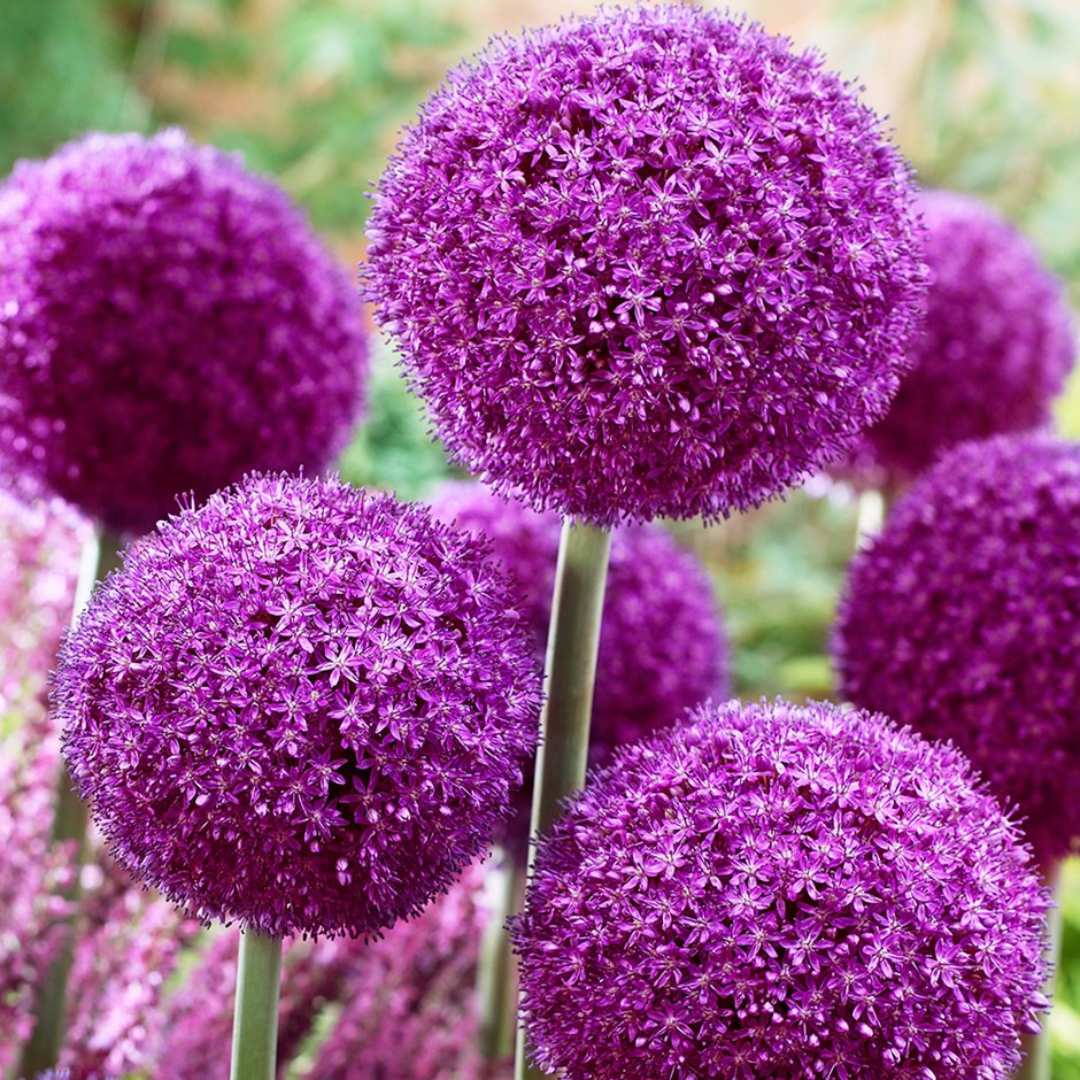
Allium 'Ambassador': Purple Planets Hovering Over the Border
Huge deep purple globes on tall, strong stems, floating above the border like it's hosting a state dinner. 'Ambassador' has diplomatic immunity from deer. NO VISA. NO BROWSING.
Plant Characteristics:
- Botanical Name: Allium 'Ambassador'
- Common Name: Ornamental Onion
- Height: 90–120 cm (3–4 ft)
- Spread: 30–45 cm (1–1.5 ft)
- Flowers: Large, round heads of deep purple, star-shaped florets on tall, strong stems
- Bloom Time: Late spring to early summer (May to June)
- Foliage: Long, strap-shaped grey-green leaves at the base that fade around bloom time
- Features: Good cut and dried flower
Where to Plant: Plant it in groups of three or more in the middle or back of a sunny border, where the globes float above shorter plants. The leaves yellow as the flowers open, so tuck it behind something leafy. Deer and rabbits tend to pass it by, which helps in suburban and cottage-country gardens.
Companion Plants: Alchemilla mollis hides the allium's fading leaves and adds yellow flowers from June to August. Tradescantia 'Little Doll' brings blue flowers from June to August at 25 to 30 cm. Rudbeckia 'Goldblitz' carries the bed through to September with yellow daisies. The purple globes float above them all in late spring, and every plant here grows in full sun or partial sun.
Plant Care: Plant in full sun to part sun in average, well-drained soil. Bulbs rot in soggy ground, so add grit or plant on a slope if you have heavy clay. Water while it's in active growth in spring. Once the leaves die down in summer, it prefers to stay on the dry side. Let the leaves wither naturally so the bulb can recharge for next year. Leave the seed heads standing for structure, or cut them for dried arrangements. Clumps can be lifted and divided after the foliage dies back in summer if they get crowded.
History: 'Ambassador' is a garden hybrid closely tied to Allium giganteum, the giant onion of Central Asia. Ornamental onions from that region have been grown in European and North American gardens for well over a century.
Final Thoughts: Plant a cluster in fall and let it negotiate with the bees next spring. Cut a few for the dining table. DIPLOMACY HAS NEVER LOOKED THIS ROUND.



