

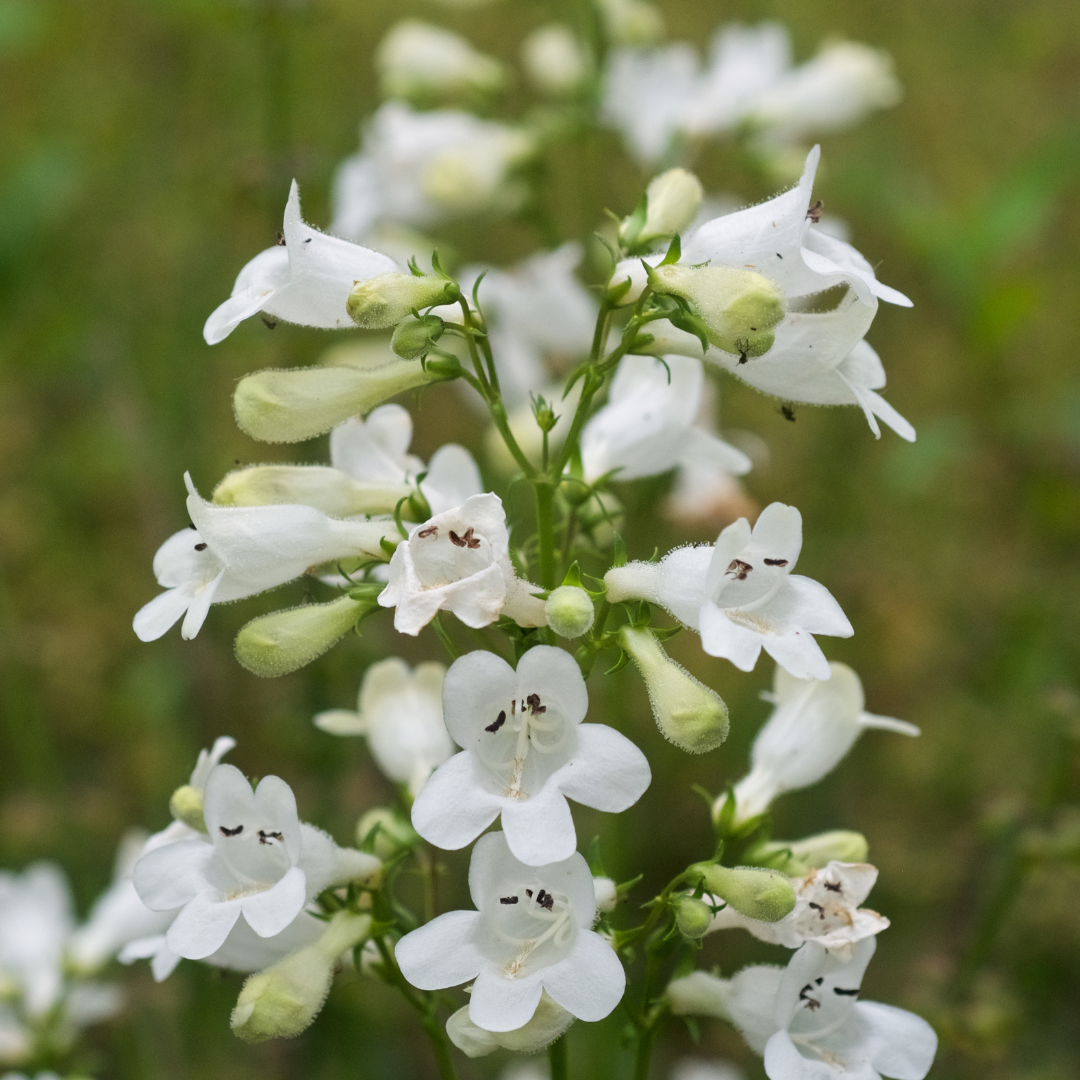
Penstemon digitalis
- In stock, ready for delivery
Penstemon digitalis: White Trumpets That Mix With Anything
Open spikes of white tubular flowers that the bees treat like a row of revolving doors. In fall the glossy leaves turn red, like this plant just remembered something embarrassing. BLUSHING SEASON IS OFFICIALLY OPEN.
Plant Characteristics:
- Botanical Name: Penstemon digitalis
- Common Name: Foxglove Beardtongue
- Height: 90–120 cm (3–4 ft)
- Spread: 45–60 cm (18–24 in)
- Flowers: White, sometimes blushed pale pink, in open spikes of tubular blooms
- Bloom Time: Early summer (June to July)
- Foliage: Glossy green, turning red in fall
Where to Plant: Plant it in a meadow, a pollinator garden, a prairie-style planting or the middle of a sunny border. The white spikes fit easily into any colour scheme. It handles a range of soils, including heavier ground as long as it isn't waterlogged.
Companion Plants: Plant foxglove beardtongue in a sunny bed with lavender-blue pincushions, pink iris and a red-turning bluestem. Sempervivum 'Commander Hay' tucks in at the front at about 10 cm with big red rosettes. Scabiosa 'Butterfly Blue' adds lavender-blue pincushions at 30 to 45 cm from May to October. Iris 'Frappe' opens strawberry-pink bearded iris at 85 to 90 cm in June. Schizachyrium 'Little Red Fox' grows to 60 to 75 cm and turns red and copper in fall.
Plant Care: Plant in full sun in average, well-drained soil. Water regularly through the first season. After that it copes with dry spells, though it looks best without long droughts. Cut the flower stems after bloom to prevent heavy self-seeding, or leave some so the seed can feed birds and new plants can fill in. Cut the old stems back in fall or early spring, keeping the leafy base. Divide in spring every few years.
History: Foxglove beardtongue grows wild across the central and eastern United States and in southern Ontario and Quebec, though some botanists consider those populations introduced. Its best-known selection, the purple-leaved 'Husker Red', was introduced by the University of Nebraska and named Perennial Plant of the Year in 1996.
Final Thoughts: Deer pass it by, hummingbirds don't, and dry spells barely register. Plant a drift and WATCH THE HUMMINGBIRDS START A TURF WAR.