

Calamagrostis 'Avalanche'
- In stock, ready for delivery
Calamagrostis 'Avalanche': Upright, White-Striped and Never Floppy
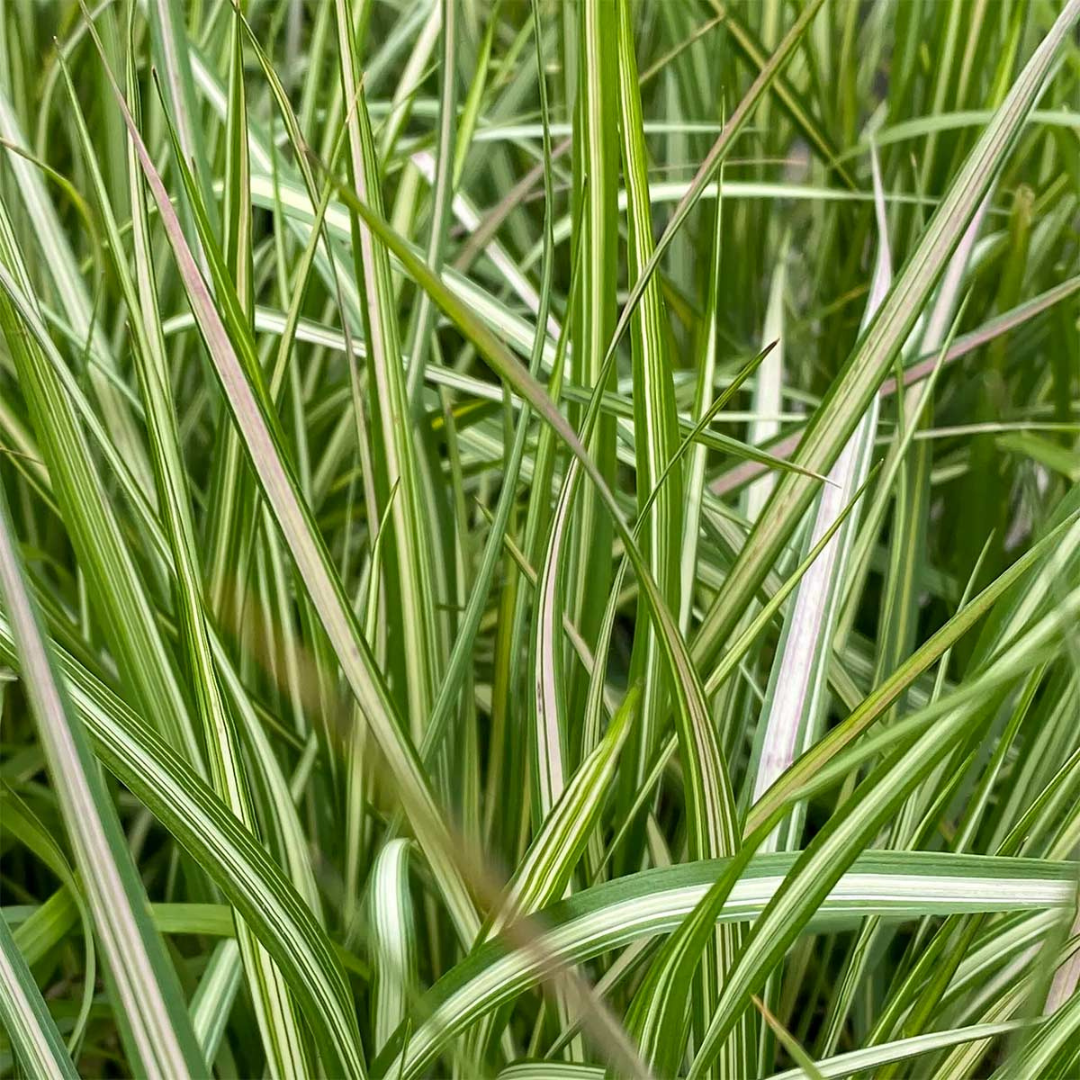
'Avalanche' has a white stripe down every blade, like the snow came early and decided to stay. Upright, tidy and topped with feathery plumes. ALL OF THE AVALANCHE, NONE OF THE SHOVELLING.
Plant Characteristics:
- Botanical Name: Calamagrostis × acutiflora 'Avalanche'
- Common Name: Feather Reed Grass
- Height: 90–120 cm (3–4 ft) in flower
- Spread: 60–75 cm (2–2.5 ft)
- Flowers: Feathery greenish-mauve plumes that ripen to wheat-coloured spikes
- Bloom Time: Early to late summer (June to August), with seedheads lasting into winter
- Foliage: Narrow green blades with a white central stripe, upright
Where to Plant: Use it where you want vertical structure with a little extra brightness: along a walkway, in a row as a low screen, or repeated through a sunny border. The white-striped leaves lighten up darker neighbours. It tolerates clay soil and stands up well in winter.
Companion Plants: Use the upright, white-centred blades of 'Avalanche' as a vertical accent in a sunny bed with a long flower season. Leucanthemum 'Sugar Bowl' edges the front with white daisies at 20 to 25 cm from May to August. Amsonia 'Storm Cloud' adds periwinkle stars on dark stems at 61 to 76 cm in May and June. Geum 'Blazing Sunset' brings double scarlet flowers at 55 to 60 cm from May to July. Solidago 'Little Miss Sunshine' adds compact golden goldenrod at 30 to 45 cm from July to October.
Plant Care: Plant it in full sun to part sun in average, well-drained soil. The variegation is crispest in spring and early summer, and it may soften a little in midsummer heat. Water regularly during the first season. After that, it only needs a drink during long dry spells. Leave the plumes up for winter interest. Cut the clump back to about 15 cm (6 in) in late winter or early spring, before new growth starts. Divide in spring when the clump gets crowded or the centre opens up.
History: 'Avalanche' was discovered by Steve Schmidt in Oregon as a variegated sport of Calamagrostis 'Karl Foerster'. Feather reed grass itself is a natural hybrid of two Eurasian Calamagrostis species and is sterile, so it doesn't spread by seed.
Final Thoughts: Drought tolerant once settled, deer resistant and still good-looking when winter shows up. PLANT IT BEFORE THE SNOWBANK DOES.